VMAC Industries
·2026-04-16
What to Look for When Buying a Gravity Separator
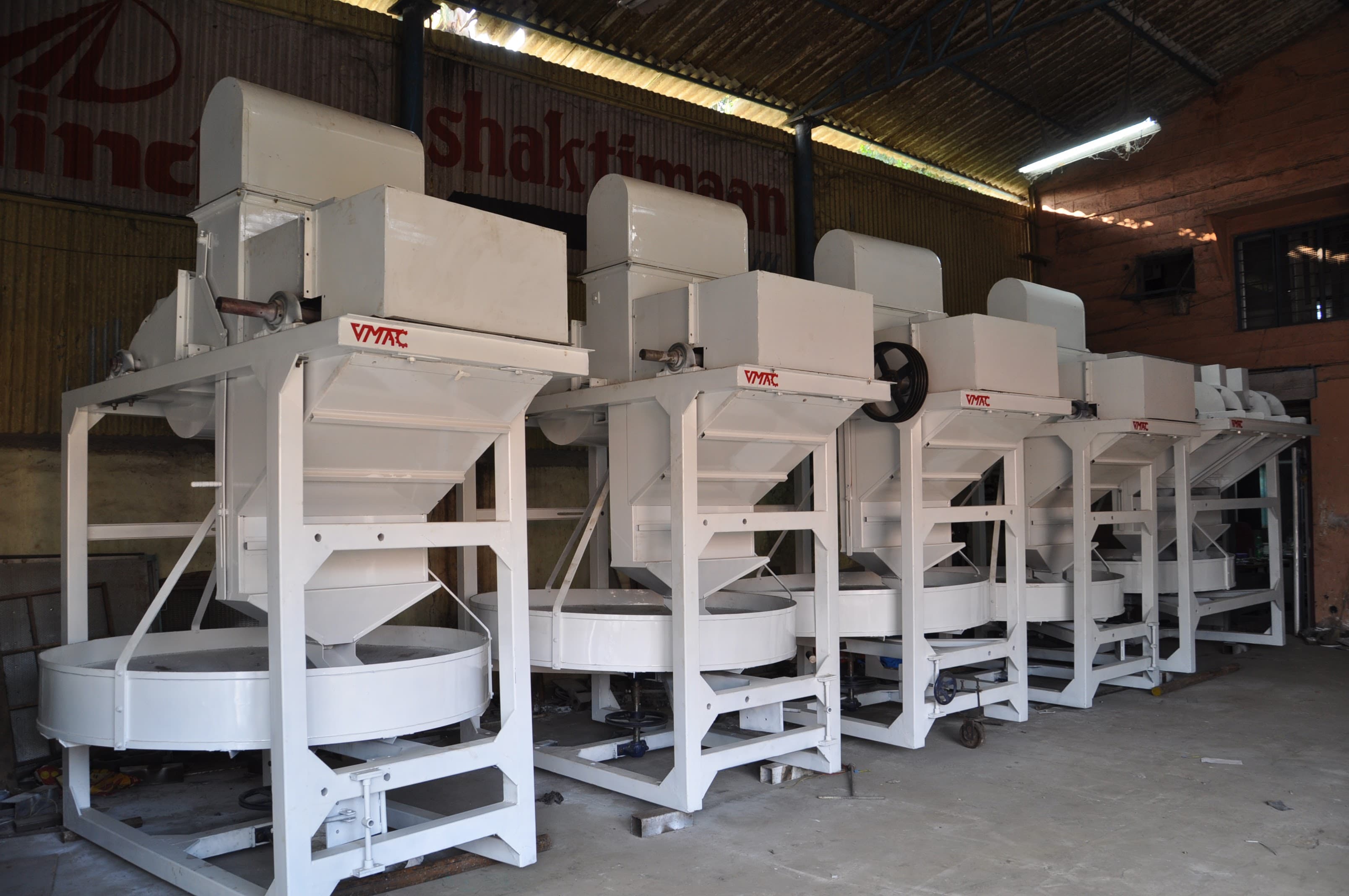
Gravity separators are the last major quality gate in a coffee processing line before colour sorting or hand-picking. They separate beans by density — the one physical property that correlates most reliably with cup quality. A well-tuned gravity separator pulls quakers, hollows, insect-damaged, and shriveled beans out of your lot automatically, doing the work of three to six hand-sorting workers at a fraction of the cost per kilogram. But buying the wrong size, misunderstanding the prerequisites, or confusing a gravity separator with a destoner leads to wasted capital and disappointing results. This guide covers what you actually need to evaluate before purchasing.
How a Gravity Separator Works
The operating principle is straightforward: two simultaneous forces act on a bed of coffee beans spread across a perforated deck.
Force 1 — Upward airflow (fluidization). A fan pushes air upward through thousands of small perforations in the deck. This airstream lifts lighter beans toward the top of the bed and lets denser beans settle to the bottom. The result is a stratified bed where heavy, well-developed beans sit on the deck surface and light, defective beans float above them.
Force 2 — Eccentric vibration on an inclined deck (directional movement). The deck vibrates in a controlled pattern driven by an eccentric motor. Because the deck is tilted, this vibration moves beans in specific directions based on where they sit in the stratified bed. Dense beans, pressed against the deck surface, grip the micro-ridges and travel uphill toward the heavy discharge. Light beans, floating on the air cushion, have no grip on the deck and slide downhill toward the lights discharge.
The combination of these two forces produces three output fractions:
- Heavies — premium-grade beans with full density and uniform structure. This is your sellable product.
- Middlings — borderline beans that sit between the heavy and light fractions. These can be re-passed through the separator or downgraded depending on your quality standards.
- Lights — reject material: quakers, hollows, shriveled, insect-damaged, and other low-density defects. This fraction gets removed from your export lot.
The elegance of the machine is that it requires no sensors, cameras, or software. Density-based separation is purely mechanical and works reliably at high throughput with minimal operator intervention once correctly tuned.
VMAC Industries
Gravity Separator
What a Gravity Separator Removes — and What It Cannot
Understanding the limits of density separation prevents you from expecting results the machine cannot deliver.
Defects effectively removed
Immature and quaker beans are the most common target. These under-developed beans have lower density than ripe cherry, and they produce a grassy, papery flavour in the cup. Gravity separation is the most effective mechanical method for removing them.
Withered and shriveled beans from drought stress are very low density and among the easiest defects to separate. They practically float off the deck.
Hollow shells and elephant ears — genetic defects that produce beans with internal voids — are extremely low density. A correctly tuned separator catches nearly all of them.
Insect-damaged beans, particularly those attacked by the coffee berry borer (CBB), develop internal tunnels that reduce density. Multi-hole damage is reliably removed. Single-hole damage with minimal internal tunnelling is harder to catch because the density reduction is small.
Floaters and overripe beans with internal breakdown, broken fragments with lower mass, and parchment remnants with very low density are all effectively separated.
Defects NOT removed
Full black beans have similar or sometimes higher density than healthy beans. A gravity separator will not catch them — you need a colour sorter downstream.
Full sour beans do not differ enough in density from sound beans to be reliably separated. These also require optical sorting.
Same-density stones cannot be removed by a gravity separator. Stones need a destoner upstream in your line, not a gravity separator. This is a common point of confusion — more on this below.
Gravity Separator vs. Destoner — They Are Not the Same Machine
This distinction matters because buyers sometimes purchase one thinking it does the other's job.
A destoner removes material that is heavier than coffee — stones, metal, glass, and other foreign objects. It works by allowing coffee beans to float on an air deck while heavy contaminants sink and travel to a separate discharge. Destoners sit upstream in the line, typically before or immediately after the huller, to protect downstream equipment from stone damage.
A gravity separator removes material that is lighter than good coffee — defective beans with reduced density. It sits near the end of the line, after hulling and screen grading, to make the final quality cut.
Both machines use air and deck vibration. Both separate by density. But they separate in opposite directions: the destoner removes the heavy fraction as reject, while the gravity separator removes the light fraction as reject. You need both in a complete processing line. They are not interchangeable.
The Critical Prerequisite: Screen-Graded Feed
This is the single most important point in this guide, and the one most frequently ignored by first-time buyers.
A gravity separator must receive screen-graded beans — not mixed sizes. You need to run each screen fraction (AA, A, B, C, PB) through the gravity separator as a separate pass.
The reason is physics. Air stratification depends on all beans in the bed having roughly the same size and shape so that density differences — not size differences — determine which beans float and which sink. If you feed a mix of Screen 18 and Screen 14 beans onto the same deck, the small Screen 14 beans will behave like light defects regardless of their density, because they present less surface area to the airstream. You will reject perfectly good small beans while keeping large defective beans.
This means your gravity separator sits after your screen grader in the line, and your effective throughput is divided by the number of screen fractions you produce. If you run four fractions (AA, A, B, PB), you are making four passes through the separator. Factor this into your capacity calculation.
The Four Adjustment Parameters
A gravity separator has four independently tuned parameters. Getting all four correct is what separates a well-running machine from one that wastes good coffee into the lights fraction or lets defects through into the heavies.
1. Feed rate controls the thickness of the bean layer on the deck. The optimal operating point is 70-80% of the machine's rated capacity. Too thin a bed and the air blows through without properly stratifying; too thick and the air cannot penetrate the bottom layers. Start at 75% of rated capacity and adjust based on output quality.
2. Air volume (CFM) is the primary fluidization control. This is the parameter you adjust first when commissioning the machine. Too little air and the bed does not stratify — everything moves to the heavy discharge regardless of density. Too much air and even good beans float off the deck and end up in the lights. Start with the manufacturer's recommended CFM for your bean type and increase gradually until you see clean separation between fractions.
3. Side tilt controls the cross-deck flow direction — how beans move laterally across the deck width. Adjust this second, after air volume is set. The side tilt determines where the boundary falls between the heavy, middlings, and lights discharge zones.
4. End raise is the longitudinal angle of the deck, controlling how fast the heavy fraction travels uphill to its discharge. Adjust this third. A steeper end raise slows the heavy fraction's travel (beans need more energy to climb), giving more separation time but reducing throughput. A shallower angle speeds throughput but reduces separation precision.
The adjustment sequence matters: air volume first, side tilt second, end raise third, feed rate as needed throughout. Do not try to compensate for incorrect air volume by changing deck angles — the physics does not work that way.
Capacity Tiers and How to Size
Gravity separators come in a range of deck sizes. The deck area directly determines throughput capacity, while the fan and vibration motor sizes scale accordingly.
| Tier | Capacity (kg/hr) | Fan Motor | Vibration Motor | Deck Size (mm) |
|---|---|---|---|---|
| Small Estate | 500 - 1,200 | 3 HP | 0.5 HP | 900 x 600 |
| Medium Estate | 1,200 - 2,500 | 5 HP | 0.75 HP | 1,300 x 800 |
| Large Estate | 2,500 - 4,000 | 7.5 HP | 1 HP | 1,600 x 950 |
| Medium Curing | 4,000 - 6,000 | 10 HP | 1 HP | 2,000 x 1,050 |
| Large Curing | 6,000 - 8,000 | 12 HP | 1.5 HP | 2,500 x 1,150 |
| Export Plant | 8,000 - 10,000 | 17 HP | 1.5 HP | 3,100 x 1,300 |
The sizing workflow
Step 1: Determine daily green coffee volume during peak season. Do not size for annual average — size for the weeks when your intake is highest. You can reduce operating hours during slow periods, but you cannot make an undersized machine run faster during peak.
Step 2: Factor in screen fractions. If you produce four screen grades (AA, A, B, PB), each one passes through the gravity separator separately. Your effective daily volume through the separator is your total green coffee volume, but you need a machine fast enough to process all fractions within your operating window.
Step 3: Size for 70-80% of rated capacity, not maximum. Running at rated maximum leaves no margin for feed surges, lot changes, or the slight throughput reduction that comes with finer separation settings. Target 75% utilization.
Step 4: Consider growth over a 3-5 year horizon. If you are expanding estate acreage or expect to take on more third-party processing, buy one tier above your current requirement. The price difference between adjacent tiers is modest compared to replacing the machine in three years.
Step 5: Check 3-phase 440V power availability. All models above the small estate tier require 3-phase power. If your facility runs on single-phase or generator power, you need to budget for electrical infrastructure upgrades.
Step 6: Verify floor space. The deck dimensions in the table above are the deck alone — you need additional clearance for the feed hopper, discharge conveyors, the fan assembly, and operator access. Measure your available floor area before selecting a model.
How to Verify Correct Separation
Once your gravity separator is running, there is a simple field check to confirm it is actually separating.
Inspect the lights fraction visually. It should contain a high concentration of visibly defective beans — shriveled, hollow, discoloured, and broken. If the lights fraction looks like good coffee, the machine is not separating properly. The most common cause is insufficient air volume: increase CFM incrementally until the lights fraction is clearly differentiated from the heavies.
Conversely, inspect the heavies fraction. It should look uniform — dense, well-developed beans with consistent size and colour. If you see obvious defects in the heavies, the machine is under-separating: air volume is too low, feed rate is too high, or the deck angles need adjustment.
The middlings fraction is your diagnostic tool. A narrow middlings stream means the machine is making a clean binary cut between good and bad. A wide middlings stream means the separation is borderline and you may need to re-pass the middlings or adjust parameters for sharper discrimination.
Maintenance: Protect the Air System
The number one failure mode on gravity separators is clogged air filters. When filters load up with dust, the fan cannot deliver adequate CFM to the deck, and stratification collapses. The machine appears to run normally — the deck vibrates, beans move across it — but separation quality drops because the air cushion is compromised. In dusty environments typical of curing works and export mills, check and clean air filters on a daily basis during production.
Beyond filters, the maintenance schedule is straightforward:
- Deck perforations: Clean periodically to prevent clogging from bean fragments, dust, and chaff. A clogged perforation is a dead zone on the deck where no air passes and no separation occurs.
- Fan belt tension: A slipping belt reduces effective CFM without any warning indicator. Check tension weekly.
- Eccentric bearings: Lubricate per manufacturer schedule. Worn bearings change the vibration pattern and affect directional movement of beans across the deck.
- Vibration mount isolators: Inspect for cracking or compression. Failed isolators transmit vibration to the frame instead of the deck, reducing separation efficiency and causing structural fatigue.
The ROI Case
A gravity separator is not a marginal upgrade — it is a grade-changing machine. For estates selling into auction or specialty markets, the density separation is what enables Plantation AA certification and specialty-grade classification. The price premium for properly graded and density-separated coffee runs 15-30% over unsorted green bean, depending on origin, season, and buyer.
For curing works and export facilities, the gravity separator automates what would otherwise require three to six hand-sorting workers per shift. The labour cost savings alone justify the equipment investment within one to two seasons at medium capacity and above.
On a medium estate or curing works running 2,500-6,000 kg/hr, the machine typically pays for itself in two to three seasons through the combination of grade premiums and labour displacement. On larger export-scale operations, the payback period is even shorter because the per-kilogram cost of mechanical separation drops as throughput increases.
Sizing a gravity separator for your line?
Tell us your daily green coffee volume, screen grades you produce, and target defect standards — VMAC's engineers will recommend the right deck size and configuration for your operation.