
VMAC Industries
·2026-04-16
How to Plan a Coffee Export Facility
Setting up a coffee export facility in India requires more than good beans and a warehouse. You need the right registrations, equipment rated for export-grade separation, and a processing line that consistently produces lots meeting Coffee Board and ICO standards. This guide walks through the entire sequence -- registration, quality infrastructure, equipment selection, processing flow, packaging, and compliance -- with the specific numbers you need to plan against.
Registration and Licensing
Before you buy a single machine, get the paperwork in order. Indian coffee exports are regulated, and operating without the correct licenses exposes you to shipment holds at port and potential forfeiture.
Required Registrations
-
IEC (Importer Exporter Code) -- Issued by DGFT. This is the base requirement for any entity engaging in cross-border trade. Apply online through the DGFT portal; turnaround is typically 3-5 working days.
-
RCMC (Registration-Cum-Membership Certificate) -- Issued by the Coffee Board of India. Valid for 3 years. The RCMC is specific to coffee; without it, your lots cannot be presented for Coffee Board quality evaluation. You must hold a valid IEC before applying.
-
GST Registration -- Mandatory for all export businesses. Coffee exports are zero-rated under GST, but registration is still required for input tax credit claims and for filing shipping bills.
-
FSSAI License -- The Food Safety and Standards Authority of India requires a license for any food processing or export operation. For facilities handling more than a few tonnes per day, you will need a Central FSSAI license rather than a state-level registration.
Coffee Board Quality Evaluation
Every export lot must undergo quality evaluation at a Coffee Board-approved lab before shipment. The Board operates labs at five locations: Bengaluru, Kushalnagar, Chikkamagalur, Coonoor, and a few satellite facilities. Evaluation covers bean size distribution, defect count, moisture, and cup quality. Lots that fail receive rejection codes -- more on those below.
Plan your facility location with lab proximity in mind. Sending samples for evaluation and waiting for results adds lead time. If you are in a major growing region (Kodagu, Chikkamagalur, Wayanad, or the Nilgiris), you are within reach of at least one lab.
Quality Infrastructure: What the Standards Actually Require
Export-grade Indian coffee is classified into well-defined grades. Your equipment must be capable of hitting these targets consistently, not just on a good day.
Coffee Board Grade Definitions (Plantation Coffees)
| Grade | Screen Size | Minimum Hole Diameter |
|---|---|---|
| Plantation AA | Screen 17+ | 6.7 mm |
| Plantation A | Screen 16+ | 6.3 mm |
| Plantation B | Screen 15+ | 6.0 mm |
| Plantation C | Screen 14+ | 5.6 mm |
| Peaberry (PB) | Separated via oblong slot decks | Varies |
Peaberry is not defined by a round screen size. It requires oblong (slotted) screen decks that separate the rounded single-seed beans from flat-faced normal beans. If you plan to sell PB as a separate grade -- and the premium justifies it -- your grader must have a dedicated PB deck.
ICO Export Defect and Moisture Limits
The International Coffee Organization sets the bar for exportable quality:
- Arabica: Maximum 86 defects per 300 g sample (New York green coffee classification)
- Robusta: Maximum 150 defects per 300 g sample
- Moisture: Minimum 8%, maximum 12.5% (per ISO 6673)
The Coffee Board uses quality codes on evaluation results:
- "S" -- Sample compliant. Cleared for export.
- "XD" -- Defect fail. The lot exceeds the allowable defect count for its declared grade.
- "XM" -- Moisture fail. Outside the 8-12.5% window.
An XD or XM result means the lot is held. You either re-process and resubmit, or downgrade the lot to a lower classification. Either path costs time and money. The goal of your equipment line is to make "S" the default outcome, not a lucky result.
Equipment Selection: The Export-Grade Dry Mill
A properly sequenced dry mill for export coffee is not a single machine -- it is a chain where each stage feeds the next. Skip a step or run machines out of order and you get poor separation, high defect counts, or damaged beans.
Here is the full sequence for an export-grade facility:
1. Pre-Cleaner
The first machine in line. Removes sticks, leaves, string, dust, and oversized foreign matter using oscillating screens and aspiration. This protects every downstream machine from damage and contamination. Do not skip this -- running unclean parchment through a huller accelerates wear on rubber rolls or friction elements.
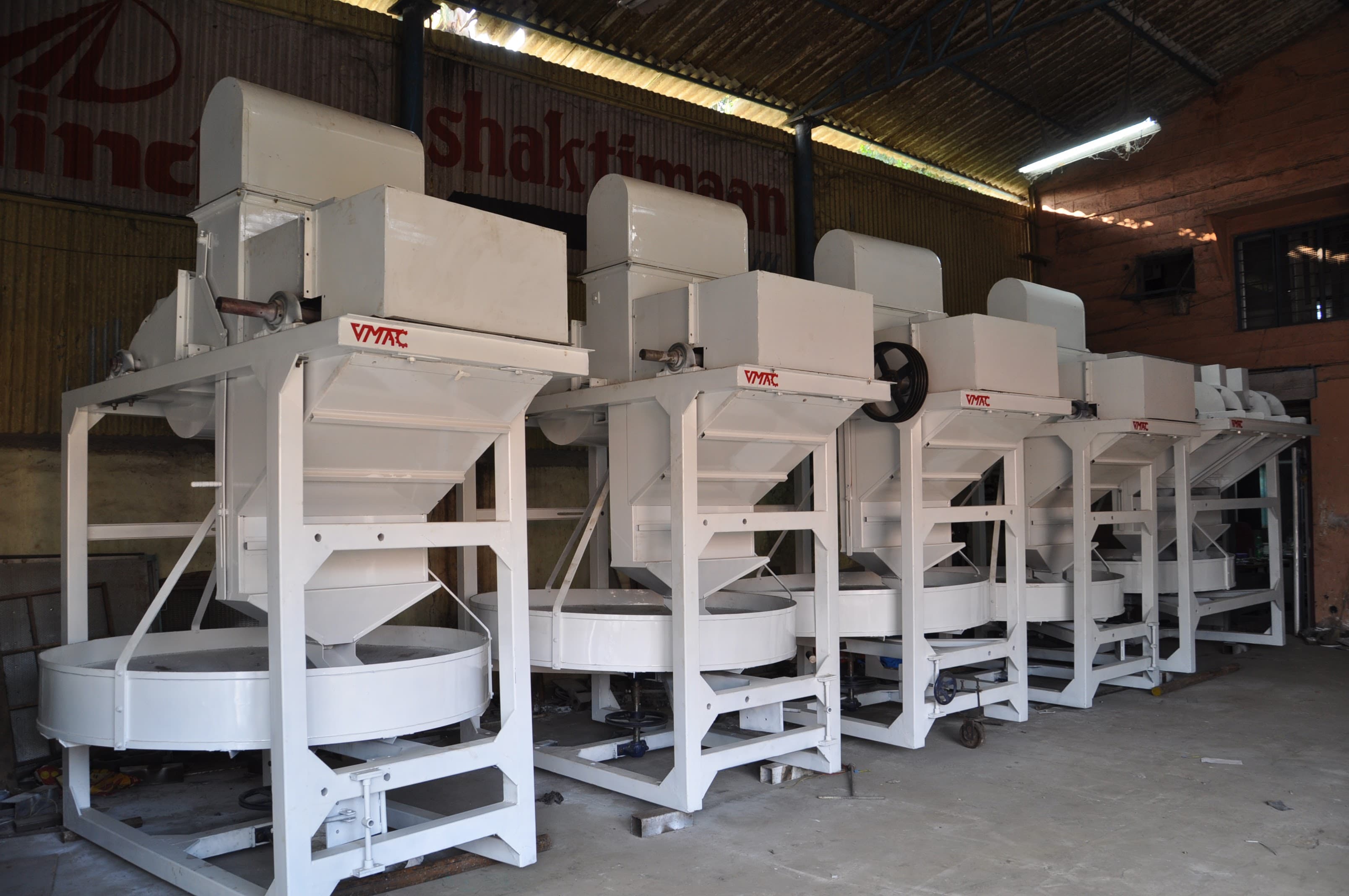
2. Destoner
Separates stones, metal fragments, glass, and other dense contaminants from the bean mass using a vibrating deck and calibrated air flow. Even a single stone in a 60 kg bag is a rejection event for most importers.
3. Huller
Removes the parchment layer (for washed/semi-washed coffees) or the dried cherry husk (for naturals). The choice between friction hullers, disc hullers, and rubber-roll hullers depends on your volume and the degree of polish required. For export, a two-stage approach -- hulling followed by a separate peeler-polisher -- gives better surface finish without cracking beans.
4. Winnower / Aspirator
After hulling, the bean mass contains loose husk, parchment fragments, and dust. An aspirator channel uses adjustable air velocity to lift and remove this light material. Clean beans drop through; chaff exits separately.
5. Peeler-Polisher
Removes the silver skin and polishes the bean surface. This is partly cosmetic -- buyers in Japan, South Korea, and parts of Europe expect a clean, polished appearance -- but it also removes a source of defect material that can trigger false rejects in optical sorting.
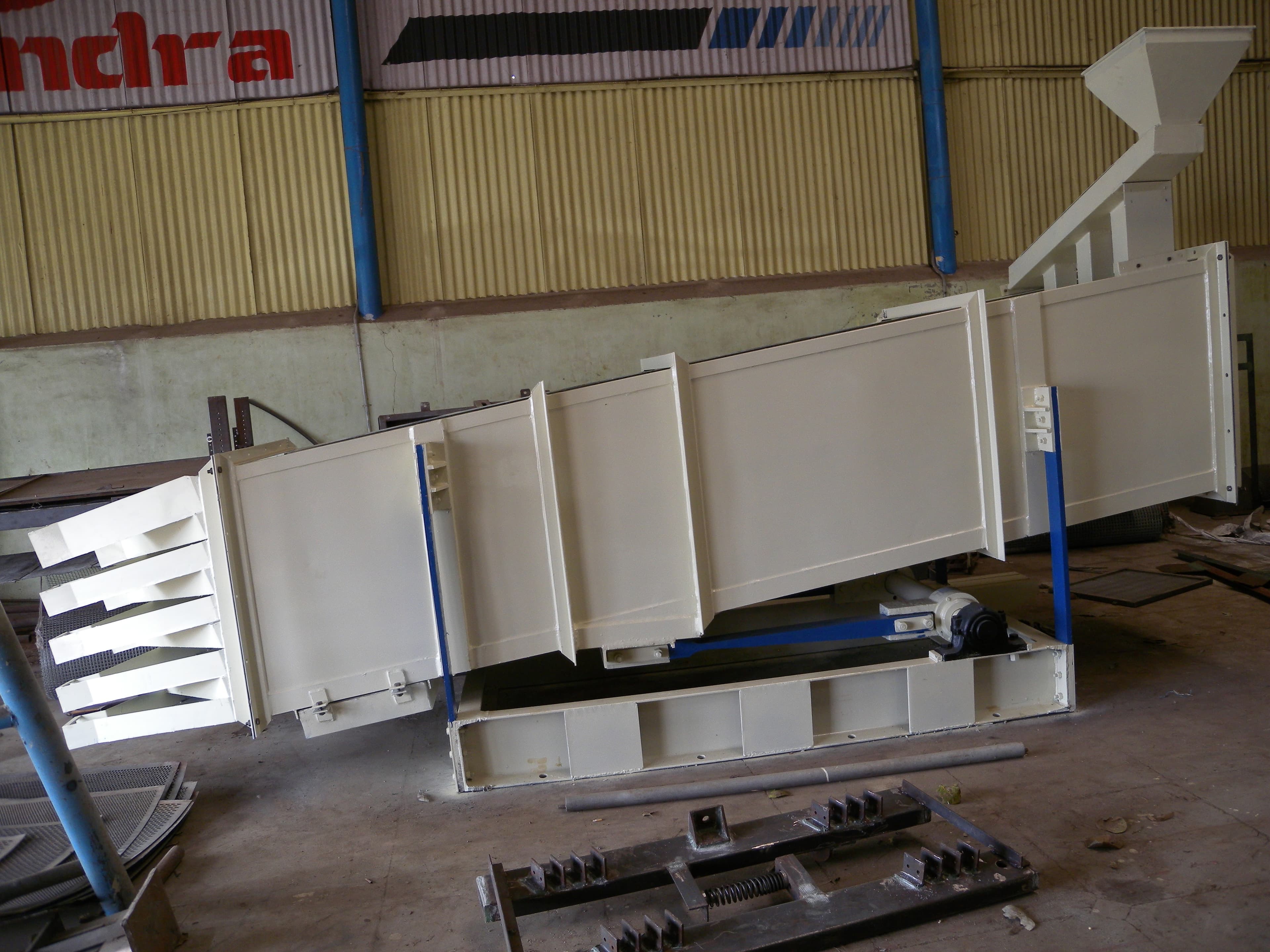
6. Screen Grader (4-5 Deck)
This is where grade separation happens. A multi-deck grader uses progressively finer round-hole screens to sort beans into AA, A, B, and C fractions, plus an oblong-slot deck for peaberry separation. A 4-deck grader is the minimum for export work; 5 decks give you cleaner cuts between adjacent grades.
The critical point: each screen fraction must be processed separately through downstream equipment. Mixing screen sizes before gravity separation defeats the purpose of grading.
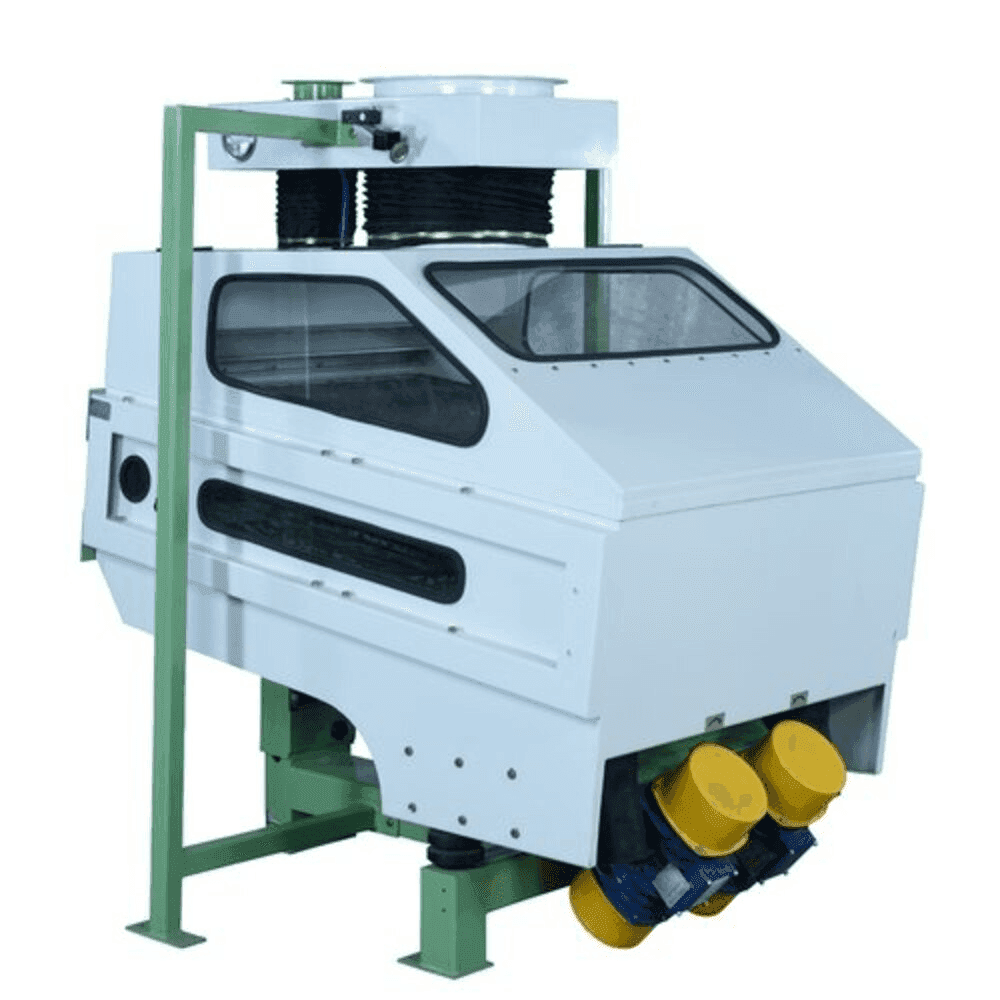
7. Gravity Separator
Separates beans by density within each screen fraction. The gravity table uses a combination of deck vibration, tilt angle, and stratified air flow to produce three outputs:
- Heavy fraction -- Dense, fully developed beans. This is your premium output.
- Middlings -- Intermediate density. May be blended back into a lower grade or re-run.
- Lights -- Under-developed, hollow, insect-damaged, or fermented beans. Reject material.
Run each screen fraction through the gravity separator separately. Mixing AA and B beans on the same table produces poor stratification because the size differential confounds density-based separation. Operate at 70-80% of rated capacity for best results. Running at full rated throughput degrades separation sharpness.
8. CCD Color Sorter
The final quality gate. A modern CCD color sorter scans every bean with high-resolution cameras (4,096 pixels per row, dual-side imaging) and ejects defects with compressed air valves in 1-3 milliseconds.
What the color sorter removes:
- Full blacks and full sours
- White/chalky beans
- Withered and shriveled beans
- Shells and broken fragments
- Quakers (under-roasted indicators in green coffee)
- Residual parchment fragments
Performance benchmarks:
- First pass: ~97% defect removal
- After two passes: ~99.5% removal
- For SCA Specialty Grade 1 (zero primary defects in 350 g): plan for 2-3 machine passes
Throughput by model:
- CS-08: 500-800 kg/hr (suitable for small exporters or single-origin lots)
- CS-64: 5,000-8,000 kg/hr (high-volume commercial export operations)
The color sorter is the most capital-intensive single machine in the line, but it is also the one that most directly determines whether your lot receives an "S" or "XD" from the Coffee Board lab.
9. Weighing and Bagging
Export coffee is typically packed in 60 kg jute bags with a GrainPro or similar hermetic liner inside. The liner maintains moisture stability during transit -- critical for keeping the lot within the 8-12.5% window when it arrives at the destination port weeks or months later. Automated weighing systems reduce bag-to-bag variance and speed up container loading.
Export-Grade Sorting & Grading Equipment
Processing Sequence: Putting It Together
The full sequence, written as a single flow:
Pre-cleaner -- Destoner -- Huller -- Winnower/Aspirator -- Peeler-Polisher -- Screen Grader (4-5 deck; produces AA, A, B, C, PB fractions) -- Gravity Separator (each fraction run separately at 70-80% capacity) -- CCD Color Sorter (2-3 passes for specialty; 1 pass for commercial) -- Weighing/Bagging (60 kg jute + GrainPro liner)
When designing your facility layout, this sequence should flow in a single direction -- ideally gravity-assisted where possible to reduce conveying costs. Place the pre-cleaner at the highest elevation and the bagging station at the lowest. Each inter-machine transfer is a potential bottleneck; size your bucket elevators and conveyors to match the throughput of the slowest machine in the chain.
Capacity Planning
Your line speed is determined by the slowest machine. In most export mills, the bottleneck is either the gravity separator (because each fraction must be run separately) or the color sorter (because multiple passes are needed for high-grade lots). Work backward from your target daily output:
- If you need 10 tonnes/day of finished, graded, sorted coffee
- And your color sorter runs at 800 kg/hr with two passes (effective ~400 kg/hr)
- You need roughly 25 hours of color sorter time -- meaning either two machines running in parallel or a larger model
Factor in 15-20% downtime for cleaning, calibration, and changeovers between lots.
Packaging and Export Documentation
Packaging Standards
- Primary container: 60 kg net weight in clean jute bags. Some buyers specify specific jute grades or bag markings.
- Hermetic liner: GrainPro or equivalent, heat-sealed. This is not optional for any shipment with more than 2 weeks of transit time.
- Marking: Each bag must display the Coffee Board lot number, grade, net weight, and exporter RCMC number. Importers may require additional marks (ICO code, contract number, destination port).
Documentation Checklist
For each export shipment, prepare:
- Coffee Board quality clearance certificate (with "S" code)
- Commercial invoice
- Packing list
- Bill of lading or airway bill
- Certificate of origin (issued by the Coffee Board or authorized chamber)
- Phytosanitary certificate (from the Plant Quarantine authority)
- ICO Certificate of Origin (for shipments to ICO member countries)
- Weight certificate (from an approved surveyor)
- FSSAI compliance documentation
Missing any single document can hold your container at port. Build a documentation checklist into your shipment workflow and assign responsibility for each item.
Export Incentives
The Indian government offers an incentive of Rs 2/kg for coffee exports to designated high-value markets: Canada, USA, Japan, New Zealand, Australia, Finland, South Korea, and Norway. This incentive is administered through the Coffee Board and is subject to periodic revision. At current Arabica prices, Rs 2/kg represents a meaningful margin improvement -- factor it into your financial model, but do not build your business case around it in case the scheme is modified.
Compliance Checklist
Use this as a pre-shipment verification list:
- IEC active and current
- RCMC valid (check 3-year expiry)
- GST registration active; LUT filed for zero-rated exports
- FSSAI license covers your declared product categories
- Coffee Board lab evaluation completed; lot received "S" code
- Moisture verified between 8.0% and 12.5% (ISO 6673 method)
- Defect count within grade limits (86/300 g Arabica; 150/300 g Robusta)
- Screen size distribution matches declared grade
- Bags marked with lot number, grade, RCMC number, and net weight
- Hermetic liners sealed in all bags
- All export documents assembled and cross-referenced to the shipment
A single "XD" or "XM" result from the Coffee Board lab means the lot is not exportable as declared. Either re-process (re-sort, re-dry) and resubmit, or reclassify to a lower grade. Build re-processing capacity into your schedule -- even well-run mills see occasional evaluation failures, particularly during peak harvest when throughput pressure increases and operators push machines beyond optimal settings.
Planning an export-grade processing line?
VMAC equipment is used by exporters across India, Ethiopia, and PNG to meet Coffee Board and ICO compliance standards. Tell us your target grades and throughput — we'll spec the right line.