
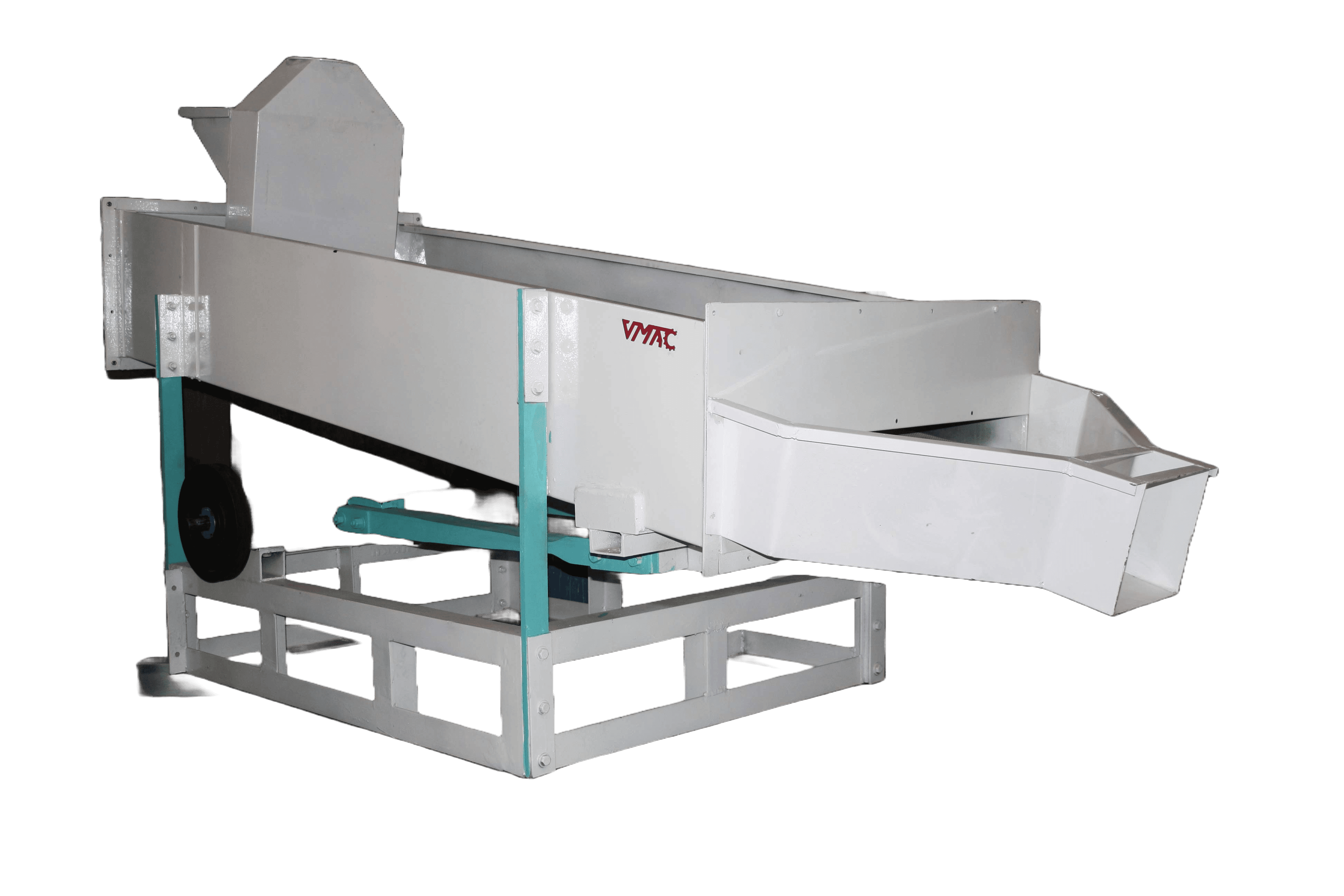
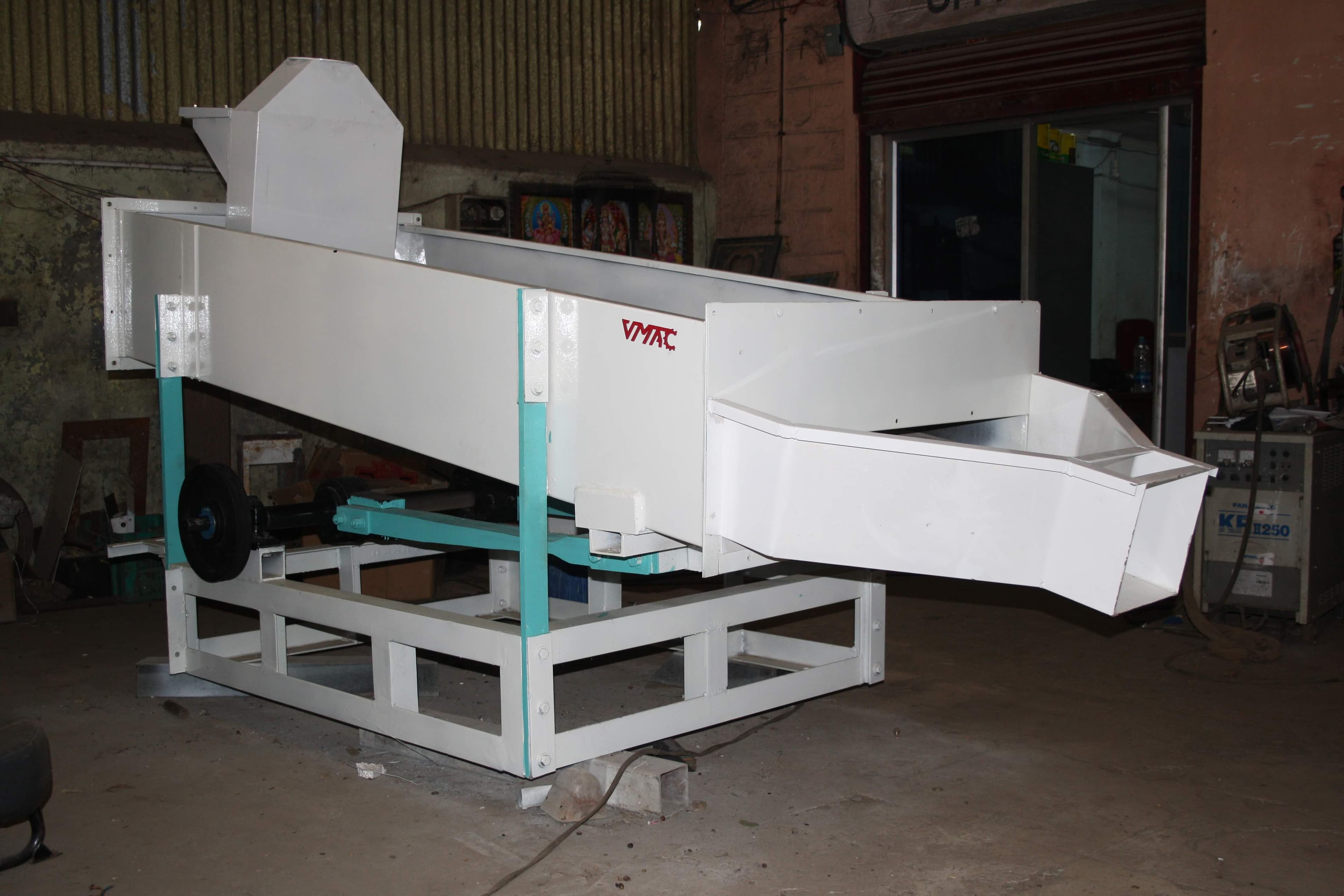
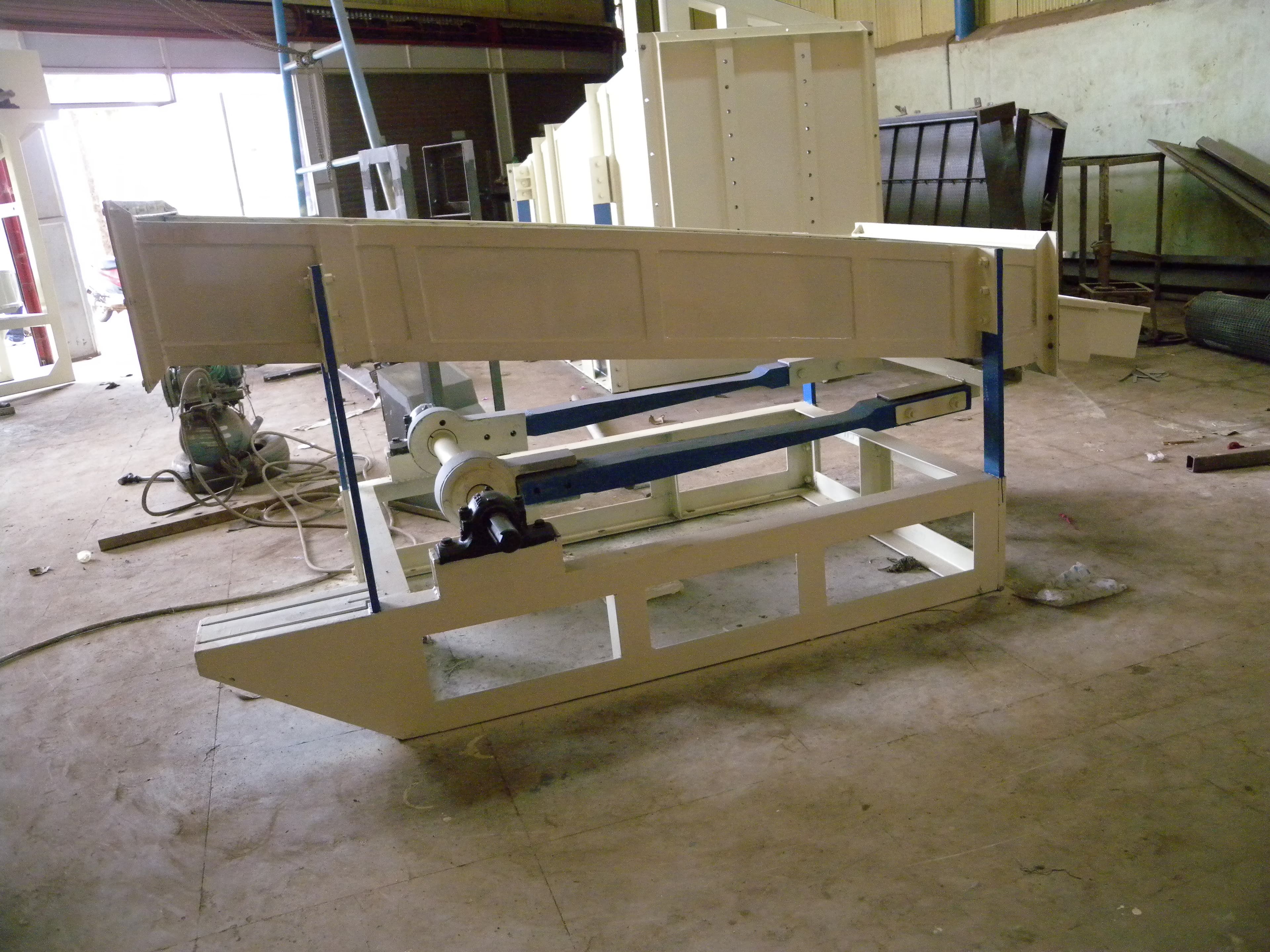
Coffee Pre-Cleaner
Vibratory scalping screen with air aspiration — removes sticks, leaves, large stones, soil clods, and light chaff from coffee cherry or parchment at intake, protecting every downstream machine in the processing line.
| Capacity | 1,000 kg/hr – 15,000 kg/hr (model-dependent) |
| Scalping screen aperture (coarse deck) | 25 mm – 50 mm (model and application dependent; field-replaceable) |
| Cleaning screen aperture (bottom deck) | 2 mm – 4 mm (removes fine soil and grit; field-replaceable) |
| Vibration motor power | 0.55 kW – 3.0 kW (model-dependent) |
| Aspiration fan motor power | 0.75 kW – 4.5 kW (model-dependent) |
| Total installed power | 1.3 kW – 7.5 kW |
| Discharge outlets | 3 — overs reject (large debris), clean coffee product, unders reject (soil / fines); light chaff and dust to cyclone |
| Power supply | 3-phase, 415V, 50 Hz (single-phase available on smallest model) |
Key Features
Dual-screen vibratory design — coarse scalping deck retains oversized debris (sticks, large stones, clods) while fine bottom screen removes soil dust and abrasive grit passing underneath the coffee layer
Integrated air aspiration column removes light foreign matter pneumatically — dry leaves, chaff, husk fragments, rope fibres, and sacking dust are drawn off and collected in a cyclone, not passed forward
First-in-line protection for all downstream equipment: hullers, destoners, pulpers, polishers, graders, and conveyors are all shielded from the gross debris that causes jamming, bridging, and accelerated wear
Handles both wet and dry intake material — cherry coffee at wet mill entry, dry natural cherry or parchment at dry mill intake, and pre-dried parchment entering curing works
Replaceable screen panels in multiple aperture sizes — coarse screen (25–50 mm) and fine screen (2–4 mm) matched to the material being processed; panels swap without tools on VMAC models
Eccentric-driven vibratory mechanism with adjustable vibration intensity and stroke — calibrate to feed rate and material type at season start without major adjustment
Dust-contained aspiration system with cyclone collector and sealed dust chamber — complies with dust emission requirements in enclosed processing halls and protects operator respiratory health
High capacity relative to installed power: processes 1–15 TPH on 1.5–7.5 kW total installed power — the lowest energy cost per tonne of any machine in the processing line
Models & Sizing
Model Range
VMAC manufactures pre-cleaners across five capacity tiers — from small cooperative and estate installations processing 1 TPH to large commercial curing works handling 15 TPH. All models feature dual-deck vibratory screening with replaceable screen panels and integrated air aspiration with cyclone dust collection. Contact VMAC for exact specifications, screen aperture options, and custom configurations.
Small Estate
1,000–2,000 kg/hr
capacity
Small estate wet mills and dry mills, farm-level processing stations, and small cooperatives. Single-shift harvest operation. Suits farms receiving cherry from their own plantation with moderate contamination levels. Entry-level protection for hullers and pulpers.
Medium Estate
2,000–4,000 kg/hr
capacity
Medium estate mills and mid-sized cooperative curing works in Karnataka and Kerala. Handles typical intake volumes from multiple smallholder farms with variable contamination. Multi-shift operation during peak harvest season.
Large Estate / Commercial Mill
4,000–7,000 kg/hr
capacity
Large estate processing facilities and medium-scale licensed curing works. Processes Plantation A, Plantation AA, and Robusta grades. Designed for continuous multi-shift operation with high intake contamination from mixed smallholder sourcing.
Industrial Curing Works
7,000–11,000 kg/hr
capacity
High-volume Coffee Board-licensed curing works and commercial export processing plants. Full harvest season continuous operation. Suits large Karnataka and Tamil Nadu curing works receiving cherry from diverse smallholder supply chains with heavy field contamination.
High Capacity Export Mill
11,000–15,000 kg/hr
capacity
Large-scale export processing mills and curing works handling 500+ containers per year. Designed for the highest throughput requirements in the Indian coffee sector. Dual-discharge configuration available for parallel processing lines.
Custom
Your specification
capacity
For operations requiring throughput beyond the standard range. VMAC engineers the machine to your exact capacity and processing conditions.
Request a Custom QuoteConfigurations
Full Model Range — Coffee Pre-Cleaner
All models feature dual-deck vibratory screening (coarse scalping + fine bottom screen) and integrated air aspiration with cyclone dust collection. Screen panels are field-replaceable. 3-phase 415V supply standard; single-phase available on smallest model. Indicative specifications — contact VMAC for exact dimensions, screen aperture selection, and custom configurations.
| Model Tier | Capacity (kg/hr) | Vibration Motor | Fan Motor | Deck Size (mm) | Best For |
|---|---|---|---|---|---|
| Small Estate | 1,000–2,000 | 0.55 kW | 0.75 kW | 800 × 500 | Small estate / farm-level processing |
| Medium Estate | 2,000–4,000 | 0.75 kW | 1.1 kW | 1,100 × 700 | Medium estate / cooperative curing works |
| Large Estate / Commercial | 4,000–7,000 | 1.5 kW | 2.2 kW | 1,400 × 900 | Large estate / mid-scale licensed curing works |
| Industrial Curing Works | 7,000–11,000 | 2.2 kW | 3.0 kW | 1,800 × 1,100 | High-volume export curing works |
| High Capacity Export Mill | 11,000–15,000 | 3.0 kW | 4.5 kW | 2,200 × 1,400 | Large-scale export processing mill |
| Custom | Built to your capacity and specification — contact us for a quote | ||||
Overview
About the Coffee Pre-Cleaner
VMAC's Coffee Pre-Cleaner — also called a scalper, coarse cleaner, or primary cleaner — is the first machine in every coffee processing line, positioned at the intake point before any other equipment receives the incoming lot. Its function is to remove gross foreign material that arrives mixed with coffee cherry at wet mill intake or with dry cherry and parchment at dry mill intake: sticks, twigs, rope fibres, burlap sacking fragments, large stones and gravel, oversized soil clods, dried leaf clusters, and light chaff. This material has no place anywhere in the processing line — it blocks screens, bridges across hullers, wears out conveyor belts, jams elevators, and causes premature failure of every machine downstream. The pre-cleaner eliminates it in a single pass before it causes any damage. The working principle combines two complementary separation mechanisms on a single vibrating frame. A coarse scalping screen (typically 25–50 mm mesh) retains oversized debris — sticks, large stones, clods, and bundled leaf material — and discharges them as overs reject. A fine bottom screen (typically 2–4 mm mesh) lets fine soil, dust, and grit pass through as unders reject, preventing abrasive fine material from coating the coffee and wearing downstream equipment. The fraction between the two screens — the actual coffee — passes forward as the cleaned product. Simultaneously, an integrated air aspiration column draws a controlled air current across the product stream, pneumatically removing light material that passed the coarse screen but is too low in density to stay in the coffee layer: dry leaves, chaff, husk fragments, and parchment dust. Dust and light material are collected in a cyclone and dust chamber; the clean coffee continues to the next machine. In Indian coffee processing — Karnataka, Kerala, and Tamil Nadu — the pre-cleaner is indispensable at wet mill cherry intake, where field-picked cherry arrives carrying the full range of farm debris, and equally critical at dry mill intake where dry cherry and parchment stored in bags or bins accumulates husk, fines, and storage debris. Coffee Board of India-licensed curing works are expected to present clean, foreign-matter-free lots for grading and export certification. The pre-cleaner is the foundational first step that makes every subsequent separation more accurate, more efficient, and more protective of the machinery investment downstream. VMAC manufactures pre-cleaners from 1 TPH for small estate and cooperative installations to 15 TPH for large commercial curing works.
How It Works
How the Pre-Cleaner Works
The pre-cleaner processes incoming coffee through two sequential physical separation stages in a single pass: a dual-deck vibratory screening stage that divides the material by size, followed by an air aspiration stage that removes low-density light material from the cleaned fraction. The result is a coffee stream that has been stripped of gross foreign material in all three size/density directions — oversized debris above, fine soil below, and light chaff aspired away — before the coffee reaches any downstream machine.
Intake and feed distribution
Coffee cherry, dry natural cherry, or parchment is fed into the pre-cleaner hopper by conveyor or bucket elevator from the intake point. An oscillating feed gate or vibratory spreader distributes the material evenly across the full width of the scalping screen. Uniform feed distribution is critical — a concentrated stream loaded onto one side of the screen creates a thick layer that the air column cannot penetrate, and the screen surface cannot clean efficiently. Feed rate should be set at 75–85% of rated capacity for best separation quality.
Coarse scalping screen — overs separation
The material lands on the top scalping screen, which vibrates in a linear or elliptical stroke. The screen aperture (25–50 mm) is sized to retain all material too large to be coffee: sticks and twigs, rope and sacking fibre bundles, large stones and gravel, bulky dried leaf clusters, large soil clods, and any other oversized debris. This material — the overs fraction — is conveyed by the vibrating screen motion to the overs discharge chute and removed from the process. Coffee cherry (15–25 mm) and parchment (10–18 mm) pass through the coarse screen to the deck below.
Fine bottom screen — unders separation and air aspiration
The coffee fraction now rests on the fine bottom screen (2–4 mm aperture). Fine soil particles, abrasive grit, sand, and dust that passed through the coarse screen but are smaller than the coffee fall through the bottom screen and are collected in the unders discharge below. While the coffee moves across the fine screen toward the product discharge, an aspiration column draws a calibrated upward air current through the material layer. Light material — dry leaves, chaff, husk fragments, parchment dust, sacking fibres — is lifted out of the coffee layer by the air current, separated from the coffee, and carried to the cyclone collector. Aspiration air velocity is adjustable and must be set high enough to remove light debris but not so high as to carry good cherry into the reject stream.
Clean product discharge and dust collection
The cleaned coffee — stripped of oversized debris, fine soil, and light chaff — exits the product discharge chute as a clean, single-fraction stream ready for the next machine in the line: typically the destoner (dry mill) or pulper (wet mill). The aspiration system discharges collected chaff, dust, and light material into a cyclone and sealed dust collection chamber. The cyclone should be emptied periodically. The three reject streams (overs, unders, cyclone dust) each indicate contamination type and can guide harvest and reception practice improvements.
Defect Separation
What the Pre-Cleaner Removes — and What It Cannot
The pre-cleaner targets three classes of contamination simultaneously: oversized material (too large for the coffee fraction), fine gritty material (too small), and light low-density material (too light). It is deliberately a coarse, high-throughput separation — its role is to protect downstream equipment and remove unambiguous non-coffee material quickly. It does not perform fine density sorting, size grading within the coffee lot, or optical colour separation; those are the roles of specialised machines later in the line.
Effectively removed
Sticks, twigs, and woody debris
The most common overs contamination at wet mill cherry intake. Field-picked cherry in Karnataka and Kerala routinely arrives with branch fragments, twigs, and woody stem sections from mechanical or rushed hand-picking. These are retained on the coarse scalping screen and discharged as overs. They would bridge across huller inlets and jam pulper feeding mechanisms if not removed at intake.
Rope, sacking fibres, and packaging debris
Polypropylene rope fragments, burlap sacking fibres, and jute strands contaminate cherry stored or transported in old bags. These long, flexible materials wrap around rotating components in hullers, pulpers, and elevators — causing catastrophic jamming. The coarse screen and aspiration system together remove them reliably.
Large stones and surface gravel
Coarse gravel and large field stones (above ~20 mm) arriving with cherry from road-dried or ground-dried lots are captured by the scalping screen. Note: smaller stones that pass through the scalping screen are not reliably removed by the pre-cleaner — these require a dedicated destoner downstream. The pre-cleaner removes only stones clearly oversized relative to the coffee fraction.
Dried leaves, leaf clusters, and chaff
Dry leaf material, leaf clusters, and light chaff that passed through the scalping screen are removed pneumatically by the aspiration column. This material is particularly abundant in natural/dry-process cherry and in dry parchment received at curing works. Leaves and chaff contaminating hulled green coffee affect visual grading and fan sorting accuracy downstream.
Soil clods, mud balls, and dense dust
Large hardened soil clods are retained by the scalping screen. Fine soil particles and abrasive grit fall through the fine bottom screen as unders. Both forms of soil contamination are removed by the pre-cleaner — large clods before they can block screens and fine soil before it abrades downstream equipment components.
Oversized foreign matter and incidental debris
Any material from the reception area that is clearly larger than coffee — broken wooden pallet fragments, stone fragments, large packaging offcuts — is retained by the scalping screen. The pre-cleaner acts as the general-purpose first-pass catch-all for everything that is obviously not coffee.
Requires further processing
Small stones, gravel, and glass (same size as coffee)
Stones and gravel particles close in size to coffee cherry or parchment will pass through the scalping screen along with the coffee. These require a dedicated destoner positioned downstream. This is why the pre-cleaner alone is never sufficient for stone removal — it removes only clearly oversized stones; a destoner is always required in addition.
Dense foreign matter at coffee-fraction size
Dense metal fragments, ceramic particles, or compacted soil nodules that happen to fall within the coffee size range pass through both screens and are not removed pneumatically. A destoner and/or magnetic separator downstream must handle these.
Defective coffee beans — blacks, sours, immatures
Black beans, sour beans, insect-damaged beans, and immature beans are not distinguishable from sound coffee by size or by weight at this stage. These require gravity separation and colour sorting later in the line. The pre-cleaner treats the entire coffee fraction as a single uniform stream.
Size grading within the coffee lot
The pre-cleaner removes material outside the coffee size range — it does not sort within the coffee fraction by screen size. Grading coffee into AA, A, B, Peaberry, and other commercial screen grades requires a dedicated coffee grader downstream.
Colour defects and discolouration
Discoloured, stained, or visually defective beans are not separable by size or density separation. Colour sorting by CCD or laser technology is required, and runs at the end of the dry mill line on clean, graded green coffee.
The pre-cleaner is a protective intake machine, not a defect-sorting machine. Its purpose is to deliver clean, gross-foreign-matter-free coffee to the first active processing machine. Stone removal, size grading, density sorting, and colour sorting are all performed by dedicated downstream machines in sequence.
Know the Difference
Coffee Pre-Cleaner vs. Coffee Destoner
The pre-cleaner and the destoner are the two cleaning machines at the start of the dry mill line, and both handle incoming cherry before it enters the huller. They are often confused or considered interchangeable — they are not. They target entirely different size and density classes of contamination, operate on different physical principles, and are both required in a complete processing line. Neither can substitute for the other.
| Feature | Coffee Pre-Cleaner | Coffee Destoner |
|---|---|---|
| Primary purpose | Remove gross foreign material — sticks, leaves, rope, large stones, fine soil, and chaff — that is obviously different in size or weight from coffee. A coarse, high-throughput protective first pass. | Remove stones, glass, metal, and dense soil clods that are similar in size to coffee but significantly denser. A precise density-based separation using an air-fluidized vibrating deck. |
| Separation principle | Dual-deck vibratory screening (size separation) plus air aspiration (light material removal). Separates by size and by low density. | Inclined vibrating deck with calibrated upward air column (density separation). Coffee is fluidized and flows downhill; dense stones grip the deck and travel uphill. Separates by high density. |
| What contaminants are targeted | Large debris (overs): sticks, large stones, leaves; fine debris (unders): soil, grit; light debris (aspiration): chaff, husk, dust. All clearly larger, smaller, or lighter than coffee. | Small stones, gravel, glass fragments, dense metal pieces, and compacted soil nodules that are within the coffee size range but far denser (~2.5 g/cm³ vs coffee ~1.35 g/cm³). |
| Can it remove small stones at coffee size? | No — stones of similar dimensions to coffee cherry pass through the scalping screen. This is the most important limitation of the pre-cleaner. A destoner is always required in addition. | Yes — this is its primary function. The density gap between stones and coffee is large enough for highly reliable separation regardless of stone size relative to coffee. |
| Position in the dry mill | First machine at intake — before the destoner, before the huller, before everything else in the line. | Second machine after the pre-cleaner — before the huller. Must run after the pre-cleaner so large debris does not bridge the destoner deck perforations and disrupt air flow. |
| Why the sequence matters | Large debris reaching the destoner blocks screen perforations and creates dead zones where stones escape into the clean stream. Pre-cleaning first protects destoner accuracy. | Stones reaching the huller cause catastrophic rubber roll damage. The destoner must run after the pre-cleaner but before the huller — it has one specific placement that cannot be changed. |
| Can it replace the other? | No — cannot reliably remove stones at coffee-fraction size. Running only a pre-cleaner sends stones to the huller. | No — cannot remove sticks, leaves, rope, and large debris. Running only a destoner sends large debris forward and large debris damages or blocks the destoner deck. |
Correct sequence: Pre-cleaner (removes gross debris of all sizes and light chaff) → Destoner (removes dense stones at coffee size) → Huller (now protected from both debris and stones). Both machines are required. Running one without the other leaves a specific contamination class unaddressed.
Processing Line
Position in the Processing Line
The pre-cleaner is always the first active machine in both wet mill and dry mill lines — the entry point for all incoming coffee. Its position before every other machine is fixed: it protects the entire line.
Cherry intake, weighing, and lot registration
Cherry received at intake, weighed by lot, and visually assessed for contamination level and quality. Heavy contamination is noted — it determines how aggressively the pre-cleaner needs to be set.
Pre-Cleaner / Scalper
This machineVibratory dual-screen scalper with air aspiration removes all gross foreign material: sticks, leaves, rope, large stones, soil clods, chaff, and fine grit. First machine in the line. Protects every downstream machine from debris-related damage.
Destoner
Vibrating inclined deck with calibrated upward air column removes stones, glass, metal, and dense soil clods at coffee-fraction size — contamination the pre-cleaner cannot catch. Must run before hulling.
Pulper (wet mill) or Huller (dry mill)
Pulper removes the cherry skin and mucilage at the wet mill; rubber-roll or disc huller removes dried parchment or husk at the dry mill. Protected from stone and debris damage by the upstream pre-cleaner and destoner.
Fermentation / washing or demucilager (wet mill)
Wet mill: fermentation tank or demucilager removes mucilage from parchment. Dry mill: proceeds directly after hulling.
Peeler / Polisher
Removes adhering silver skin from hulled beans, smooths the bean surface for improved visual grading accuracy and color sorter performance.
Winnower / Aspirator
Air column removes hulling-generated chaff, parchment dust, and light fragments. A second aspiration stage after active processing removes material generated by hulling that was not present at intake.
Coffee Grader (screen grader)
Flat or rotary screen grader separates beans by screen size — Grade AA, A, B, C, and Peaberry fractions. Must precede gravity separation, which requires uniform bean size to function correctly.
Gravity Separator
Sorts within each screen-graded fraction by density — removes immature beans, hollow shells, insect-damaged beans, and floaters. Runs on each screen grade separately.
Color Sorter (CCD / laser)
Removes colour-based defects: full blacks, partial blacks, sour beans, and discoloured beans. Requires clean, graded, polished green coffee for maximum ejection accuracy.
Weighing, bagging, and export
Final product bagged into 60 kg jute or grain-pro bags, labelled with lot, grade, crop year, and ICO mark. Certified for export by Coffee Board of India.
FAQ
Frequently Asked Questions
Why is the pre-cleaner always the first machine in the line and not positioned later?
Every machine downstream of the intake point is designed to process coffee, not mixed farm debris. A pulper's feeding rollers jam on sticks and rope. A huller's rubber rolls shred when a large stone enters. Conveyors and bucket elevators accumulate soil and grit that accelerates wear on all moving components. Screens in graders and gravity separators bridge when leaf clusters arrive. The pre-cleaner must remove this material at the entry point — before it reaches any equipment that can be damaged by it. Positioning it later in the line means every machine upstream of it has already been exposed to the debris.
Can the pre-cleaner replace the destoner, or does a separate destoner still need to be installed?
A separate destoner is always required in addition to the pre-cleaner. The pre-cleaner's scalping screen removes only stones that are clearly larger than coffee cherry — typically above 20–25 mm. Stones and gravel particles of similar dimensions to coffee (10–20 mm) pass through the scalping screen along with the coffee and proceed to the next machine. The destoner is specifically designed to catch these same-size dense contaminants using a density-based air-and-vibration separation. Running a pre-cleaner without a destoner leaves your huller exposed to the most damaging stones — the ones that sneak through at coffee size.
What screen aperture sizes should I use for cherry coffee versus parchment?
For cherry coffee at wet mill intake, the scalping (coarse) screen is typically set at 30–50 mm to retain sticks and large debris while passing cherry (15–25 mm). The fine bottom screen is set at 3–4 mm to remove soil and grit while retaining cherry. For dry parchment coffee at dry mill intake, cherry is 12–20 mm and the scalping screen is set at 25–35 mm; the fine bottom screen at 2–3 mm. VMAC supplies machines with field-replaceable screen panels in standard aperture sizes — the correct panel set for your primary material type is selected at order time, with alternatives available.
How much contamination does a typical Karnataka or Kerala cherry intake lot carry?
This varies significantly by source type. Estate cherry from well-managed Karnataka or Kerala plantations with netting-covered drying beds may have low contamination — mostly a small quantity of leaves and minor sticks. Smallholder cherry received at curing works from field-picked lots, especially Robusta from lower-altitude farms in Kerala or Chikmagalur district, can be heavily contaminated: 2–5% by weight of sticks, leaves, soil, and stones is not uncommon in peak-season intake. Pre-cleaner overs and unders discharge volumes provide a direct ongoing measurement of incoming contamination level by lot — useful for procurement quality management.
Does the pre-cleaner work on wet cherry or only on dry material?
VMAC's pre-cleaners handle both wet freshly-picked cherry and dry natural cherry or parchment. Wet cherry at wet mill intake is the most common application. Wet material tends to be heavier and may require slightly higher vibration intensity to convey effectively across the screen surface. The main adjustment for wet material is aspiration velocity — wet chaff and damp leaves are heavier than dry and require higher air flow to be pneumatically removed. The screen panels should be checked more frequently for blinding (fine soil sticking to screen wires) when processing wet material in muddy conditions.
How do I know the aspiration is set correctly — how much air is too much or too little?
The practical calibration check: observe the cyclone discharge during normal operation. The cyclone should contain light material — dry leaves, chaff, husk fragments, and fine dust — with minimal or no coffee cherry visible in the airstream. If good coffee is being pulled into the aspiration and appearing in the cyclone, aspiration velocity is too high — reduce the fan speed or close the damper slightly. If whole leaves or light chaff are passing through to the product discharge instead of being aspirated away, velocity is too low — increase it. Re-calibration is needed at the start of each new season and whenever feed material moisture or bulk density changes significantly.
What is the pre-cleaner's role when receiving parchment coffee at a curing works?
At dry mill intake in a curing works, parchment coffee arrives in bags after a storage period. Storage generates debris: bag fibres, dust, rodent-related contamination, caked fines, and occasionally stones from drying yard material that was not fully cleaned at the wet mill. The pre-cleaner at curing works intake removes this accumulated storage debris from the parchment before it enters the hulling line. It is standard practice in Karnataka and Kerala curing works to pre-clean all incoming parchment regardless of apparent cleanliness — the overs and unders discharge volumes confirm that material is always present, even in well-stored lots.
What regular maintenance does the pre-cleaner require?
The pre-cleaner requires less maintenance than almost any other machine in the line due to its simple vibratory mechanism. Key routine tasks: inspect screen panels at each shift start for blinding (fine soil clogging screen wire apertures) and clear any blocked areas — a build-up reduces throughput capacity and screening accuracy. Check and empty the cyclone dust collection chamber daily or as needed based on contamination level. Inspect rubber vibration isolation mounts weekly — worn mounts reduce vibration amplitude and screen efficiency. Lubricate eccentric vibration shaft bearings per the maintenance schedule. Check fan belt tension monthly if the fan is belt-driven. Replace screen panels when aperture wire shows visible wear or deformation — worn screen wires can enlarge the aperture, allowing oversized material to pass through.
Related guides
Learn more about this equipment
VMAC Industries
Pre-Cleaning Essentials: Protecting Your Coffee Processing Equipment
Learn how effective pre-cleaning safeguards your coffee plant from costly damage and ensures consistent bean quality throughout the production process.
Read the guide →
VMAC Industries
Why Pre-Cleaning is Crucial in Coffee Processing
Discover how pre-cleaning your coffee beans enhances quality, efficiency, and the overall success of your coffee production.
Read the guide →
Send a Enquiry Request
Retail store
Mon-Sat 9am to 5pm.
B.M road, Hassan, Karnataka 573201
Related Products
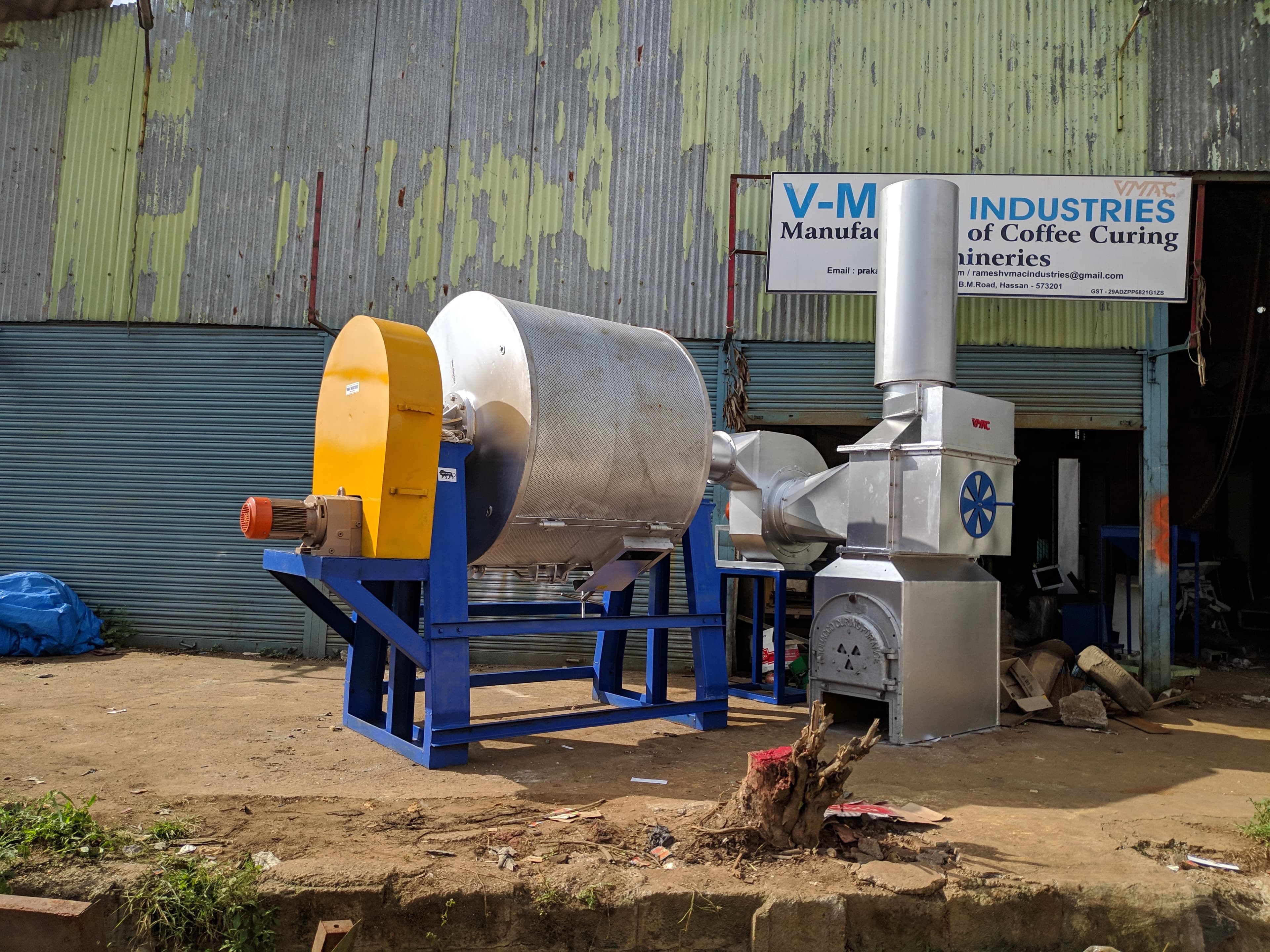
Coffee Dryer
Rotary drum dryer for parchment coffee, cherry coffee, and pepper. Reduces moisture from 50–55% post-pulping down to 10–12% for safe storage — weather-independent and significantly faster than sun drying.
Coffee Pulper
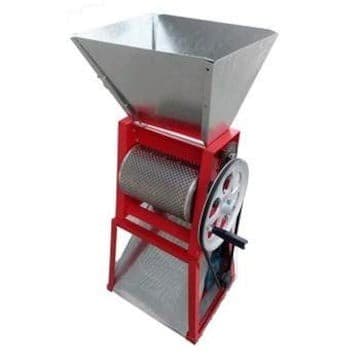
Removes the fruit skin and outer mucilage from ripe coffee cherries to expose the parchment-covered bean — the critical first step in washed and honey processing that determines cup quality from the very beginning.
Coffee Curing Machine & Complete Processing Line
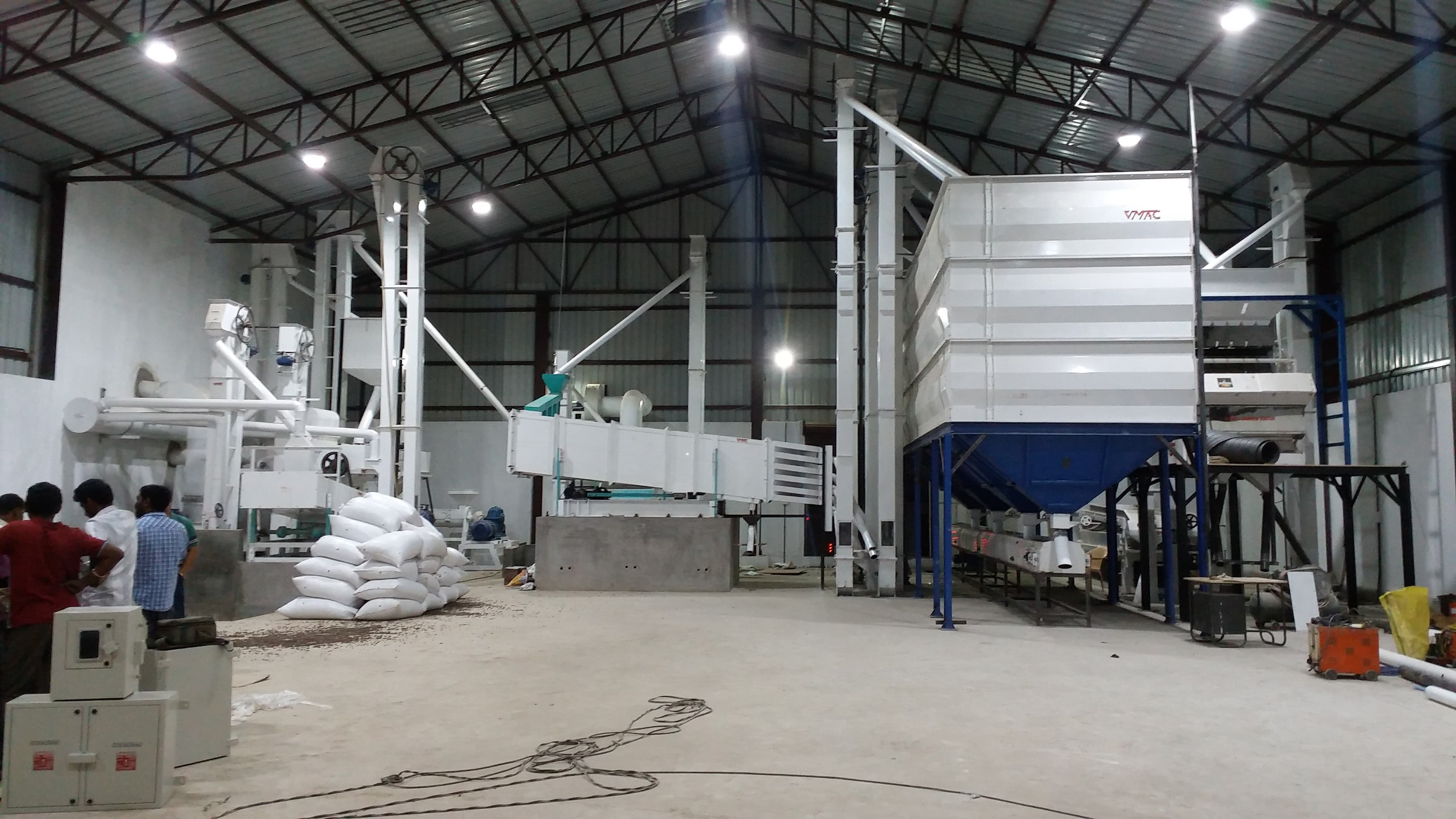
Turnkey coffee curing machines and complete wet/dry mill lines engineered by VMAC Industries — from cherry reception through export bagging, all machines matched to your capacity and supplied from a single manufacturer.