
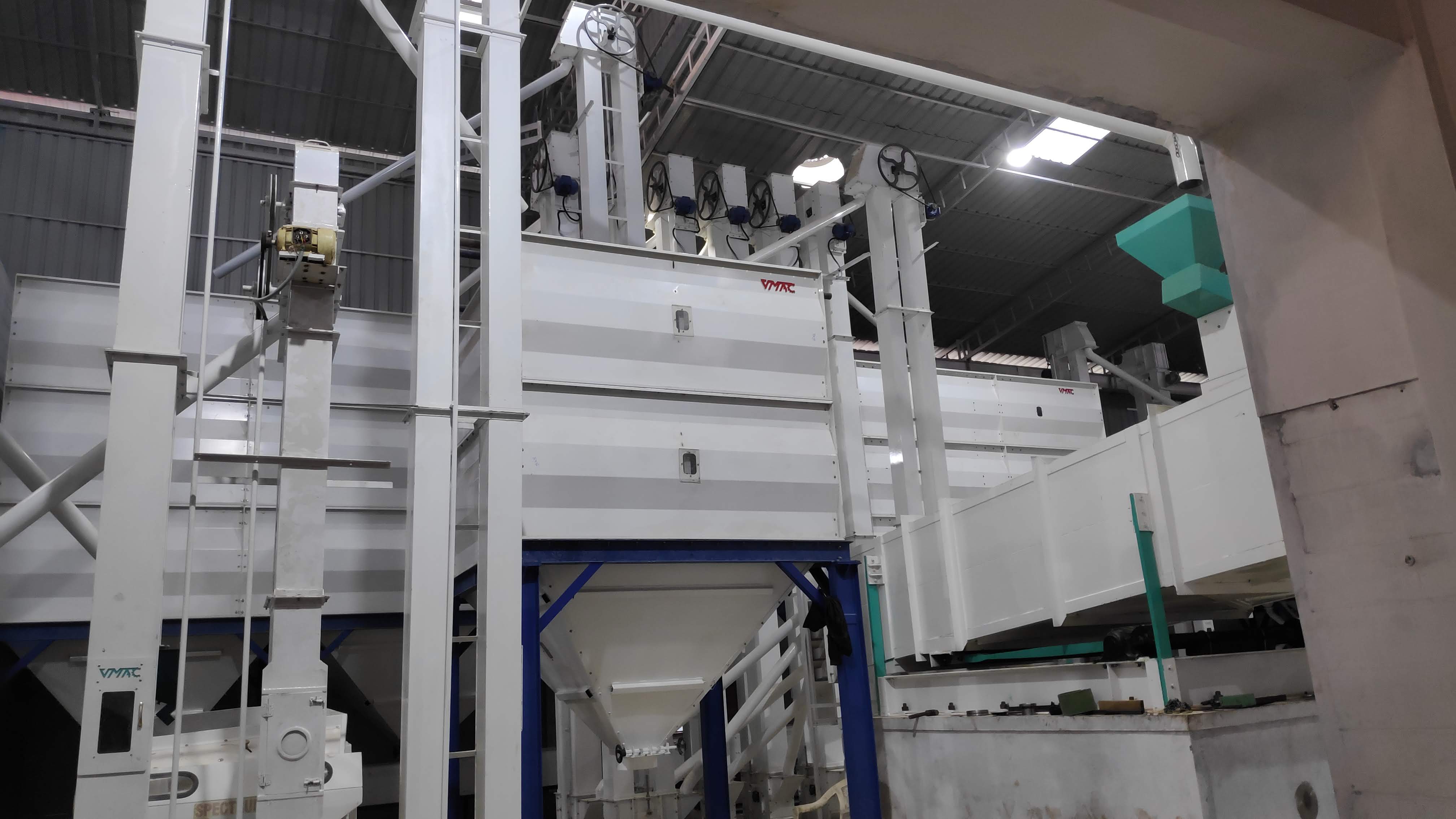
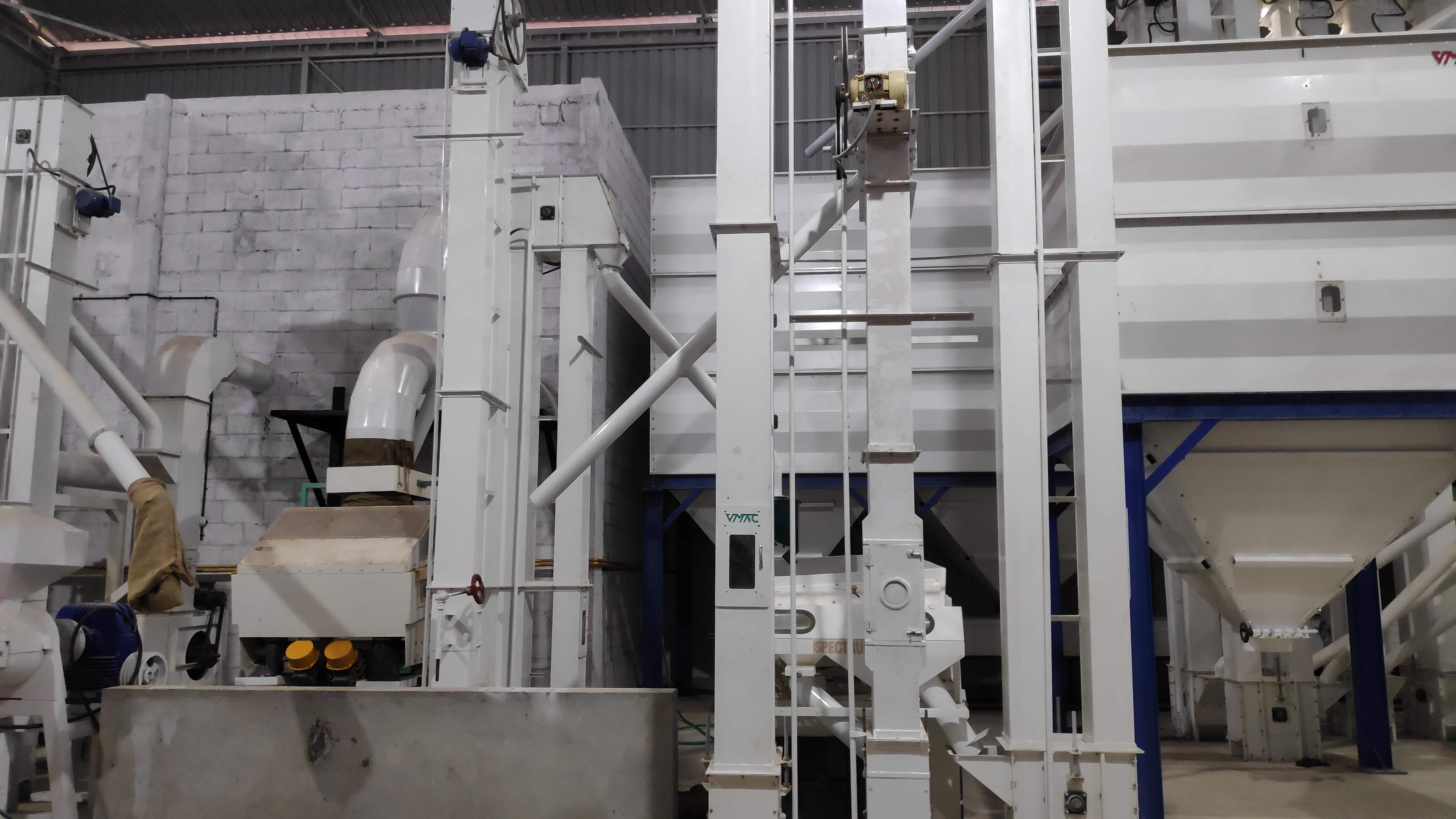
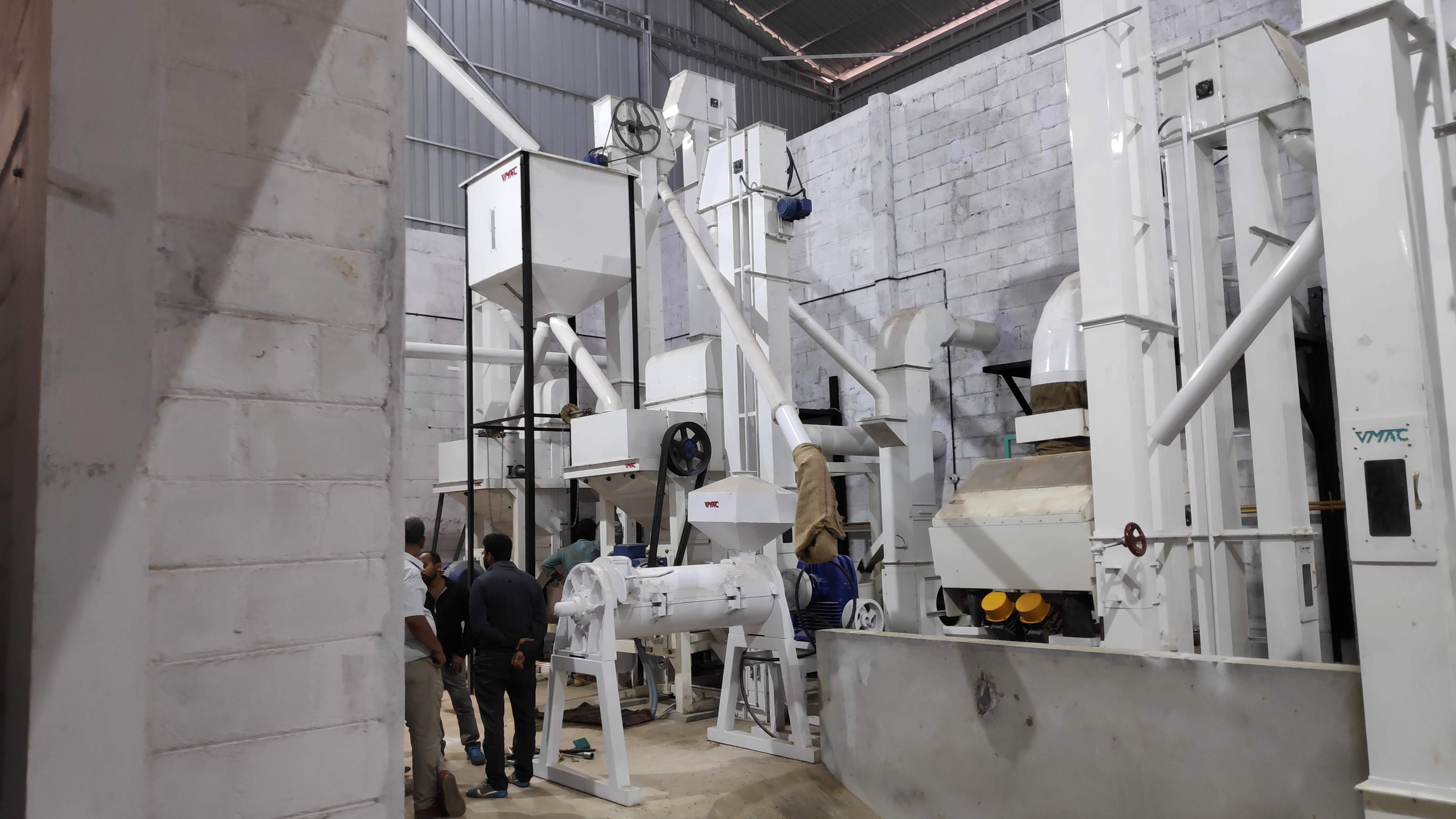
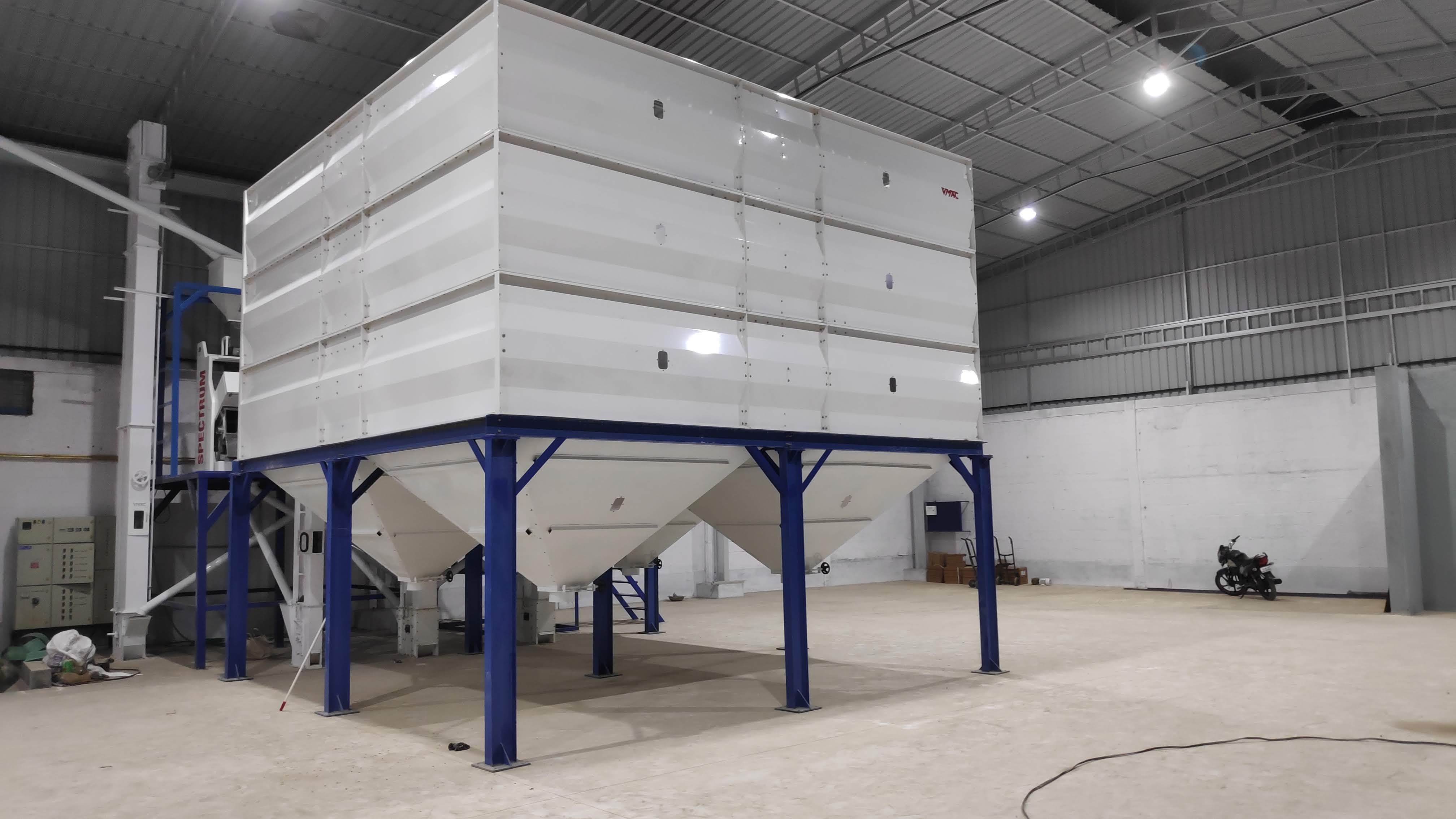
Coffee Curing Machine & Complete Processing Line
Turnkey coffee curing machines and complete wet/dry mill lines engineered by VMAC Industries — from cherry reception through export bagging, all machines matched to your capacity and supplied from a single manufacturer.
| Plant capacity range | 500 kg/hr to 50 TPH (cherry or parchment input) |
| Line types available | Wet processing (washed), dry processing (natural), combined wet & dry |
| Power supply | 3-phase, 440 V, 50 Hz; total connected load sized to plant capacity |
| Wet mill machines | Cherry classifier, pulper, eco-demucilager, channel washer, mechanical dryer |
| Dry mill machines | Pre-cleaner, destoner, huller, winnower, screen grader, gravity separator, colour sorter |
| Material handling | Belt conveyors, bucket elevators, pneumatic conveyors, silos, hoppers |
| Capacity matching | All machines engineered to the same nominal throughput; buffers sized for continuous flow |
| Customization | Site-specific layout, elevation diagrams, utility requirements supplied with quotation |
| Support | Installation, commissioning, operator training, spare parts supply, remote technical assistance |
Key Features
Complete wet mill line: cherry classifier, pulper, eco-demucilager, channel washer, and mechanical dryer
Complete dry mill line: pre-cleaner, destoner, huller, winnower, screen grader, gravity separator, and colour sorter
Integrated material handling: belt conveyors, bucket elevators, hoppers, and bulk storage silos
Capacities matched across every machine in the line — no bottlenecks, no oversized stages
Custom plant layouts designed around your site dimensions, input volume, and target output grades
Factory commissioning and on-site installation support by VMAC field engineers
Operator training conducted on-site before plant handover
Single-supplier spare parts availability and dedicated after-sales service
Models & Sizing
Processing Line Tiers by Capacity
VMAC plants are configured around five capacity tiers. All throughput figures refer to cherry input (wet lines) or parchment/cherry input (dry lines). Actual green yield depends on coffee variety and processing method.
Small Estate Mill
500 kg/hr – 1 TPH
capacity
Single-estate wet mills, small cooperative reception centres, smallholder groups processing 300–600 bags per season
Medium Estate Mill
1 TPH – 3 TPH
capacity
Mid-size estates with 50–200 acres under coffee, cooperative central wet mills, specialty micro-mills producing single-origin lots
Large Estate / Small Curing Works
3 TPH – 8 TPH
capacity
Large integrated estates, small licensed curing works handling coffee from multiple estates, trader-operated wet mills
Licensed Curing Works
8 TPH – 20 TPH
capacity
Licensed curing works and secondary processors handling multi-estate cherry or parchment, export-oriented processing hubs
Large Export Processing Plant
20 TPH – 50 TPH
capacity
Large-scale export processing plants, commodity exporters, government or institutional processing facilities, multi-origin blending operations
Custom
Your specification
capacity
For operations requiring throughput beyond the standard range. VMAC engineers the machine to your exact capacity and processing conditions.
Request a Custom QuoteConfigurations
What's Included at Each Line Tier
Machine inclusion by capacity tier — wet mill, dry mill, and material handling
| Machine / Section | Small Estate (0.5–1 TPH) | Medium Estate (1–3 TPH) | Large Estate (3–8 TPH) | Curing Works (8–20 TPH) | Export Plant (20–50 TPH) |
|---|---|---|---|---|---|
| Cherry reception hopper | Yes | Yes | Yes | Yes | Yes |
| Pre-cleaner | Yes | Yes | Yes | Yes | Yes |
| Cherry classifier | Optional | Yes | Yes | Yes | Yes |
| Disc pulper | Yes | Yes | Yes | Yes (multiple units) | Yes (multiple units) |
| Eco-demucilager | Optional | Yes | Yes | Yes | Yes |
| Channel washer | Yes | Yes | Yes | Yes | Yes |
| Mechanical dryer | Optional | Optional | Yes | Yes | Yes |
| Huller | Yes | Yes | Yes | Yes | Yes |
| Aspirator / winnower | Yes | Yes | Yes | Yes | Yes |
| Screen grader (multi-deck) | Yes | Yes | Yes | Yes | Yes |
| Gravity separator | Optional | Yes | Yes | Yes | Yes |
| Colour sorter | Optional | Optional | Yes | Yes | Yes |
| Bucket elevators | Yes | Yes | Yes | Yes | Yes |
| Belt conveyors | Yes | Yes | Yes | Yes | Yes |
| Storage silos / bins | Optional | Optional | Yes | Yes | Yes |
| Automatic weighing & bagging | No | Optional | Optional | Yes | Yes |
| Installation & commissioning | Yes | Yes | Yes | Yes | Yes |
| Operator training | Yes | Yes | Yes | Yes | Yes |
| Custom | Built to your capacity and specification — contact us for a quote | ||||
Overview
About the Coffee Curing Machine & Complete Processing Line
VMAC Industries supplies complete, integrated coffee processing units and plants for estates, cooperatives, curing works, and export facilities across India and abroad. Our turnkey line covers every stage of coffee processing: cherry reception and pre-cleaning, wet processing (pulping, demucilaging, washing, and mechanical drying), followed by the full dry mill sequence (hulling, aspiration, screen grading, gravity separation, and optical colour sorting), and finally export preparation through weighing and bagging. Each plant is engineered around your site, your cherry input volumes, and your target output grade — not assembled from catalogue off-cuts. We supply both wet processing (washed) lines and dry processing (natural) lines, as well as combined facilities that handle both methods. A wet mill line includes cherry classifiers, disc or drum pulpers, eco-demucilagers or fermentation tanks, channel washers, and mechanical dryers. A dry mill line for parchment or cherry includes pre-cleaners, destoners, horizontal or vertical shaft hullers, winnowers, multi-deck screen graders, gravity separators, and CCD or LED colour sorters. Material handling — belt conveyors, bucket elevators, storage silos, and hopper systems — is engineered into the layout so that capacity is continuous and matched at every transfer point. Sourcing your entire processing line from VMAC eliminates the capacity mismatch, delivery delays, and accountability gaps that arise when machines come from multiple manufacturers. Every machine in the line is sized to the same throughput, so no single stage becomes a bottleneck. Installation and commissioning is managed by our field engineers, who have set up hundreds of coffee processing units and plants across the coffee-growing regions of India. Spare parts are stocked and supplied from our manufacturing facility, and operator training is conducted on-site before handover. One supplier, one technical contact, one parts source — for the life of the plant.
How It Works
How a Complete Coffee Processing Line Works
Coffee moves through two distinct processing pathways — wet (washed) and dry (natural) — before converging at the dry mill for grading, sorting, and export preparation. VMAC supplies the full sequence for both pathways, or a combined facility that handles both.
Cherry reception and pre-cleaning
Freshly harvested cherry is received at a hopper or reception pit and conveyed to a pre-cleaner that removes leaves, twigs, soil clods, and other field debris. A density-based cherry classifier then separates floaters (unripes and empties) from sinkers (ripe, dense cherry). Only dense cherry passes to the next stage; waste fractions are discharged separately.
Wet processing — pulping, demucilaging, and washing
In the washed pathway, ripe cherry is fed to a disc or drum pulper that removes the outer fruit skin, leaving mucilage-covered parchment. The parchment then passes to an eco-demucilager (mechanical mucilage remover) or enters fermentation tanks for enzymatic breakdown. After demucilaging, the parchment is conveyed through a channel washer where mucilage residue and remaining floaters are flushed away. Clean parchment exits at high moisture content and moves to drying. In the dry (natural) pathway, whole cherry bypasses pulping and is transferred directly to drying infrastructure.
Drying
Parchment or whole cherry is dried to a stable moisture content of approximately 11–12% (parchment) or 12–13% (cherry). VMAC supplies mechanical drum dryers and belt dryers for estates and curing works where high throughput or limited yard space makes sun-drying insufficient. Drying is the longest stage in the line and must be sized carefully to match pulping or reception capacity.
Dry mill — hulling, aspiration, and grading
Dried parchment coffee is fed to a horizontal or vertical shaft huller that removes the parchment layer (and the dried fruit in the case of natural cherry). An aspirator or winnower draws off the light parchment dust and chaff, leaving clean green bean. The green coffee then passes through a multi-deck oscillating screen grader that separates beans by size (screen numbers 13 through 20 are standard for Arabica). Size-graded coffee moves to a gravity separator, which stratifies beans by density within each screen grade, separating heavy, well-filled beans from lights and defects.
Final sorting and export preparation
Size- and density-graded coffee passes through a CCD or LED optical colour sorter that detects and ejects colour defects — blacks, browns, and pale beans — that cannot be removed mechanically. The finished green coffee is conveyed to an automatic weighing and bagging unit that fills jute or GrainPro sacks to the specified export weight (typically 60 kg). Finished bags are conveyed to a palletising or dispatch area.
Know the Difference
Coffee Curing Machine & Complete Processing Line vs. Multi-supplier assembly of machines from different manufacturers
Many buyers piece together a processing line from different machine suppliers — one for the pulper, another for the huller, a third for the colour sorter. Comparing that approach against sourcing the complete line from VMAC:
| Feature | Coffee Curing Machine & Complete Processing Line | Multi-supplier assembly of machines from different manufacturers |
|---|---|---|
| Capacity matching across machines | All machines engineered to the same throughput — no bottlenecks | Each supplier sizes to their own standard; mismatches are common and costly to fix after installation |
| Installation coordination | Single VMAC field team installs and commissions the full line | Multiple supplier engineers on site simultaneously; scheduling conflicts and handover disputes are typical |
| Accountability for line performance | VMAC is responsible for the complete line throughput and output quality | Each supplier is responsible only for their individual machine; no one is accountable for overall line performance |
| Spare parts sourcing | All consumables and wear parts from a single VMAC source; one call, one invoice | Parts ordered from multiple suppliers with different lead times and minimum order quantities |
| Line layout and civil interface | VMAC provides complete elevation drawings, floor-load specifications, and utility schedules for the whole plant | Each supplier provides drawings for their section only; integration is left to the buyer's engineer |
| Operator training | Structured on-site training covering the full line before handover | Each supplier trains on their machine only; operators must learn integrations independently |
| Future capacity expansion | VMAC can extend the line with matched additional machines; upgrade path is defined | Expansion requires re-sourcing from all original suppliers, often with model discontinuities |
A multi-supplier approach may be appropriate when individual machines are being added to an existing line of known specification. For a greenfield plant or full-line replacement, a single-supplier turnkey approach significantly reduces commissioning risk.
Processing Line
Complete Coffee Processing Sequence — Cherry to Export Bag
The following is the full machine sequence for a combined wet and dry mill plant. Wet and dry processing lines share the same dry mill section from hulling onwards.
Cherry reception hopper
Wet and dry process both start here
Pre-cleaner
Removes leaves, twigs, soil, and field debris
Cherry classifier
Floaters (unripe/empty) separated from sinkers (dense ripe cherry)
Pulper
This machineWet process only — removes outer skin; dry process routes to drying
Eco-demucilager or fermentation tank
Wet process only — removes mucilage mechanically or enzymatically
Channel washer
Wet process only — final mucilage flush and density separation
Mechanical dryer (or drying beds)
Reduces moisture to 11–12% (parchment) or 12–13% (natural cherry)
Pre-cleaner (dry input)
Optional second pre-cleaning before dry mill for natural coffee
Huller
Removes parchment from washed coffee, or husk + parchment from natural
Winnower / aspirator
Removes parchment dust and chaff by aspiration
Screen grader
Separates by bean size across multiple screen decks (screens 13–20)
Gravity separator
Separates heavy, well-filled beans from lights and defects within each screen fraction
Colour sorter
CCD or LED optical sorter ejects colour defects — blacks, browns, pales
Weighing and bagging
Automatic filler into jute or GrainPro sacks at specified export weight
FAQ
Frequently Asked Questions
What's included in a complete coffee processing plant from VMAC?
A VMAC complete coffee processing plant covers the full sequence from cherry reception to export bagging. Depending on the processing method selected, this includes: a reception hopper, pre-cleaner, cherry classifier, pulper, demucilager, channel washer, mechanical dryer (wet mill section); and huller, winnower/aspirator, multi-deck screen grader, gravity separator, colour sorter, and weighing and bagging unit (dry mill section). Material handling — belt conveyors, bucket elevators, and storage silos — is included and integrated into the plant layout. Installation, commissioning, and operator training are provided as part of the supply.
Do you supply wet processing lines, dry processing lines, or both?
VMAC supplies both wet (washed) processing lines and dry (natural) processing lines, as well as combined facilities that can handle both methods. A wet mill line includes the pulper, demucilager, channel washer, and dryer upstream of the dry mill. A dry processing line routes cherry directly from reception to drying infrastructure and then to the dry mill. If your estate or facility processes both washed and natural lots, we can design a single plant with split-path capability.
How long does installation and commissioning take?
Installation time depends on plant capacity and site readiness. A small estate mill (500 kg/hr – 1 TPH) typically takes 5–10 days to install and commission once civil works are complete. A medium estate mill (1–3 TPH) typically takes 10–20 days. Large curing works and export plants (8 TPH and above) may require 4–10 weeks depending on the number of machines, site complexity, and availability of utilities. VMAC's installation team coordinates with your site engineer and provides a detailed installation schedule and civil/utility requirements document in advance.
Can you design a line for my specific throughput requirement?
Yes. VMAC plants are engineered to your specified cherry input volume or green output requirement, not standard off-the-shelf configurations. We size each machine in the line — including all conveyors, elevators, and buffers — to the same nominal capacity so that no stage becomes a bottleneck. To prepare a quotation, we typically need: your target capacity in kg/hr or TPH, the processing method (wet, dry, or combined), the cherry or parchment type (Arabica, Robusta, or mixed), available power supply, and any site constraints.
What's the minimum order for a complete line versus individual machines?
VMAC supplies both complete lines and individual machines. There is no formal minimum order for a complete line — we supply turnkey plants starting from small estate mills at 500 kg/hr. Individual machines can be ordered separately for line additions, replacements, or upgrades. However, if you are setting up a new facility, we strongly recommend ordering the full line together so that all machines are sized and commissioned as a matched system. Mixed-supplier lines frequently encounter capacity mismatch issues that are expensive to resolve after installation.
Do you provide operator training?
Yes. On-site operator training is included with every complete plant supply. Our commissioning engineer conducts structured training covering: machine start-up and shutdown procedures, feed rate and parameter adjustment, daily cleaning and lubrication, identification of common faults, and basic maintenance tasks. Training is conducted in the local language where possible and covers all machines in the line. A machine-specific operation and maintenance manual is supplied for each unit.
What after-sales support does VMAC offer?
VMAC provides after-sales support through: a dedicated spare parts supply from our manufacturing facility with standard wear-part kits available for all machines in our range; remote technical assistance by phone and video call for troubleshooting; and scheduled preventive maintenance visits by our field engineers. For curing works and large export plants, annual maintenance contracts are available. Because VMAC manufactures all machines in the line, parts are available for the full service life of the plant — not discontinued when a model is updated.
How are machine capacities matched across the line?
When VMAC designs a processing line, every machine is specified to the same nominal throughput. We also size buffer hoppers and conveyors between stages to absorb short-term flow variation, so that downstream machines are never starved by a momentary upstream lag. The dryer section is a common pinch point in many poorly designed plants — we size drying capacity to match the pulper's wet output, not just the dry mill's input. You will receive a capacity flow diagram with your quotation showing the rated throughput at each stage.
Do you handle civil construction or building works?
No. VMAC supplies machinery only. We do not undertake civil construction, structural works, roofing, electrical wiring beyond the machine panel, or plumbing. However, we provide complete civil interface documents with every plant quotation: floor plan layouts with machine positions and anchor-bolt locations, elevation drawings, floor-load specifications, utility requirements (power, water, drain), and recommended building dimensions. These documents are designed to be handed directly to your civil contractor.
Can an existing processing line be expanded or upgraded using VMAC machines?
Yes. VMAC regularly supplies individual machines or line sections to expand existing plants. Common upgrades include adding a gravity separator or colour sorter to a dry mill line that lacks them, replacing an ageing huller with a higher-capacity unit, or adding a second pulper and demucilager to increase wet mill throughput. When integrating VMAC machines into an existing line, we assess the rated capacities of the surrounding machines and confirm that the addition will not create a new bottleneck. Provide us with your existing machine list and rated capacities, and we will recommend the appropriate specification.
What is a coffee curing machine?
In the Indian coffee trade, a 'coffee curing machine' — also called a coffee curing unit or coffee processing unit — refers to the full set of dry mill machinery used in a coffee curing works to process dried parchment or cherry into export-ready green coffee. The curing process includes hulling (removing the dried parchment or husk), aspiration/winnowing (removing chaff), screen grading (separating by bean size), density separation (gravity separator removes immature and defective beans), and optical colour sorting (removes black, sour, and discoloured beans). VMAC supplies all of these machines individually or as a matched, integrated curing plant — the same equipment used in Coffee Board of India-licensed curing works across Karnataka, Kerala, and Tamil Nadu.
What is the difference between a coffee curing machine and a coffee processing plant?
The terms are often used interchangeably in the Indian industry — coffee curing machine, coffee curing unit, coffee processing unit, and coffee processing plant all refer to similar facilities. Technically, a coffee curing machine or curing unit refers specifically to the dry mill section — the machinery used after the coffee has been dried, to remove husk, grade, separate, and sort the green beans ready for export. A coffee processing plant in the broader sense includes both the wet mill (pulping, demucilaging, washing, drying) and the dry mill (curing). VMAC supplies both: standalone curing lines for estates that buy dried parchment for further processing, and integrated wet-plus-dry mills for estates that process from fresh cherry through to export grade.
Which machines are included in a coffee curing line?
A standard VMAC coffee curing line for export-grade processing includes: pre-cleaner (intake scalping), destoner (stone removal), huller (parchment or cherry husk removal), winnower/aspirator (chaff removal), peeler-polisher (silver skin removal and bean polishing), screen grader (separation by bean screen size — AA, A, B, C, Peaberry), gravity separator (density sorting — removes immature, hollow, and insect-damaged beans), and CCD colour sorter (removes black, sour, and discoloured beans). The line is connected by belt conveyors, screw conveyors, and bucket elevators sized to match throughput. Bulk storage silos and weighing/bagging equipment complete the plant.
Related guides
Learn more about this equipment
VMAC Industries
Cost of a Complete Coffee Processing Plant
A realistic cost breakdown for coffee processing plants in India — from small estate mills to large export facilities. Capacity tiers, what drives cost, operating expenses, and how to plan your investment.
Read the guide →
VMAC Industries
Coffee Processing Plant Layout Guide
How to design the layout for a coffee processing plant — machine sequence, linear flow principles, capacity matching, wet mill and dry mill zoning, and site infrastructure requirements for estates and curing works.
Read the guide →
Send a Enquiry Request
Retail store
Mon-Sat 9am to 5pm.
B.M road, Hassan, Karnataka 573201
Related Products
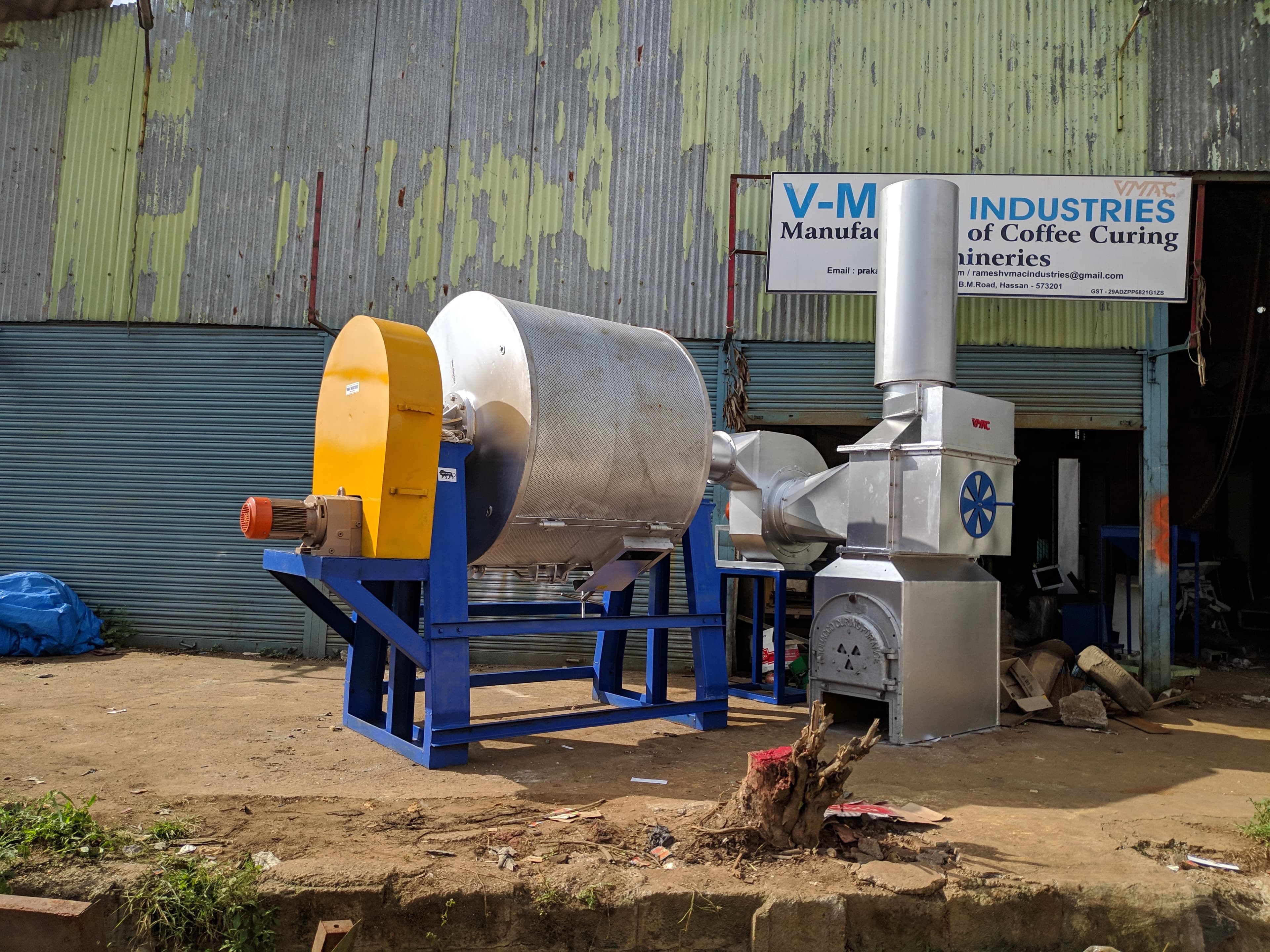
Coffee Dryer
Rotary drum dryer for parchment coffee, cherry coffee, and pepper. Reduces moisture from 50–55% post-pulping down to 10–12% for safe storage — weather-independent and significantly faster than sun drying.
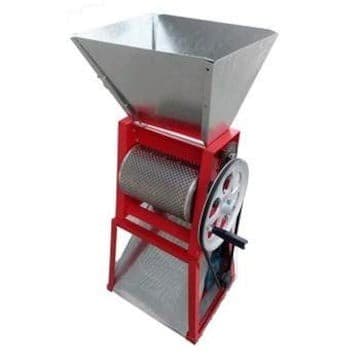
Coffee Pulper
Removes the fruit skin and outer mucilage from ripe coffee cherries to expose the parchment-covered bean — the critical first step in washed and honey processing that determines cup quality from the very beginning.
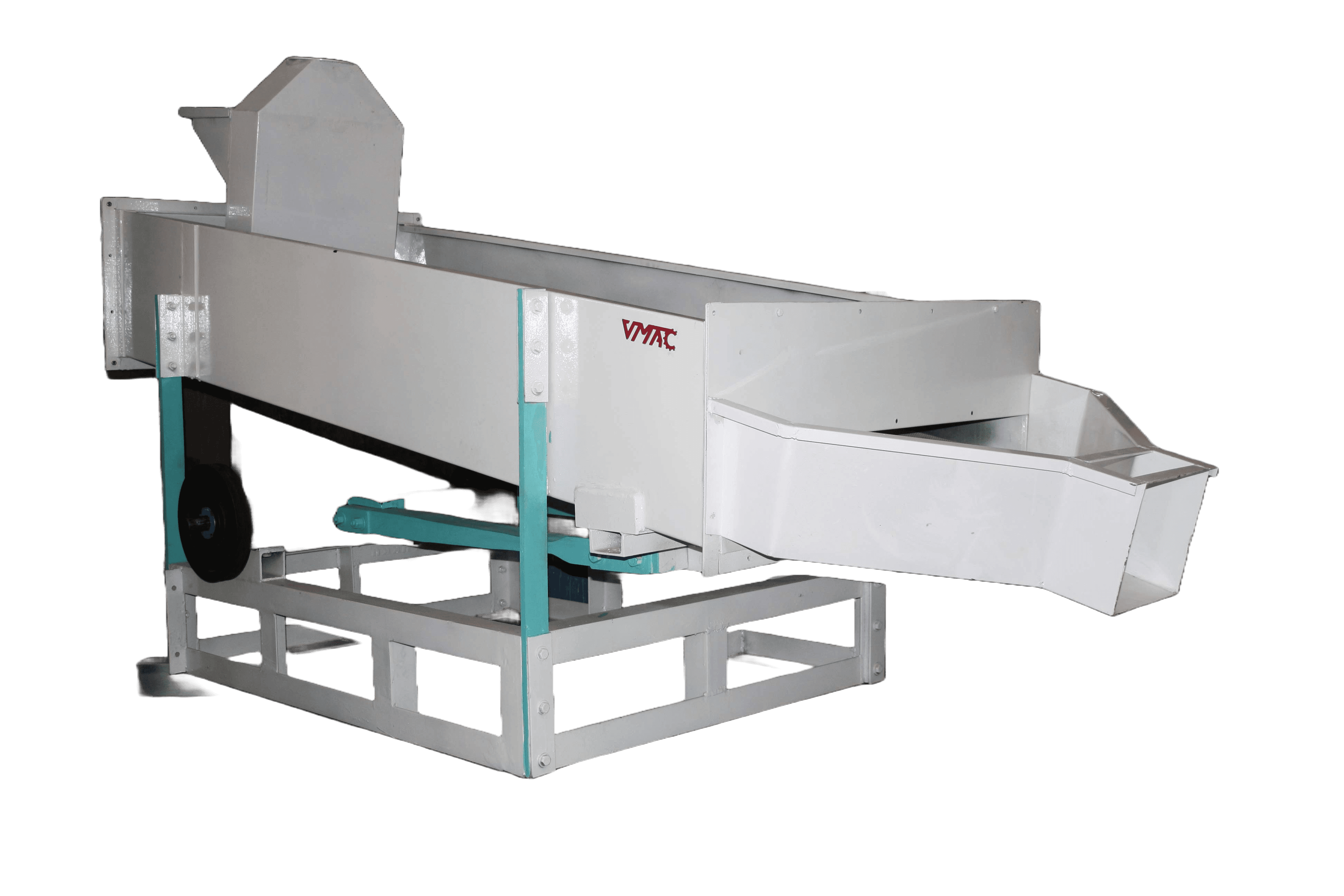
Coffee Pre-Cleaner
Vibratory scalping screen with air aspiration — removes sticks, leaves, large stones, soil clods, and light chaff from coffee cherry or parchment at intake, protecting every downstream machine in the processing line.