
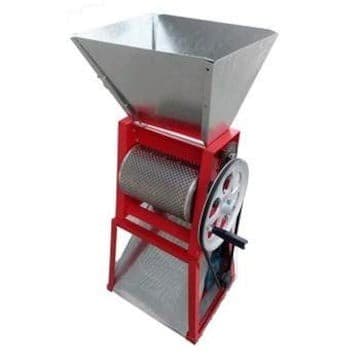
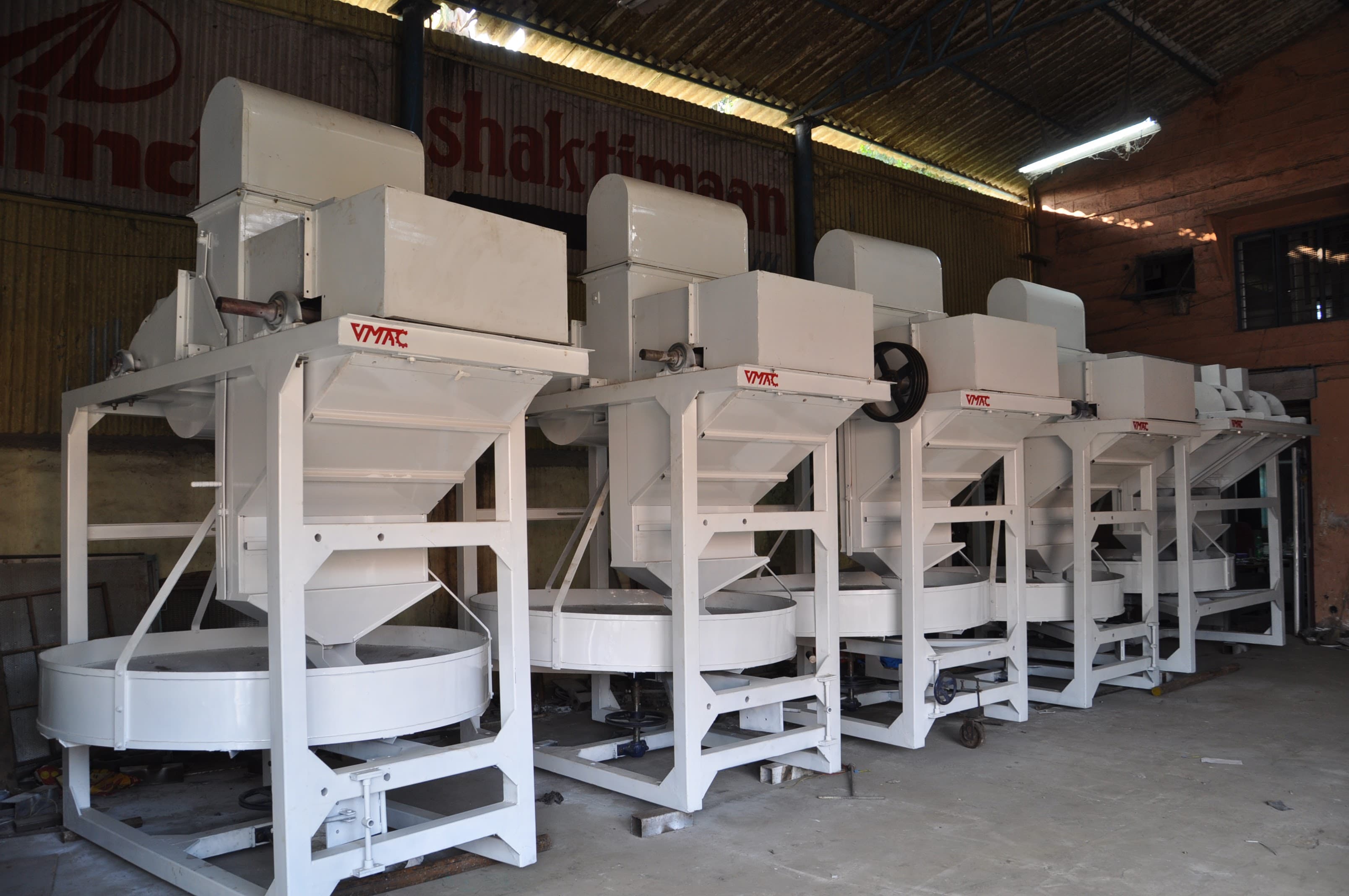
Coffee Pulper
Removes the fruit skin and outer mucilage from ripe coffee cherries to expose the parchment-covered bean — the critical first step in washed and honey processing that determines cup quality from the very beginning.
| Capacity | 100 – 15,000 kg cherry/hr (model dependent) |
| Pulper type | Disc pulper (standard) / Drum pulper (high volume) |
| Disc diameter | 250 mm – 800 mm (model dependent) |
| Breast plate material | Hardened cast iron / food-grade stainless steel (SS304) |
| Gap adjustment range | 0.5 mm – 8 mm (infinitely adjustable) |
| Water consumption | 2 – 10 litres per kg cherry (recirculating system: 2–4 L/kg) |
| Motor power | 0.75 HP – 15 HP (single-phase and 3-phase options) |
| Bean breakage rate | < 2% at correct gap setting with ripe pre-sorted cherry |
| Output | Parchment coffee with mucilage + cherry skin / pulp (separate discharge) |
| Power supply | Single-phase 230V or 3-phase 415V, 50 Hz |
Key Features
Precision gap adjustment between disc and breast plate — independently set per cherry variety and harvest batch to minimise bean breakage while eliminating floaters
Stainless steel or food-grade hardened cast-iron wetted parts resist pulp acids and allow easy cleaning between processing sessions
Disc pulper and drum pulper configurations available — disc for small-medium estate precision, drum for high-volume commercial throughput from 2,000 kg cherry/hr upward
Low water consumption: recirculating water channel designs reduce pulping water to 2–4 litres per kg cherry — critical for water-scarce regions and wastewater management compliance
Integral cherry channel and breast plate channel design keeps whole cherries separated from pulped parchment, reducing cherry re-mixing and downstream fermentation contamination
Capacity range from 100 kg cherry/hr (small cooperative washing station) to 15,000 kg cherry/hr (large estate central pulping unit) — models scale with production without changing operating principles
Hardened pulping disc or drum surface is replaceable as a wear part — extends machine service life significantly without full-unit replacement
Compatible with upstream flotation tanks and cherry classifiers for pre-sorted ripe-cherry feed — improves pulp cleanliness and reduces breakage by ensuring uniform cherry size at the gap
Pulp discharge chute positioned to feed directly into pulp press or composting channel — minimises handling of wet pulp and reduces wastewater BOD load at source
Models & Sizing
Right-Sized for Every Operation
VMAC manufactures coffee pulpers in four capacity tiers covering small cooperative washing stations through large estate central pulping units. All disc-pulper models share the same adjustable breast plate mechanism; drum pulpers are available from the Medium Estate tier upward. Contact VMAC for exact dimensions, custom configurations, and multi-disc configurations for high-volume installations.
Small Cooperative / Micro-Mill
100 – 500 kg cherry/hr
capacity
Small washing stations serving 5–20 smallholder farmers, micro-mill operators, and specialty estates processing single-pick selective harvests. Single-disc configuration. Suits Arabica estates in Coorg and Chikmagalur and washing cooperatives in East Africa.
Medium Estate
500 – 2,000 kg cherry/hr
capacity
Medium estates and cooperative central pulping stations processing 50–200 acres of bearing Arabica per harvest. Single or twin-disc configuration. Common in Wayanad, Coorg, and high-altitude Kenya cooperative stations. Disc or drum configuration available.
Large Estate / Central Processing Station
2,000 – 6,000 kg cherry/hr
capacity
Large integrated estates and multi-farm central processing stations. Twin or triple-disc, or drum pulper configuration. Handles full-day harvest of 200–800 acres. Suits large Indian estate companies, Ethiopian cooperative unions, and Central American beneficios.
Commercial / Industrial Drum Pulper
6,000 – 15,000 kg cherry/hr
capacity
High-volume commercial central pulping stations and large estate groups. Drum pulper design for maximum throughput with lower maintenance intervals than equivalent multi-disc configurations. Suits large estates and cooperative processing hubs in Karnataka, Ethiopia, and East African export-volume operations.
Custom
Your specification
capacity
For operations requiring throughput beyond the standard range. VMAC engineers the machine to your exact capacity and processing conditions.
Request a Custom QuoteConfigurations
Full Model Range — Coffee Pulper
All disc pulper models feature infinitely adjustable gap setting, replaceable disc and breast plate wear parts, stainless or food-grade cast-iron wetted surfaces, and single-phase or 3-phase motor options. Drum pulper models available from Medium Estate tier upward. Indicative specifications — contact VMAC for exact dimensions and bespoke configurations.
| Model Tier | Capacity (kg cherry/hr) | Pulper Type | Motor Power | Water Use (L/kg cherry) | Best For |
|---|---|---|---|---|---|
| Small Cooperative / Micro-Mill | 100 – 500 | Disc (single) | 0.75 – 1.5 HP | 4 – 8 | Small washing station / micro-mill / specialty single-pick |
| Medium Estate | 500 – 2,000 | Disc (single/twin) or Drum | 2 – 5 HP | 3 – 6 | Medium estate / cooperative central station |
| Large Estate / Central Processing Station | 2,000 – 6,000 | Disc (twin/triple) or Drum | 5 – 10 HP | 2 – 5 | Large estate / multi-farm central processing |
| Commercial / Industrial Drum Pulper | 6,000 – 15,000 | Drum | 10 – 15 HP | 2 – 4 | High-volume commercial / cooperative export station |
| Custom | Built to your capacity and specification — contact us for a quote | ||||
Overview
About the Coffee Pulper
VMAC's Coffee Pulper — also called a cherry pulper, coffee depulper, or depulping machine — removes the outer exocarp (fruit skin) and a portion of the mesocarp (mucilage) from freshly harvested coffee cherries to expose the parchment-covered green bean beneath. This is the defining entry point of wet-process and honey-process coffee: everything downstream in fermentation, washing, and drying is shaped by how cleanly and gently the pulping step is performed. Two principal designs are available. The disc pulper uses a rotating abrasive disc working against a fixed adjustable breast plate — the narrow gap between disc and plate tears the skin while allowing the bean to pass through intact. Gap adjustment is the operator's primary control: too tight causes bean breakage and cracked parchment; too loose passes whole or partially pulped cherries (floaters). Disc pulpers are the dominant choice for small and medium Arabica estates in Coorg, Chikmagalur, and Wayanad — precise, easy to calibrate, easy to maintain. The drum pulper uses a textured rotating cylinder with a larger processing surface area and is suited for high-volume commercial estates and central processing stations handling 2,000 kg cherry/hr and above. Before the pulper, a flotation tank or cherry classifier should remove under-ripe, overripe, and damaged cherries — ripe cherry sinks, unripe floats. Feeding only uniform ripe cherry produces clean pulping with minimal bean damage and eliminates the primary source of fermentation defects. After pulping, the parchment coffee — still coated in mucilage — flows to fermentation tanks or a demucilager for mucilage removal before washing and drying. The despulpadora de café (Central America), despolpador de café (Brazil), mesin pulper kopi (Indonesia), and máy xát vỏ cà phê (Vietnam) are all regional names for the same machine. Regardless of origin, the mechanical principles and critical operating parameters are identical. VMAC manufactures disc and drum pulpers from 100 kg cherry/hr for small cooperative washing stations to 15,000 kg cherry/hr for large estate central pulping units — all with adjustable gap settings, stainless-contact food-grade wetted parts, and low water consumption designs suitable for water-scarce harvest regions.
How It Works
How It Works
A coffee cherry pulper works by mechanically separating the soft fruit skin (exocarp) and outer mucilage (mesocarp) from the harder parchment-covered bean inside. The gap between the rotating disc and the fixed breast plate is the controlling variable — it determines whether the machine strips skin cleanly or damages the bean beneath.
Cherry feed and water assist
Ripe cherries — ideally pre-sorted by a flotation tank or cherry classifier to remove floaters and unripe fruit — enter the pulper hopper and flow by gravity and water current onto the rotating disc. Water is introduced at the feed point to lubricate the cherry passage and reduce friction heating. Consistent feed rate is important: starving the disc causes bean damage from direct contact; overloading causes incomplete pulping.
Gap adjustment — the critical setting
The gap between the rotating disc and the fixed breast plate is set manually before processing begins and checked during the first 10–15 minutes of operation. The correct gap is tight enough that the skin tears and releases the bean, but wide enough that the parchment-covered bean passes without being pinched, cracked, or broken. Gap varies by cherry variety, bean size, and ripeness. Indian Arabica (Coorg, Chikmagalur) and Kenya AB cherries require different settings. Operators confirm correct setting by inspecting the output: zero whole cherries should pass; broken parchment rate should be below 2%.
Disc rotation tears the skin
As cherries press between the rotating disc surface and the stationary breast plate, the abrasive disc grips the soft skin and tears it open. The disc surface rotates at 400–900 RPM (model dependent). The harder parchment-covered bean, being more rigid, is squeezed through the gap and exits the rear of the breast plate while the torn skin remains on the disc face and is discharged separately. Some mucilage is dragged off with the skin; the remainder adheres to the parchment and must be removed by fermentation or mechanical demucilaging downstream.
Parchment coffee exits — mucilage intact
Pulped parchment coffee exits the breast plate channel in a stream mixed with water. At this stage the beans still carry a significant mucilage coat — typically 15–25% of their wet weight. This mucilage layer must be managed: in the washed process, it is removed by fermentation (12–48 hours in fermentation tanks) then washed away in washing channels. In the honey process, varying amounts of mucilage are deliberately left on to influence drying flavour development.
Skin and pulp discharge — wastewater management
Cherry skin and wet pulp are discharged separately through a dedicated chute. Wet pulp has a very high BOD (biological oxygen demand) — typically 40,000–80,000 mg/L — and must not be discharged directly to waterways. Best practice routes the pulp directly to a pulp press (which dewaters and compresses it for composting or fuel use) or to a covered compost bay. Wastewater from the pulping channel is similarly managed through settling ponds or anaerobic treatment systems before land irrigation.
Know the Difference
Coffee Pulper vs. Eco-Pulper / Penagos-type (combined pulper + demucilager)
The standard disc or drum pulper and the eco-pulper (Penagos-type combined machine) are often compared because both remove the cherry skin — but they have fundamentally different outputs, water requirements, and process implications. The choice depends on your target process type, water availability, and capital position.
| Feature | Coffee Pulper | Eco-Pulper / Penagos-type (combined pulper + demucilager) |
|---|---|---|
| Primary function | Removes cherry skin only — parchment exits with full mucilage coat intact | Removes cherry skin AND mechanically strips most of the mucilage in a single pass |
| Output process type | Produces washed (fully fermented) or honey process material — operator controls downstream mucilage treatment | Defaults to honey or natural process by design — mucilage is partially or fully removed dry, without fermentation tanks |
| Water consumption | 2–10 litres per kg cherry; standard design requires active water flow for transport and cooling | 0.3–1.5 litres per kg cherry; water reduction is a core design feature — suited for water-scarce regions |
| Fermentation tank requirement | Required for fully washed process — mucilage must be broken down by fermentation before washing | Fermentation tanks optional or eliminated — mucilage removed mechanically, reducing processing cycle from 24–48 hours to same-day |
| Flexibility for different process profiles | High flexibility — operator can produce washed, yellow honey, red honey, or black honey by varying downstream steps after pulping | Lower flexibility — machine is optimised for a specific mucilage-removal level; changing process profile requires mechanical adjustment |
| Capital cost | Lower — single-function machine; simpler construction; lower purchase price at equivalent cherry throughput | Higher — integrated demucilaging mechanism adds complexity and cost; typically 2–3× price of a comparable disc pulper |
| Pulp and wastewater management | Wet pulp discharge requires pulp press or composting; fermentation wastewater requires settling ponds — higher effluent management cost | Reduced effluent volume due to lower water use; mucilage partially captured in pulp fraction rather than dissolved in fermentation water — lower wastewater treatment burden |
For most small and medium Indian estates running washed Arabica — the dominant process profile in Coorg, Chikmagalur, and Wayanad — a standard disc pulper followed by fermentation tanks and washing channels is the established and cost-effective approach. The eco-pulper is the correct choice where water is severely constrained, where fermentation tank construction is not viable, or where the estate specifically targets honey-process production.
Processing Line
Where It Fits in Your Processing Line
The pulper sits at the first active processing stage in the wet mill — immediately after cherry reception and flotation sorting. Its output — parchment coffee with mucilage — defines all subsequent fermentation, washing, and drying parameters.
Cherry intake / reception
Freshly harvested cherries received, weighed, and inspected for ripeness uniformity — only ripe-dominant cherry lots should enter the wet mill
Flotation tank (cherry sorter)
Water flotation separates ripe (sinking) cherries from floaters — unripe, overripe, insect-damaged, and dry cherries float and are diverted; ripe cherry sinks and feeds the pulper
Pulper
This machineRemoves cherry skin and outer mucilage; gap setting critical — inspect output for zero whole cherries and less than 2% broken parchment; pulp discharged separately to pulp press or compost bay
Demucilager OR Fermentation tanks
Washed process: fermentation tanks (12–48 hours, species and temperature dependent) break down mucilage; honey process: skip fermentation, proceed directly to drying with mucilage intact; eco-mill / Penagos route: mechanical demucilager removes mucilage same-day
Washing channels
For washed process — flowing water channels remove fermented mucilage and sort parchment by density; final grade check; under-fermented beans removed
Drying beds / mechanical dryer
Raised drying beds (sun drying) or rotary / belt-conveyor dryer reduces moisture from ~55% to 10–12% for parchment; honey process beans require longer drying on raised beds due to sticky mucilage coat
FAQ
Frequently Asked Questions
What gap setting should I use for my coffee variety?
Gap setting depends on your cherry variety and average cherry size — not a single universal number. A practical starting point: set the gap so a ripe cherry can be gripped but cannot pass whole. Run 5–10 kg of cherry, then stop and inspect the output. Check for three things: (1) no whole unpulped cherries in the parchment stream — if present, tighten the gap slightly; (2) parchment breakage rate below 2% — if higher, loosen the gap slightly; (3) skin discharge is clean and not mixed with intact beans. Indian Arabica (S.795, Chandragiri) typically runs at a slightly wider gap than Ethiopian Yirgacheffe or Kenya SL28 due to larger cherry size. Begin loose and tighten incrementally — it is easier to recover from a slightly loose gap than from cracked parchment caused by overtightening.
Why is cherry ripeness so important before pulping?
Ripe cherry has a soft, easily torn exocarp and releases the bean cleanly at the correct gap. Unripe (green) cherry has a tough, leathery skin that resists pulping — it either passes the gap whole (floater) or requires excessive pressure that damages ripe beans at the same gap setting. Overripe cherry disintegrates and mixes pulp fragments into the parchment stream, increasing fermentation contamination. The solution is to run a flotation tank before the pulper — ripe cherry sinks, unripe floats. Feeding only sorted ripe cherry reduces breakage, eliminates floaters, reduces fermentation defects, and extends disc wear life significantly.
How much water does a coffee pulper use?
A conventional disc pulper with a full water channel system uses 5–10 litres of water per kg of cherry processed. A well-designed recirculating water system reduces this to 2–4 litres per kg. An eco-pulper (Penagos-type combined machine) with a mechanical demucilager can achieve 0.3–1.5 litres per kg. Water use matters for two reasons: availability during peak harvest (many Indian and East African growing regions are water-stressed during October–January) and wastewater treatment burden — pulping water carries dissolved sugars, pulp fragments, and mucilage with a very high BOD that must be treated before discharge. If water is constrained, specify a recirculating channel design or consider an eco-pulper.
What is the difference between a disc pulper and a drum pulper?
A disc pulper uses a single rotating abrasive disc working against a fixed breast plate. The disc-to-breast-plate gap is adjustable and is the primary control. Disc pulpers are precise, easy to calibrate, easy to maintain, and the dominant choice for Arabica processing where cherry size uniformity is valued. A drum pulper uses a rotating cylinder with a textured surface processing cherries over a larger contact area. Drum pulpers handle higher cherry throughput per unit of motor power at commercial volumes (2,000 kg/hr and above), have longer intervals between gap adjustments, and are better suited to processing mixed-ripeness cherry because the longer contact path provides more opportunity for the skin to separate. For small estates, disc pulpers are simpler and more cost-effective. For large central processing stations, drum pulpers are preferred for throughput and maintenance economics.
What causes high bean breakage in a pulper, and how do I fix it?
The primary cause of high bean breakage is an incorrect (too tight) gap setting. Secondary causes include: feeding cherry that is too dry or too unripe (hard skin requires more pressure), feeding cherry with excessive variation in size (large cherries set the gap, small cherries get overtightened), worn or glazed disc surface (reduced grip creates inconsistent pressure), and running above rated capacity (cherry piles up, increasing pressure at the gap). Corrective steps in order: (1) open the gap by 0.5 mm increments and re-check; (2) inspect the disc surface — if it is glazed or smooth, the disc needs dressing or replacement; (3) check feed rate; (4) confirm cherry was properly sorted before entering the pulper.
How do I manage the wet pulp and wastewater from a coffee pulper?
Wet cherry pulp is one of the most significant environmental management challenges in a wet coffee mill. It has a BOD of 40,000–80,000 mg/L — roughly 50–100 times the strength of domestic sewage. Direct discharge to rivers or streams is prohibited in most coffee-producing countries and causes serious watercourse damage. Best practice routes pulp directly from the discharge chute to a pulp press, which dewaters it to approximately 60% solids — the dewatered cake can then be composted into organic fertiliser (coffee pulp compost is a high-value soil amendment). Pulping water is directed through settling ponds followed by anaerobic treatment before land irrigation. Biogas digesters can capture methane from pulp and pulping water, offsetting fuel costs at the mill.
Should I use a flotation tank before the pulper?
Yes — a flotation tank (cherry sorter) before the pulper is strongly recommended and widely considered a best-practice requirement for quality wet mills. Ripe coffee cherry sinks in water; unripe, overripe, dry, and insect-damaged cherry floats. By removing floaters before the pulper, you achieve three benefits: (1) more uniform cherry size at the gap, improving pulping consistency; (2) elimination of tough unripe cherries that cause breakage and pass whole through the gap; (3) reduction of fermentation defects caused by overripe or damaged cherry contaminating the fermentation tank. In India, most quality-focused estates in Coorg and Chikmagalur run flotation tanks as standard. In East Africa, all serious cooperative washing stations use them upstream of the pulper.
What is the difference between a pulper and a demucilager?
A pulper (cherry pulper / depulper / despulpadora) removes the cherry skin (exocarp) and some surface mucilage to expose the parchment-covered bean. The bean exits with most of its mucilage layer still intact. A demucilager (mechanical mucilage remover) is a separate downstream machine — or a second stage of the eco-pulper — that mechanically abrades the remaining mucilage off the parchment surface. In the conventional washed process, mucilage removal is done biologically by fermentation (12–48 hours), not by a demucilager. The demucilager replaces or supplements fermentation tanks where a shorter processing cycle, reduced water use, or honey-process default is desired.
What happens if I feed under-ripe cherry into the pulper?
Under-ripe (green or semi-ripe) cherry causes several problems: the tough skin resists tearing and requires gap tightening, which in turn causes increased breakage of the ripe cherries being processed simultaneously. Green cherries that pass through the gap whole (floaters) contaminate the parchment stream and will create immature-bean defects — detectable as quakers after roasting. Green beans also have different mucilage chemistry that can interfere with fermentation, producing off-flavours in the cup. The correct solution is upstream sorting — a flotation tank removes the majority of unripe cherry before the pulper. Selective harvesting (picking only red/ripe cherries) is the root-cause control.
How often should pulper discs and breast plates be replaced?
Disc and breast plate wear rates depend on cherry volume processed, cherry hardness (variety and dryness), and the presence of any abrasive contaminants in the cherry stream (soil, small stones). A well-maintained disc pulper running clean, sorted ripe cherry typically requires disc dressing or replacement every 50,000–100,000 kg of cherry processed, and breast plate replacement every 100,000–150,000 kg. Signs of wear: deteriorating pulping quality despite correct gap setting, increased bean breakage, visible rounding of the disc surface teeth or abrasive profile, and the need to progressively tighten the gap to achieve the same result. Both disc and breast plate are designed as replaceable wear parts — replacement is a field-level job requiring no specialised tools. VMAC supplies replacement discs and breast plates for all models.
Related guides
Learn more about this equipment
VMAC Industries
How to Set Up a Wet Processing Line
A practical guide to building a washed coffee processing line — from cherry reception through drying. Machine sequence, water requirements, capacity matching, and site planning for Indian estates and cooperatives.
Read the guide →
VMAC Industries
Boost Bean Quality with Advanced Coffee Pulpers
Unlock the full potential of your coffee beans by utilizing advanced coffee pulpers designed to enhance quality and efficiency in coffee processing.
Read the guide →
Send a Enquiry Request
Retail store
Mon-Sat 9am to 5pm.
B.M road, Hassan, Karnataka 573201
Related Products
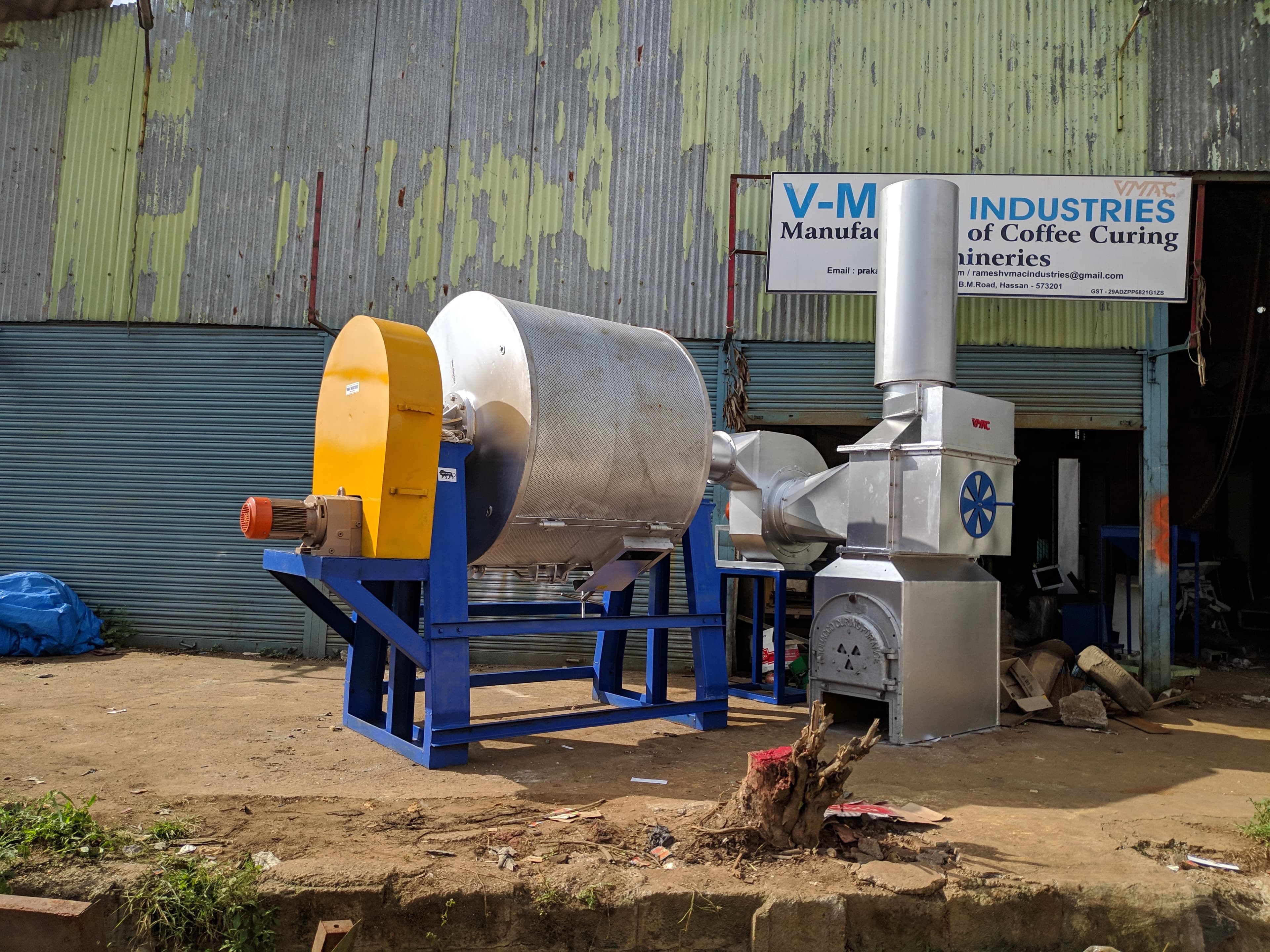
Coffee Dryer
Rotary drum dryer for parchment coffee, cherry coffee, and pepper. Reduces moisture from 50–55% post-pulping down to 10–12% for safe storage — weather-independent and significantly faster than sun drying.
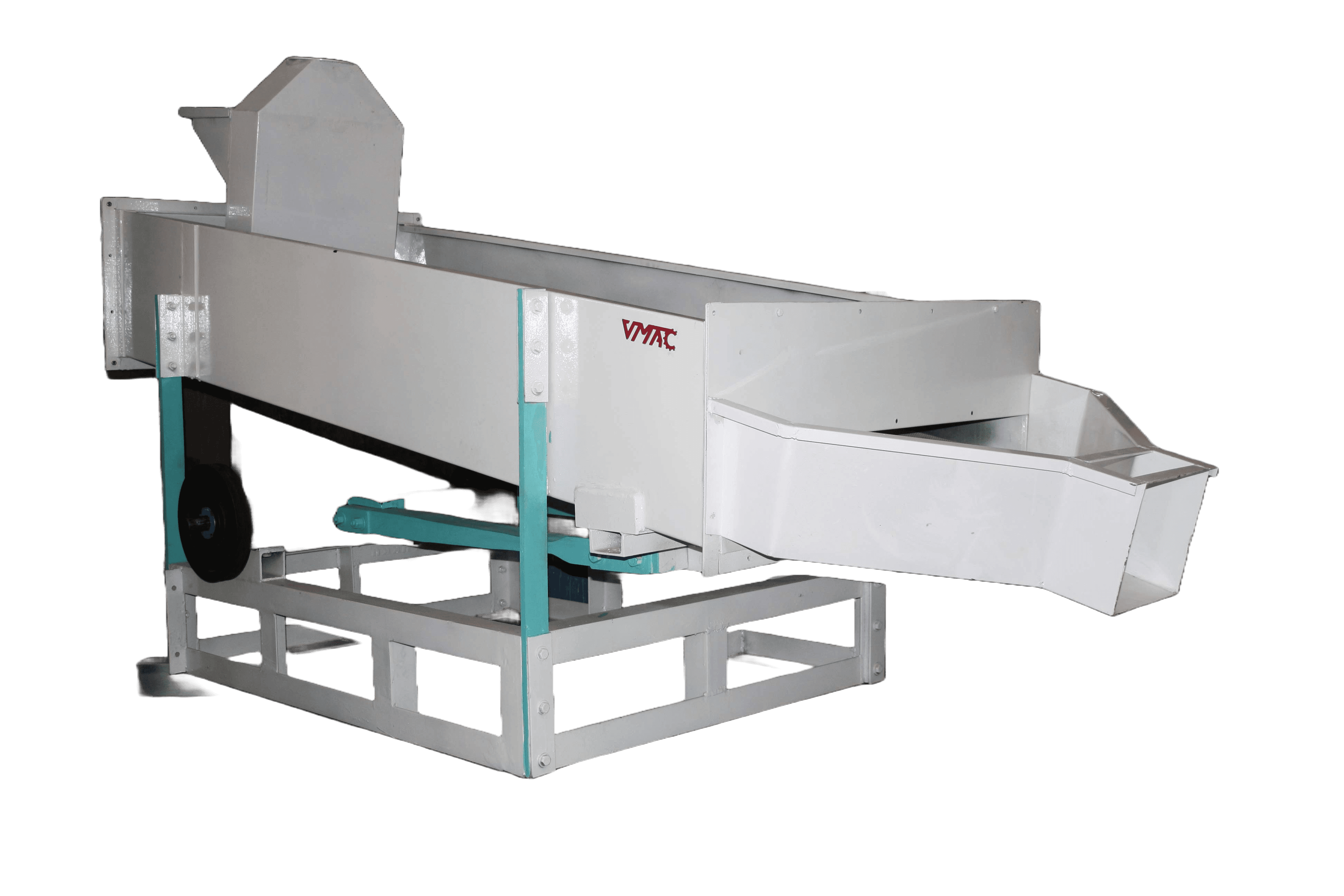
Coffee Pre-Cleaner
Vibratory scalping screen with air aspiration — removes sticks, leaves, large stones, soil clods, and light chaff from coffee cherry or parchment at intake, protecting every downstream machine in the processing line.
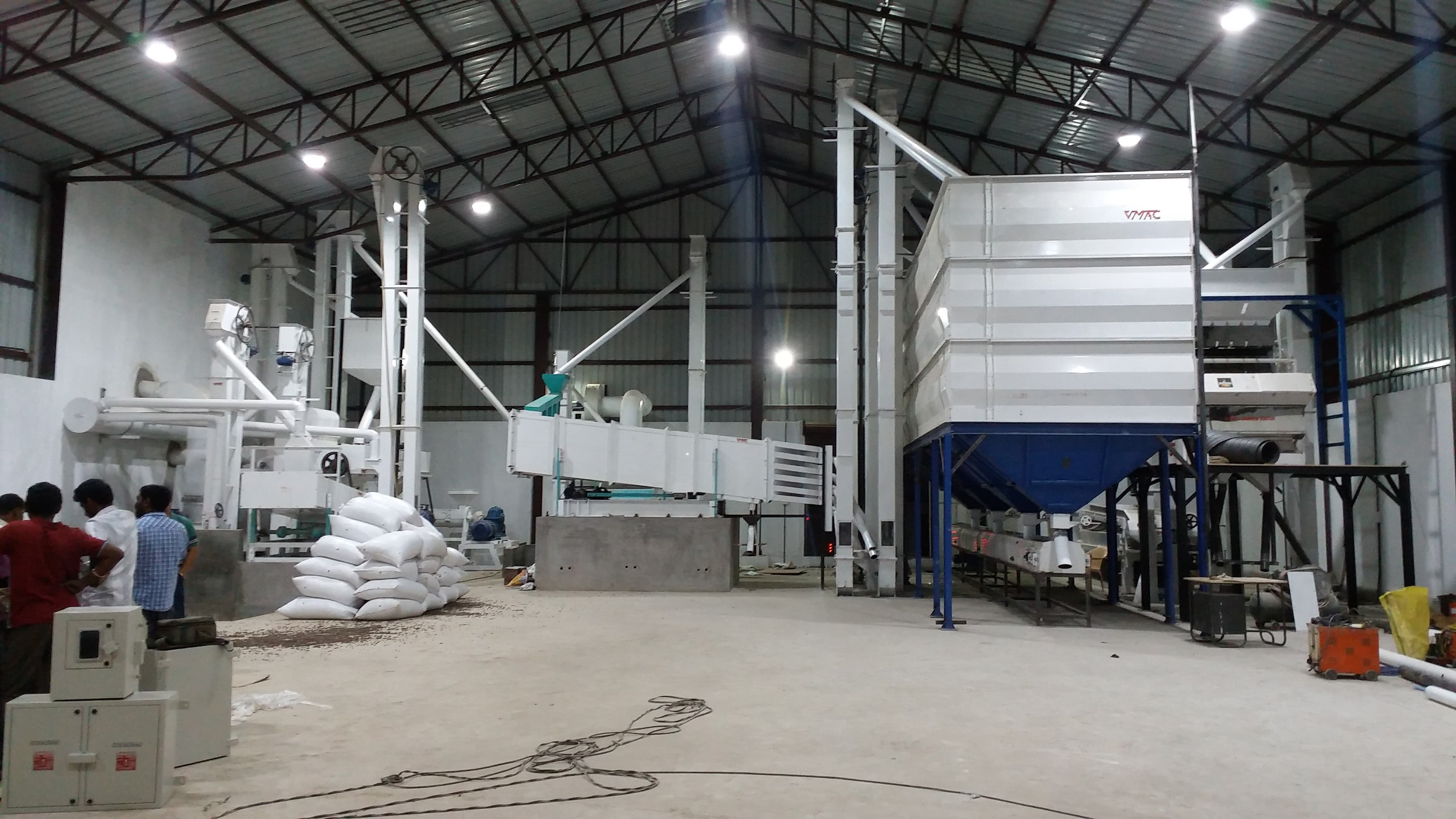
Coffee Curing Machine & Complete Processing Line
Turnkey coffee curing machines and complete wet/dry mill lines engineered by VMAC Industries — from cherry reception through export bagging, all machines matched to your capacity and supplied from a single manufacturer.