
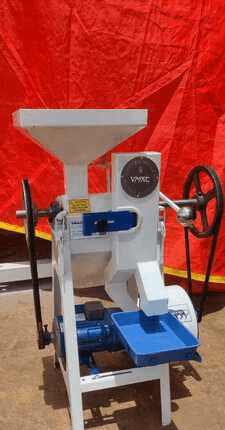
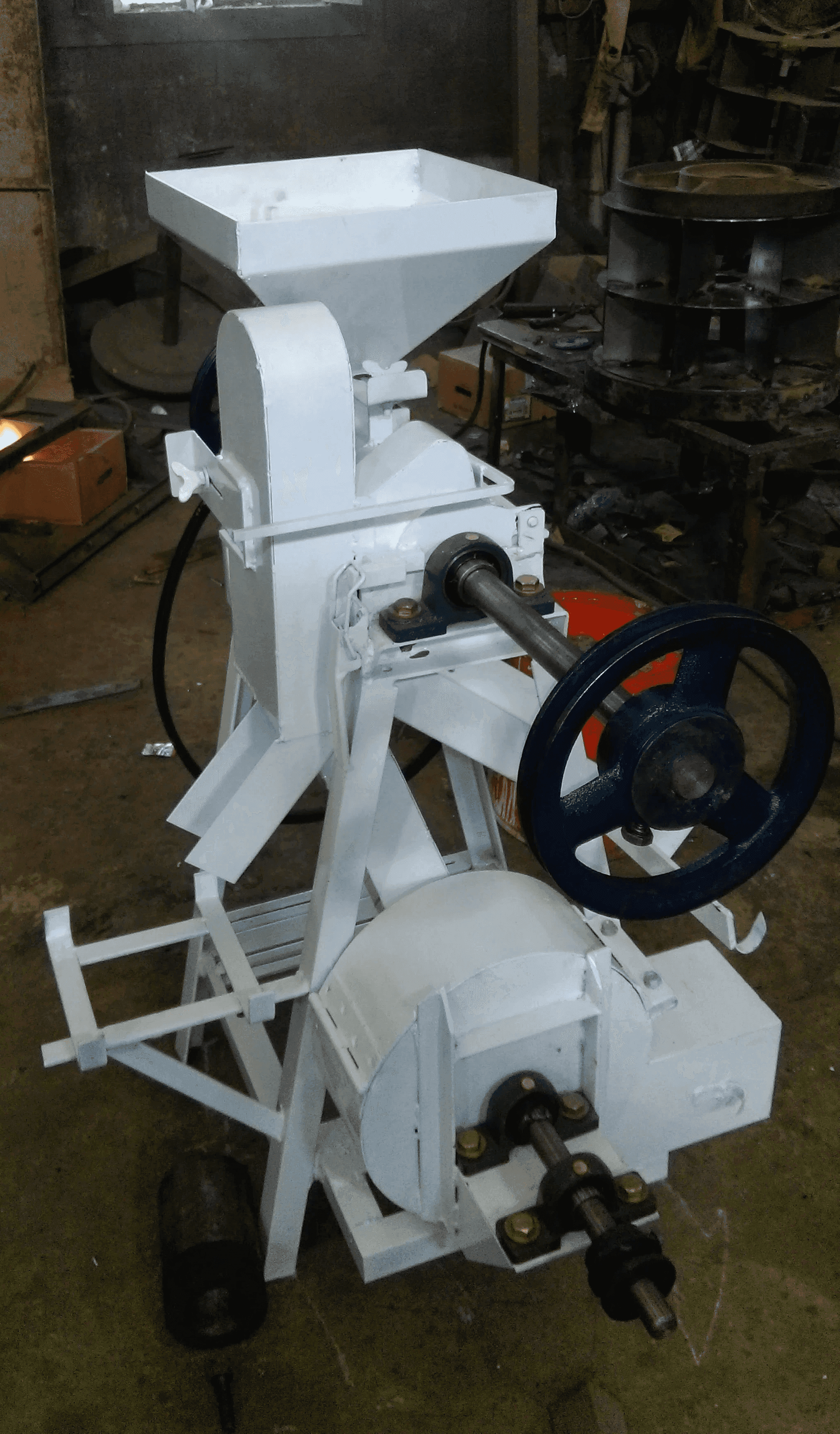
Coffee Sample Huller
Bench-top electric sample huller for coffee QC labs, cupping labs, and curing works — hulls 50g–500g parchment samples cleanly and quickly so green beans are ready for defect assessment and cupping.
| Sample capacity per pass | 50g – 500g (parchment coffee) |
| Motor power (electric model) | 0.25 HP – 0.5 HP, single-phase 230V 50 Hz |
| Hulling mechanism | Rubber roll (electric bench-top) or abrasive disc; manual hand-crank (manual model) |
| Dimensions (bench-top electric) | Approx. 400 mm (L) × 300 mm (W) × 350 mm (H) — exact dimensions vary by model |
| Coffee types handled | Washed parchment (Arabica and Robusta); natural / dry-processed cherry |
| Power supply | Single-phase 230V, 50 Hz (electric model); hand-crank (manual model) |
Key Features
Designed specifically for sample-size quantities — hulls 50g–500g per pass, producing a clean, intact green bean sample ready for defect assessment or sample roasting without manual re-sorting
Minimum bean breakage by design — hulling intensity adjusted to sample size and parchment condition; correctly set, broken and chipped beans in the output sample are negligible and do not skew defect counts
Fast and complete parchment removal — no re-hulling passes required for correctly-dried parchment samples; the entire sample is processed in under two minutes
Easy cleaning between samples — all contact surfaces accessible for brush cleaning; no carry-over of parchment dust or bean fragments between sequential lot samples
Compact bench-top form factor — fits on a standard lab counter or cupping table; no dedicated floor space or civil installation required
Handles washed parchment and natural/dry-processed coffee samples — adjustable hulling mechanism covers both processing types
Electric model with on/off switch and direct-drive motor eliminates belt slippage and speed variation during the sample pass
Durable construction suitable for daily multi-sample lab use — cast components and hardened hulling surfaces resist wear across many seasons of QC operation
Models & Sizing
Coffee Sample Huller Model Range
VMAC manufactures three Coffee Sample Huller configurations covering hand-crank field use through high-throughput QC labs. All models produce clean green bean samples from 50g–500g parchment inputs and are designed for easy inter-sample cleaning. Contact VMAC for pricing and availability.
Manual Hand-Crank
50–200g per sample
capacity
Remote estate QC, field-level Coffee Board inspections, cupping events without power access, smallholder cooperative grading. Fully portable. Ideal where power supply is unavailable or unreliable.
Electric Bench-Top
50–500g per sample
capacity
Standard QC lab and curing works grading room. The most common configuration in Indian curing works and Coffee Board offices. Handles back-to-back sample runs with minimal cleaning time. Suitable for most day-to-day grading and cupping lab use.
Semi-Automatic Batch
Multiple samples sequentially; up to 1–2 kg/hr lab throughput
capacity
High-volume QC labs, large curing works managing many simultaneous lot assessments, research and training institutions, and specialty importers pre-screening large numbers of origin samples. Reduces operator fatigue and per-sample time when running 20+ samples per session.
Custom
Your specification
capacity
For operations requiring throughput beyond the standard range. VMAC engineers the machine to your exact capacity and processing conditions.
Request a Custom QuoteConfigurations
Coffee Sample Huller — Model Comparison
All models designed for parchment coffee samples at 10–12% moisture. Electric models operate on single-phase 230V 50 Hz. Contact VMAC for dimensions, pricing, and availability.
| Model | Sample Capacity | Power | Hulling Type | Best For |
|---|---|---|---|---|
| Manual Hand-Crank | 50–200g | None (hand-crank) | Abrasive disc or roller | Remote / field grading, no-power environments |
| Electric Bench-Top | 50–500g | 0.25–0.5 HP / 230V | Rubber roll or abrasive disc | Standard QC lab, curing works grading room |
| Semi-Automatic Batch | Multiple samples / 1–2 kg/hr | 0.5 HP / 230V | Rubber roll | High-volume lab, 20+ samples per session |
| Custom | Built to your capacity and specification — contact us for a quote | |||
Overview
About the Coffee Sample Huller
The Coffee Sample Huller is a precision bench-top machine designed for coffee quality control laboratories, cupping labs, curing works QC departments, and Coffee Board inspection facilities. Its sole function is to hull small parchment coffee samples — typically 50g to 500g — with the speed and cleanliness necessary for rapid sample turnaround during grading and cupping sessions. Unlike production hullers that optimise for throughput in tonnes per hour, the sample huller optimises for sample integrity: minimum bean breakage, complete parchment removal in a single pass, and fast cleaning between samples so cross-contamination between lots is eliminated. In every Indian curing works, registered grader, Coffee Board Quality Controller, and specialty coffee buyer, the path from parchment lot to cupping table runs through the sample huller. Parchment coffee cannot be cupped — the parchment shell blocks assessment of bean colour, defect count, screen size, and density, and it prevents uniform roasting of the sample. The sample huller is the instrument that unlocks those assessments. Graders use it to prepare green bean samples for the three-stage QC sequence: green bean analysis (defect count, screen, density, moisture), sample roasting, and cupping. A fast, reliable sample huller shortens the QC cycle and allows more lots to be assessed per session. VMAC's Coffee Sample Huller range covers three configurations: a hand-crank manual model for remote or off-grid use, an electric bench-top single-sample model for standard lab and grading use, and a semi-automatic batch model for high-throughput QC labs and curing works managing multiple lots simultaneously. All models use a rubber roll or disc hulling mechanism sized for sample quantities, produce minimal broken beans at correct settings, and are built for easy cleaning between samples. The compact bench-top footprint fits any lab counter or cupping table setup.
How It Works
How It Works
The Coffee Sample Huller uses the same mechanical principles as a production huller — abrasive disc or rubber roll — but at a scale calibrated for gram-weight samples rather than tonnes per hour. The entire sample is loaded in one pass; the hulled green beans and detached parchment fragments exit together and are separated manually or by a small aspirator.
Sample weighing and loading
Weigh the parchment sample to the required test weight — typically 100g, 200g, or 300g depending on the assessment protocol. Load the weighed sample into the hopper or feed inlet of the huller. On the electric bench-top model, a simple lever or slide gate controls when material enters the hulling chamber. Do not exceed the rated sample size per pass — overloading causes incomplete hulling and elevated breakage.
Hulling — parchment removal
Switch on the motor (electric model) or turn the hand crank (manual model). The hulling mechanism — rubber rolls or abrasive disc — strips the dried parchment (endocarp) from the green bean through compression and shear or abrasive friction. For correctly-dried parchment coffee (10–12% moisture), a single pass is sufficient for complete hull removal. The hulling intensity setting on the electric model is adjusted once per coffee type or parchment condition and rarely needs changing for standard washed samples.
Chaff and bean separation
Hulled green beans and detached parchment fragments exit the hulling chamber together. On the electric bench-top model, a short aspiration channel or manual blowing separates the light parchment chaff from the green beans. On the manual model, the operator tips the mixed output onto a cupping tray and blows or fans away the parchment before proceeding to inspection. The green bean sample is now ready for defect count, screen sizing, and density checks.
Cleaning between samples
Before loading the next lot sample, the hulling chamber, hopper, and discharge area must be brushed clean. Residual parchment dust and bean fragments from the previous sample will contaminate the next if not removed. On the electric bench-top model, this takes less than two minutes with the provided cleaning brush. Regular inter-sample cleaning is the most important operating discipline for reliable QC results — cross-lot contamination in a sample is a defect-count error that cannot be corrected after the fact.
Know the Difference
Coffee Sample Huller vs. Production Coffee Huller
A sample huller and a production huller both remove parchment from coffee beans, but they are built for entirely different tasks, scales, and operating environments. Selecting the wrong machine for lab use is a common mistake — a production huller cannot hull a 100g sample accurately, and a sample huller has no place in a production dry mill.
| Feature | Coffee Sample Huller | Production Coffee Huller |
|---|---|---|
| Throughput | 50g–500g per pass — designed for individual lot samples; no continuous production capability | 250 kg/hr to 5 TPH — continuous production; minimum practical batch is several kilograms |
| Primary purpose | QC and grading lab use — prepares green bean samples for defect assessment, screen sizing, density check, and cupping | Production hulling — removes parchment from entire dried lots before export grading and bagging |
| Precision | High — calibrated for sample integrity; minimal breakage at gram-weight quantities; hulling intensity finely adjustable | Optimised for throughput consistency, not sample-scale precision; cannot hull gram-size quantities accurately |
| Installation | Bench-top, plug-in, no civil works — sits on a lab counter or cupping table; footprint under 0.5 m² | Floor-mounted, bolted down, three-phase power, infeed and discharge connections; requires planned installation in the dry mill building |
| Motor power | 0.25–0.5 HP, single-phase 230V — standard lab socket; or hand-crank (no power required) | 3 HP to 20 HP, three-phase 440V — requires industrial power supply and motor starter |
| Cleaning between batches | Fast — brush-clean in under 2 minutes between samples; essential for accurate cross-lot QC | Not designed for frequent batch changeovers — full cleandown requires production shutdown and is done between crop seasons or processing varieties |
| Typical users | Quality controllers, licensed graders, Coffee Board inspectors, cupping lab managers, green coffee buyers, specialty roasters | Dry mill operators and curing works managers processing lots for export |
| Cost | Low capital cost — bench-top appliance scale pricing; affordable for estates, labs, and individual graders | Significant capital investment — sized for production throughput; not cost-justified for lab use |
Every curing works that operates a production huller also needs a sample huller in the QC lab — they serve different functions and one cannot substitute for the other. The sample huller is used to assess each incoming parchment lot before it enters the production hulling line.
Processing Line
The QC and Grading Workflow — Where the Sample Huller Fits
The sample huller is not part of the production processing line. It is a QC instrument used in the grading lab to evaluate each lot before and during production processing. The workflow below shows the QC cycle that runs in parallel with the production line in every well-run curing works or grading facility.
Lot reception and sampling
A representative sample is drawn from the incoming parchment lot — typically 200–500g taken from multiple points in the bag or lot. The sample represents the entire lot for grading purposes.
Moisture check
Input moisture is measured with a calibrated grain moisture meter. Parchment at 10–12% is correct for hulling; above 13% requires further drying; below 9% indicates over-drying and elevated breakage risk.
Coffee Sample Huller
This machineThe parchment sample is hulled in the bench-top sample huller to produce a clean green bean sample. Parchment is removed; chaff is aspirated or manually separated. The green bean sample is now available for physical inspection and sample roasting.
Green bean inspection — defect count and grading
The green bean sample is spread on a cupping tray or garbling table. Defects are counted and classified per Coffee Board or SCA protocol: blacks, browns, sours, withered, insect-damaged, broken, husks, stones, and other defects. Screen size and density are also assessed.
Sample roaster
A weighed portion of the hulled green bean sample (typically 50–100g) is roasted in a sample drum roaster to a defined roast profile. The roasted sample is assessed for roast uniformity and colour.
Cupping
Cupped coffees are assessed for aroma, flavour, aftertaste, acidity, body, uniformity, balance, and overall quality per SCA or Coffee Board cupping protocol. Results determine lot grade, pricing, and acceptance or rejection.
Lot disposition decision
Based on green bean inspection and cupping scores, the lot is assigned a grade (Plantation A, AB, Robusta, etc.) and a production routing decision is made — standard processing, re-drying, separation into sub-lots, or rejection.
FAQ
Frequently Asked Questions
What sample sizes can the Coffee Sample Huller handle?
The electric bench-top model handles samples from 50g to 500g per pass. The manual hand-crank model is suited to 50g–200g samples. The semi-automatic batch model can handle multiple samples sequentially and is more efficient when running 20 or more samples per session. The most common lab sample sizes are 100g, 200g, and 300g — these produce sufficient green beans for a combined defect count and cupping sample without overloading the hulling chamber.
How do I clean the machine between lot samples?
Cleaning between samples is critical — residual parchment dust and bean fragments from the previous lot will contaminate the next sample's defect count if not removed. On the electric bench-top model: switch off the machine, open the hulling chamber access cover, and brush all contact surfaces, the discharge chute, and the aspiration channel with the provided cleaning brush. Blow out any remaining dust with a puffer or compressed air bulb. The entire process takes under two minutes. A disciplined cleaning routine between every sample is the most important operating practice for reliable QC results.
Can I hull natural (dry-processed) coffee samples as well as washed parchment?
Yes. The sample huller handles both washed parchment coffee and natural (dry-processed) coffee samples. Natural coffee samples require slightly more aggressive hulling intensity settings — the dried fruit layer (skin, mucilage, and parchment adhering together) is thicker and more fibrous than clean parchment. Adjust the hulling intensity setting toward the higher end for natural samples. If the output shows incomplete hulling on the first pass, increase the setting and re-run the remaining unhulled beans. Natural coffee samples also produce significantly more chaff and require more thorough cleaning after each sample.
What moisture level should parchment samples be at before hulling?
Parchment samples for QC assessment should be at the same moisture as the lot being evaluated — typically 10–12% for correctly-dried washed coffee. If you measure the moisture before hulling (which you should, as moisture is a grading parameter), that check also tells you whether the parchment will hull cleanly. Samples above 13% moisture may hull incompletely — the parchment is still pliable. Samples below 9% are over-dried and will produce elevated breakage in the hulled sample. If an incoming lot is at abnormal moisture, that finding should be recorded before the sample is hulled.
Is the Coffee Sample Huller used by Coffee Board inspectors?
Yes — the Coffee Sample Huller is standard equipment in Coffee Board of India Quality Control laboratories and grading offices. It is used by Quality Controllers and Authorised Internal Inspectors (AIIs) during pre-shipment inspection of export lots. The inspector draws a representative sample from the export lot, hulls it in the sample huller to produce a green bean sample, and assesses it for grade compliance against Coffee Board specifications (Plantation AA, A, AB, RVA, FAQ, etc.) before issuing the Green Certificate. A reliable, fast sample huller that produces clean, intact green bean samples is essential for the Coffee Board QC process.
What is the difference between a sample huller and using a production huller for small quantities?
A production huller cannot effectively hull gram-weight samples — the hulling chamber is sized for continuous throughput in kilograms per minute, and a 100g sample moving through it will experience erratic hulling, high breakage, and significant loss into the chamber walls and discharge path. The sample will not represent the lot accurately. A sample huller is calibrated for sample-scale quantities: the chamber volume, gap setting, roll pressure, and feed mechanism are all designed for 50g–500g passes. Using a production huller for lab grading is a false economy that produces unreliable QC data.
How many samples per day can the electric bench-top model process?
The electric bench-top model can comfortably process 30–50 samples per working day with proper inter-sample cleaning between each. Each hulling pass takes approximately 1–3 minutes depending on sample size; cleaning takes under 2 minutes. In a standard 8-hour shift with a single operator, 30–40 samples is a realistic high-throughput day. For labs running more than 50 samples per day consistently, the semi-automatic batch model is more appropriate — it reduces per-sample time and operator fatigue over long sessions.
Do I need a separate aspirator or winnower to use with the sample huller?
A dedicated bench-top aspirator is not required for most sample hulling applications, but it speeds up chaff separation. The electric bench-top model is designed so that the mixed green bean and chaff output can be manually separated by blowing gently across the sample on a cupping tray or using a small hand-held puffer. Some operators prefer to tip the output onto a slotted cupping tray and use a small fan or blow-gun. For high-volume labs processing many samples per session, a small bench-top sample aspirator matched to the sample huller reduces the time spent on manual chaff separation and keeps the QC workflow moving efficiently.
Related guides
Learn more about this equipment
VMAC Industries
How to Size a Coffee Huller for Your Throughput
A practical sizing guide for coffee estate owners and curing works operators — how to match huller type, capacity, and gap settings to your bean variety, daily volume, and processing conditions.
Read the guide →
VMAC Industries
Ensure Consistent Quality with Sample Hullers
Learn how using sample hullers can help maintain consistent quality in your coffee production by providing accurate assessments of your beans before full-scale processing.
Read the guide →
Send a Enquiry Request
Retail store
Mon-Sat 9am to 5pm.
B.M road, Hassan, Karnataka 573201
Related Products
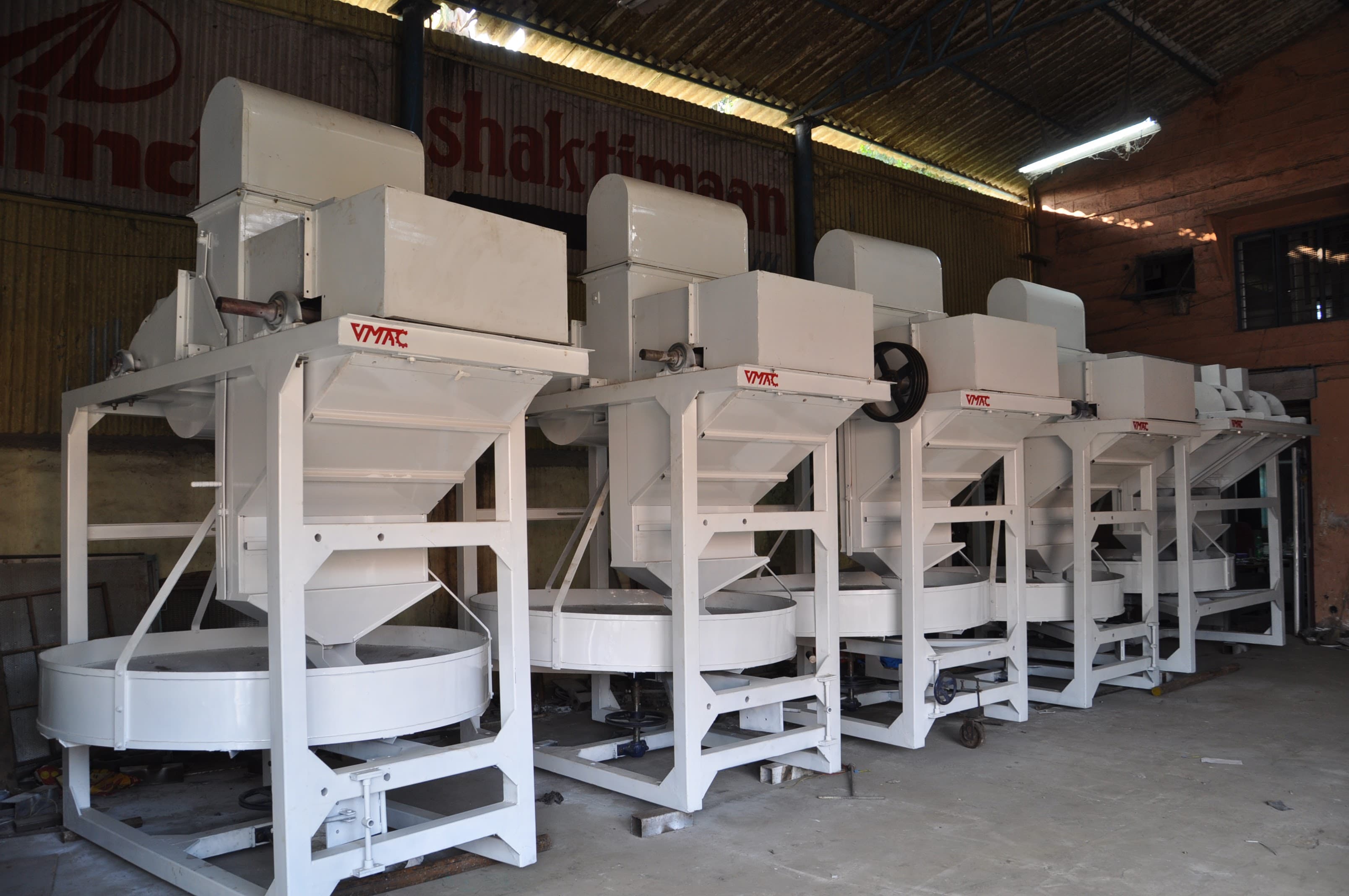
Coffee Huller
Abrasive disc huller for removing dried parchment and husk from washed parchment coffee — high throughput, adjustable hulling intensity, and low bean breakage for dry mill operations.
Rubber Roll Coffee Huller
Counter-rotating rubber roll huller that gently removes parchment from dried washed Arabica with less than 1–2% bean breakage. The industry-standard hulling machine for parchment coffee in Karnataka, Kerala, and Tamil Nadu estates.
Disc Coffee Huller
Abrasive rotating-disc huller for natural and dry-processed coffee — removes dried husk from cherry-processed Robusta and Arabica naturals that rubber roll machines cannot handle. Capacity 300 kg/hr to 5 TPH.