
Coffee Pulp Press
Mechanically dehydrates wet coffee pulp from ~80% moisture down to 40–50% — reducing transport weight, stopping rapid decomposition, enabling composting and biofuel use, and protecting waterways from one of wet processing's most significant pollution sources.
| Input material | Wet coffee pulp (fruit flesh from pulper discharge), 75–82% initial moisture |
| Output moisture (press cake) | 40 – 55% (adjustable via end-cone back-pressure) |
| Capacity (wet pulp input) | 500 – 3,000 kg wet pulp/hr (model dependent) |
| Press mechanism | Continuous screw press (auger) with perforated cylinder and adjustable back-pressure cone |
| Cylinder / screen material | Stainless steel SS304 perforated screen; replaceable wear section |
| Screw / auger material | Hardened alloy steel with corrosion-resistant coating |
| Moisture reduction | Approximately 35–40 percentage points (e.g., 80% → 42–45%) |
| Weight reduction of pulp | 45 – 55% reduction in wet weight per batch |
| Motor power | 2 HP – 10 HP (model dependent) |
| Power supply | Single-phase 230V or 3-phase 415V, 50 Hz |
| Press water discharge | High-BOD liquid fraction; route to settling pond or biodigester — not to waterways |
Key Features
Screw press mechanism applies progressive compressive pressure through a tapering perforated cylinder — reduces wet pulp moisture from 75–82% down to 40–55% in a single continuous pass
Continuous-feed operation matched to pulper output rate — wet pulp discharged from the pulper chute can feed directly into the press hopper, eliminating wet pulp stockpiling and immediate decomposition risk
Reduces wet pulp weight by 45–55% per batch — directly cuts transport cost per tonne of organic matter hauled from the wet mill to compost bays or off-site disposal
Dewatered press cake at 40–55% moisture is stable enough to stack and transport without immediate decomposition — aerobic breakdown proceeds slowly at this moisture, compared to rapid anaerobic putrefaction of raw wet pulp
Produces high-quality compostable material: dewatered coffee pulp composted with turning and aeration yields an organic fertiliser with NPK approximately 2–3% N, 0.3–0.5% P₂O₅, 2–3% K₂O — directly applicable to coffee plantation soil management
Press liquid (press water) is captured as a defined, concentrated stream rather than dispersed in wet pulp leachate — easier to route to settling ponds or biodigester for treatment
Stainless steel or corrosion-resistant alloy screw and cylinder construction — coffee pulp is highly acidic (pH 4–5) and rapidly corrodes unprotected steel; food-grade corrosion-resistant materials are specified throughout
Screw pitch and end-cone back-pressure are adjustable — operator controls output moisture level to match compost bay, biofuel, or transport requirements
Capacity from 500 kg/hr to 3,000 kg/hr wet pulp input — sized to match pulper throughput so that wet pulp is pressed in real time during the harvest shift rather than accumulating overnight
Models & Sizing
Right-Sized for Every Operation
VMAC manufactures coffee pulp presses in four capacity tiers. Capacity is specified as wet pulp input per hour — matching the press to the upstream pulper is critical. As a rule of thumb, for every 1,000 kg of cherry processed per hour by the pulper, approximately 400–550 kg of wet pulp is generated that needs pressing. Contact VMAC for matching calculations for your specific pulper model.
Small Estate
500 – 900 kg wet pulp/hr
capacity
Small washing stations and estates running pulpers up to 1,500 kg cherry/hr. Compact screw press footprint; single-phase motor available. Suitable for Coorg and Chikmagalur smallholder cooperative stations.
Medium Estate
900 – 1,500 kg wet pulp/hr
capacity
Medium estates and cooperative washing stations running pulpers at 2,000–3,500 kg cherry/hr. Continuous-feed design; 3-phase motor standard. Common for Wayanad and Coorg medium-scale wet mills.
Large Estate
1,500 – 2,500 kg wet pulp/hr
capacity
Large integrated estates and central processing stations running pulpers at 3,500–6,000 kg cherry/hr. Adjustable back-pressure cone; heavy-duty screw and screen for continuous harvest-season operation.
Commercial / High-Volume
2,500 – 3,000 kg wet pulp/hr
capacity
High-volume commercial central pulping stations with drum pulpers or multi-disc configurations at 6,000–15,000 kg cherry/hr. Designed for continuous multi-shift operation during peak harvest.
Custom
Your specification
capacity
For operations requiring throughput beyond the standard range. VMAC engineers the machine to your exact capacity and processing conditions.
Request a Custom QuoteConfigurations
Full Model Range — Coffee Pulp Press
All models feature a continuous screw press mechanism, perforated stainless steel cylinder, adjustable end-cone back-pressure, and corrosion-resistant construction throughout. Press capacity should be matched to upstream pulper throughput — contact VMAC for capacity matching calculations for your specific wet mill configuration.
| Model Tier | Capacity (kg wet pulp/hr) | Motor Power | Output Moisture | Matching Pulper Capacity | Best For |
|---|---|---|---|---|---|
| Small Estate | 500 – 900 | 2 – 3 HP | 42 – 55% | Up to 1,500 kg cherry/hr | Small cooperative / micro-mill / smallholder estate |
| Medium Estate | 900 – 1,500 | 3 – 5 HP | 40 – 52% | 2,000 – 3,500 kg cherry/hr | Medium estate / cooperative washing station |
| Large Estate | 1,500 – 2,500 | 5 – 7.5 HP | 40 – 50% | 3,500 – 6,000 kg cherry/hr | Large integrated estate central processing |
| Commercial / High-Volume | 2,500 – 3,000 | 7.5 – 10 HP | 38 – 48% | 6,000 – 15,000 kg cherry/hr | High-volume commercial / multi-farm export station |
| Custom | Built to your capacity and specification — contact us for a quote | ||||
Overview
About the Coffee Pulp Press
VMAC's Coffee Pulp Press — also called a pulp dehydrator, pulp dewatering press, or screw press — is a by-product handling machine that mechanically squeezes wet coffee pulp to dramatically reduce its moisture content. Wet coffee pulp is the outer fruit flesh (exocarp and mesocarp) removed from coffee cherries during pulping. For every 1,000 kg of parchment coffee produced in a wet mill, approximately 1,500–2,000 kg of wet pulp is generated as a by-product — making it the highest-volume waste stream in any coffee wet-processing operation. Fresh wet pulp carries approximately 75–82% moisture. At this moisture level, it is extremely heavy (making transport expensive per unit of dry organic matter), decomposes rapidly through aerobic and anaerobic biological processes (generating foul odours, leachate, and significant heat within 24–48 hours of discharge), and has a very high biochemical oxygen demand (BOD) that makes it one of the most serious waterway pollutants in coffee-producing regions. In Karnataka, Kerala, and other Indian coffee-growing states, wet pulp runoff into streams and rivers is a documented environmental compliance issue with regulatory consequences for processing estates. The pulp press addresses this at source. It operates on the screw press principle: wet pulp is fed into a hopper and transported by a rotating screw (auger) through a tapering perforated cylinder. As the screw advances, the cavity volume decreases, generating progressive compressive pressure on the pulp mass. Water is squeezed out through the perforations in the cylinder wall and drains away. The dewatered pulp cake exits from the discharge end at 45–55% moisture — roughly half the original water content has been mechanically removed. This moisture reduction has cascading benefits across the waste management workflow. Dewatered pulp cake weighs approximately half as much as raw wet pulp for the same dry matter content, dramatically reducing haulage cost per tonne of organic matter transported. At 45–55% moisture, aerobic decomposition still proceeds, but at a slower and more controlled rate — the cake can be stacked and managed before composting without the immediate environmental risk of fresh wet pulp. When composted properly with turning and aeration, dewatered coffee pulp produces a high-quality organic fertiliser with an NPK profile of approximately 2–3% N, 0.3–0.5% P₂O₅, and 2–3% K₂O — well-suited for coffee plantation soil conditioning. The press cake can also be used as biomass fuel or as a substrate for mushroom cultivation and biogas production. The liquid fraction expressed by the press — the press water — carries a very high BOD load and must not be discharged directly to water bodies. It should be directed to settling ponds or a biodigester. However, because the pulp's water content has been captured as a concentrated stream rather than being dispersed across a large volume of pulp, it is easier and less costly to treat than an equivalent wet-pulp dump.
How It Works
How It Works
The pulp press uses a screw auger to progressively compress wet coffee pulp as it travels through a tapering, perforated cylinder. Water is physically squeezed out through the cylinder perforations; dewatered press cake exits at the discharge end. The process is continuous, requires no batch handling, and operates in real time alongside the pulper during a harvest shift.
Wet pulp intake from pulper discharge
Wet coffee pulp — the fruit flesh (exocarp and mesocarp) removed from cherries during pulping — is discharged from the pulper's pulp chute directly into the press hopper. Fresh wet pulp at this point carries 75–82% moisture and begins aerobic decomposition within hours. Feeding the press continuously during pulper operation — rather than stockpiling wet pulp overnight — is the best practice for both environmental management and press cake quality. Stockpiled wet pulp heats rapidly, becomes anaerobic, and generates significant odour and leachate before pressing.
Screw compression — water squeezed through perforated cylinder
Inside the press, a rotating helical screw (auger) conveys the pulp mass forward through a cylindrical stainless-steel screen with fine perforations. The screw is designed with a progressively decreasing pitch — the flights become closer together toward the discharge end — and the cylinder tapers slightly, reducing the available volume per unit length. As pulp advances, it is increasingly compressed against the cylinder wall and the preceding pulp mass. The compressive pressure physically expels water from the wet pulp; this water passes through the cylinder perforations and drains away as press water into a collection channel below the machine. The pulp solids, unable to pass through the perforations, continue advancing toward the discharge end.
Back-pressure control — output moisture set by end cone
At the discharge end of the cylinder, an adjustable back-pressure cone (or choke plate, depending on model) creates resistance against the advancing press cake. The resistance level set by this cone is the primary variable controlling output moisture: higher back-pressure increases compression, reduces output moisture further, and produces a drier, firmer press cake; lower back-pressure produces a wetter, softer cake with higher throughput. Operators set the cone position based on the intended end use — composting requires a manageable moisture level (40–50%), biofuel pelletising requires lower moisture (35–45%). The adjustment is made manually and held throughout a processing session; changes are made between sessions based on previous output moisture assessment.
Press cake and press water — two managed output streams
The dewatered press cake exits the discharge end continuously as a dense, solid mass at 40–55% moisture. It is collected in a transport container — typically a tipper trolley or conveyor — and moved to the compost bay, drying area, or loading point for haulage. At the correct moisture level, the press cake stacks without collapsing, does not generate immediate anaerobic putrefaction, and retains sufficient moisture for aerobic composting to proceed without irrigation. The press water — captured in the drainage channel below the press — is a concentrated liquid high in organic acids, sugars, and dissolved pulp matter, carrying BOD of 25,000–60,000 mg/L. It must be routed to a covered settling pond or biodigester; it cannot be discharged to watercourses or irrigation channels without treatment.
Know the Difference
Coffee Pulp Press vs. Untreated Wet Pulp Disposal (Stockpiling / Open Dumping)
Many small and medium Indian wet mills still manage coffee pulp by stockpiling it in open heaps adjacent to the processing building, allowing it to decompose over weeks or months before spreading it in the plantation. The pulp press represents a direct alternative to this practice. The comparison is relevant to any estate evaluating the investment case for pulp treatment.
| Feature | Coffee Pulp Press | Untreated Wet Pulp Disposal (Stockpiling / Open Dumping) |
|---|---|---|
| Moisture level at disposal | 40–55% moisture — physically manageable, stackable, resistant to immediate anaerobic putrefaction | 75–82% moisture — heavy, unstable, begins anaerobic decomposition within 24–48 hours of discharge; generates foul odours and leachate immediately |
| Transport cost | Press cake weighs 45–55% less than equivalent wet pulp for the same dry matter — direct reduction in haulage cost per tonne of organic material moved from the wet mill | Full wet weight must be transported; for estates with remote compost bays or off-site disposal, transport cost is significantly higher per tonne of useful organic matter |
| Waterway pollution risk | Press cake leachate significantly reduced; press water captured as a defined stream and routed to treatment — environmental risk managed and auditable | High — wet pulp leachate with BOD 40,000–80,000 mg/L drains from stockpiles into soil and surface water; one of the leading causes of watercourse BOD elevation in Indian coffee regions |
| Regulatory compliance | Press cake with captured press water routed to treatment represents best-practice compliance with CPCB and State Pollution Control Board norms for coffee wet processing effluent | Open wet pulp dumping is increasingly cited in enforcement actions under the Environment Protection Act and Water (Prevention and Control of Pollution) Act in Karnataka and Kerala |
| Composting quality and timeline | Dewatered press cake composts in 60–90 days with turning and aeration — produces stable, friable organic fertiliser suitable for direct plantation application | Wet pulp heaps take 120–180 days to reach a compostable state and require extensive management to prevent anaerobic zones; compost quality and NPK uniformity are lower than press-cake compost |
| Odour management | Significantly reduced — dewatered cake at 40–50% moisture undergoes slower, more controlled aerobic decomposition; odour generation is a fraction of that from wet pulp heaps | Severe — wet pulp at 80% moisture produces intense anaerobic fermentation within 24–48 hours; ammonia, hydrogen sulphide, and organic acid odours are a common source of community complaints near Indian wet mills |
| Capital requirement | Moderate — pulp press is a standard piece of machinery; operating cost is motor power only (2–10 HP); payback typically 2–4 years through transport savings and compost value | Minimal capital — but costs are externalised as environmental liability, regulatory risk, community relations damage, and long-term soil and watercourse contamination |
Coffee pulp is classified as a scheduled effluent under several Indian state environmental regulations. While enforcement has historically been inconsistent, regulatory pressure on wet-processing estate effluent management is increasing in Karnataka and Kerala. Estates investing in a pulp press and covered settling ponds now are ahead of a compliance curve that is tightening.
Processing Line
Where It Fits in Your Processing Line
The pulp press is not in the main coffee processing line — it handles the pulp by-product stream that branches off at the pulper. While parchment coffee continues through fermentation, washing, and drying, the wet pulp takes a separate route through the press to the compost bay.
Cherry intake / flotation tank
Ripe cherry sorted; floaters removed
Coffee pulper
Cherry skin and pulp removed — parchment continues to fermentation / demucilager; wet pulp branches off to pulp press
Pulp press [by-product branch]
This machineWet pulp (75–82% moisture) pressed to 40–55% moisture; press water to settling pond / biodigester; press cake to compost bay or transport
Compost bay / biofuel preparation
Press cake stacked and aerated for 60–90 days to produce organic fertiliser; or pelleted / dried for biofuel; or used as mushroom cultivation substrate
Main line: fermentation → washing → drying
Parchment coffee continues independently through the main wet-mill sequence — the pulp press operates in parallel, not in series
FAQ
Frequently Asked Questions
What is a coffee pulp press and why do wet mills need one?
A coffee pulp press is a screw-press machine that mechanically squeezes water out of wet coffee pulp — the fruit flesh removed during cherry pulping. For every 1,000 kg of parchment coffee produced, approximately 1,500–2,000 kg of wet pulp is generated. Fresh wet pulp carries 75–82% moisture. At this moisture level it is too heavy and unstable to manage economically: it begins aerobic and anaerobic decomposition within hours, generates foul odours and leachate, and has a very high BOD that makes it a serious waterway pollutant if not managed. The pulp press reduces moisture to 40–55% — roughly halving the wet weight, stopping rapid decomposition, enabling clean transport to compost bays, and capturing the expressed liquid as a defined stream for treatment. For Indian wet mills under increasing environmental compliance scrutiny, a pulp press is the most practical first step in responsible pulp management.
How much water does a pulp press remove from coffee pulp?
A well-adjusted screw press reduces wet pulp moisture from a typical input of 78–82% down to 40–55% in a single continuous pass. In practical terms, this means that approximately 400–500 kg of water is expelled per tonne of wet pulp processed — the output press cake weighs roughly half as much as the input wet pulp for the same dry matter content. The exact output moisture depends on the back-pressure cone setting (higher back-pressure = drier cake), the screw speed, and the physical characteristics of the pulp (variety, ripeness, and degree of mucilage removal at pulping all influence how well the pulp presses). A test run with the back-pressure cone at mid-setting, then checking output moisture with a hand-squeeze test or a simple moisture meter, allows the operator to calibrate for local conditions at the start of each harvest season.
Can coffee pulp press cake be used as fertiliser?
Yes — composted coffee pulp press cake is a well-regarded organic soil amendment for coffee plantations. Dewatered press cake at 40–50% moisture is suitable for aerobic composting with turning and aeration every 7–10 days. With 60–90 days of managed composting, the press cake stabilises into a friable, dark organic matter with an approximate NPK analysis of 2–3% nitrogen, 0.3–0.5% phosphorus pentoxide, and 2–3% potassium oxide, plus significant organic carbon content that improves soil structure and water retention. This nutrient profile makes coffee pulp compost a directly useful input for coffee plantation maintenance, reducing dependency on synthetic fertiliser. Some Karnataka estates have closed the loop completely — all pulp returns to the plantation as compost, reducing external fertiliser costs measurably over several seasons.
What happens to the press water (liquid fraction) from the pulp press?
Press water is the high-BOD liquid squeezed out of the pulp during pressing. It carries dissolved organic acids, sugars, mucilage residue, and suspended fine pulp particles — typically with a BOD of 25,000–60,000 mg/L. This is significantly stronger than domestic sewage and must not be discharged to streams, rivers, or open ground without treatment. The correct management route is to direct press water through a covered drain to a settlement pond, where suspended solids settle over 48–72 hours, followed by an anaerobic treatment pond or biodigester. After settling and biological treatment, the clarified effluent can typically be used for sub-surface land irrigation on the coffee plantation without causing damage to soil biology. A biodigester can capture the methane produced during anaerobic treatment, partially offsetting the fuel costs of a mechanical dryer.
How do I size a pulp press for my wet mill?
The pulp press capacity (rated in kg wet pulp per hour) should match the wet pulp generation rate of your pulper. As a rule of thumb, approximately 400–550 kg of wet pulp is generated for every 1,000 kg of cherry processed. So if your pulper processes 2,000 kg cherry per hour, expect 800–1,100 kg of wet pulp per hour — a medium-tier press (900–1,500 kg/hr capacity) is appropriate. It is better to be slightly over-capacity than under, as a press running at 70–80% of its rated throughput achieves better compression (longer dwell time in the cylinder) and drier press cake output than one running at 100%. VMAC provides capacity matching calculations for all pulper models — contact VMAC with your pulper model and throughput for a specific press recommendation.
Is a pulp press required for regulatory compliance in India?
Coffee wet processing effluent — including wet pulp, pulping water, fermentation water, and washing water — is regulated under the Water (Prevention and Control of Pollution) Act 1974 and the Environment Protection Act 1986 in India. State Pollution Control Boards in Karnataka and Kerala have specific effluent standards for coffee processing industries. While direct regulatory requirements for pulp presses specifically are not uniformly codified in the same way effluent discharge limits are, open wet pulp dumping that results in leachate reaching surface water or groundwater is actionable under pollution norms. In practice, estates that can demonstrate a complete pulp management chain — press → compost bay → plantation application, with press water routed to treatment — are significantly better positioned during SPCB inspections and consents-to-operate renewals than estates with open pulp heaps adjacent to waterways.
Can coffee pulp be used as biofuel after pressing?
Yes, though with qualifications. Dewatered coffee pulp press cake at 40–55% moisture still has too high a water content for direct combustion or pelletisation as biofuel — it typically needs further drying (sun drying on a concrete pad, or low-temperature mechanical drying) to reach 15–25% moisture before it can be pelleted or briquetted effectively. At that moisture level, coffee pulp has a calorific value of approximately 16–18 MJ/kg (dry basis), which is comparable to agricultural biomass residues. Small-scale estates have used air-dried coffee pulp as boiler fuel for mechanical dryers, though the logistics of drying and handling the material before combustion add complexity. The more straightforward value pathway for most Indian estates is composting — lower capital, simpler management, and a direct agronomic return through fertiliser value.
Where should the pulp press be located in the wet mill layout?
The pulp press should be positioned directly adjacent to the pulper discharge chute — ideally so that wet pulp flows by gravity from the pulper pulp outlet into the press hopper with no intermediate stockpiling. This eliminates the holding period during which wet pulp begins decomposing and generating odours and leachate before processing. The press water drainage outlet should connect directly to an enclosed drain leading to the first settling pond. The press cake discharge end should face toward the compost bay or a loading bay for transport — either by direct conveyor or by tipper trolley. In a well-designed wet mill layout, the pulp press, press water drain, and compost bay form a clean by-product management circuit that operates in parallel with the main parchment processing line without cross-contamination. VMAC provides wet mill layout consultation as part of the equipment specification process.
Send a Enquiry Request
Retail store
Mon-Sat 9am to 5pm.
B.M road, Hassan, Karnataka 573201
Related Products
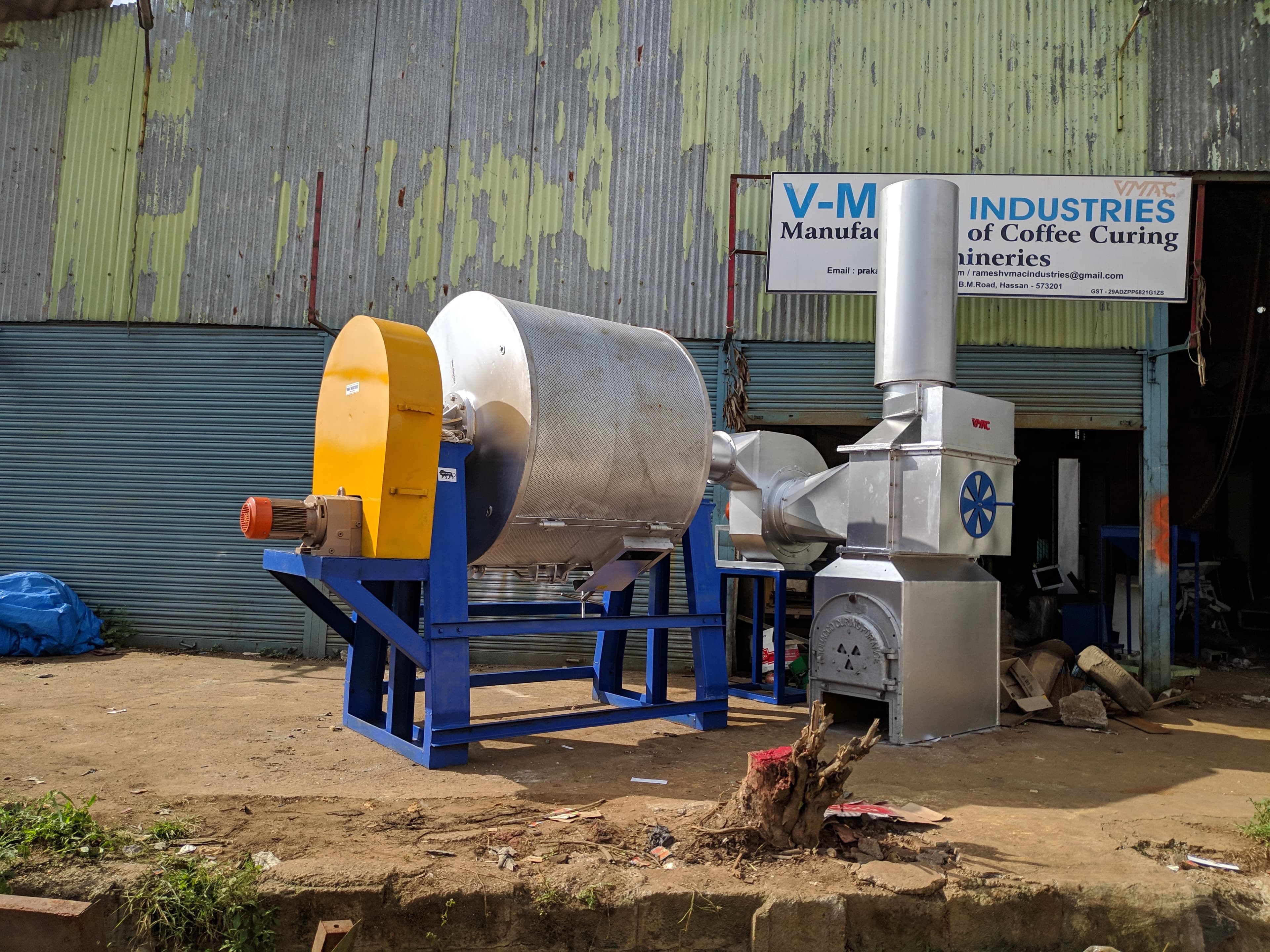
Coffee Dryer
Rotary drum dryer for parchment coffee, cherry coffee, and pepper. Reduces moisture from 50–55% post-pulping down to 10–12% for safe storage — weather-independent and significantly faster than sun drying.
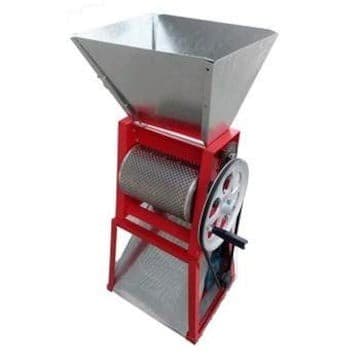
Coffee Pulper
Removes the fruit skin and outer mucilage from ripe coffee cherries to expose the parchment-covered bean — the critical first step in washed and honey processing that determines cup quality from the very beginning.
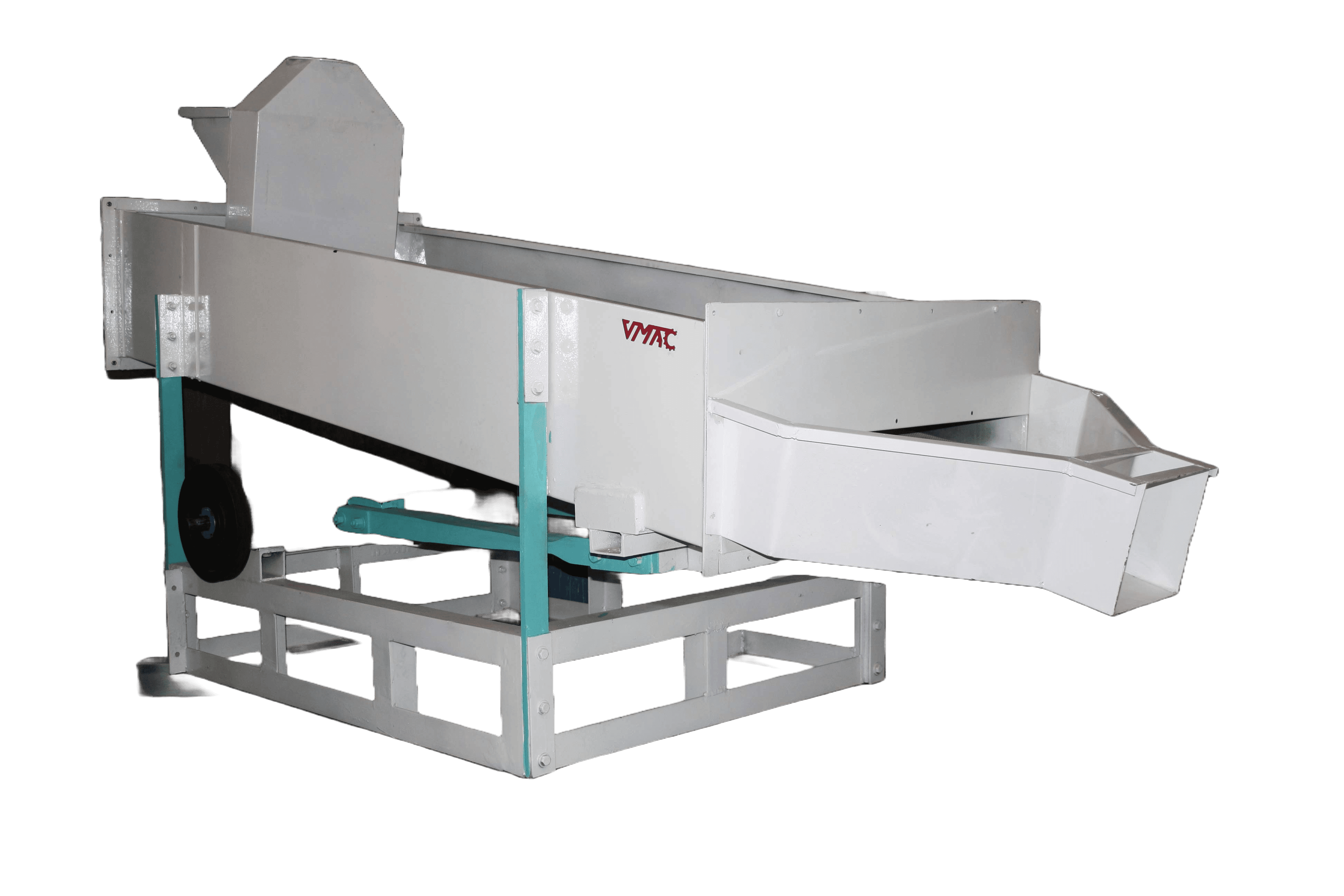
Coffee Pre-Cleaner
Vibratory scalping screen with air aspiration — removes sticks, leaves, large stones, soil clods, and light chaff from coffee cherry or parchment at intake, protecting every downstream machine in the processing line.