
VMAC Industries
·2026-04-16
How to Set Up a Wet Processing Line
Washed coffee commands a premium because it produces clean, bright cups with clearly defined origin character. The trade-off is infrastructure: a wet processing line requires more equipment, more water, and more careful sequencing than dry or natural methods. This guide covers the full machine sequence from cherry reception to dried parchment, with the engineering data you need to size equipment, estimate water demand, and plan your site layout.
The Wet Mill Sequence
A complete wet processing line follows this order:
- Cherry reception hopper -- receives harvested cherry from the field and meters it into the line.
- Pre-cleaner -- removes leaves, twigs, and dirt before processing begins.
- Cherry classifier (flotation tank) -- separates ripe cherry (which sinks) from unripe, damaged, or insect-bored cherry (which floats). This single step eliminates a major source of cup defects before any mechanical processing occurs.
- Pulper -- removes the outer skin and fruit pulp, exposing the mucilage-coated parchment.
- Demucilager or fermentation tanks -- removes the mucilage layer, either mechanically (3-8 minutes) or biologically (12-72 hours).
- Channel washer -- washes residual mucilage from the parchment and simultaneously density-grades it via overflow weirs.
- Mechanical dryer -- reduces parchment moisture from 50-55% down to 11-12%.
- Conditioning and storage -- a 12-24 hour rest period before hulling, allowing internal moisture to equilibrate and preventing cracks.
Every machine in this chain must be capacity-matched. A 3 TPH pulper feeding a 500 kg/hr demucilager creates a bottleneck that backs up the entire line and risks cherry sitting too long before pulping.
Cherry Classification
Flotation-based classification is the first quality gate. Ripe, dense cherry sinks; underripe, overripe, and insect-damaged cherry floats. Removing floaters before pulping prevents defective beans from contaminating the rest of the lot.
Available capacities range from 500 to 15,000 kg/hr across five models. Water consumption is 30-60 litres per tonne of cherry with a recirculation system, or 150-300 litres per tonne without. Given that classification water carries minimal organic load compared to pulping or washing water, recirculation is straightforward and should be standard on any new installation.
Pulping
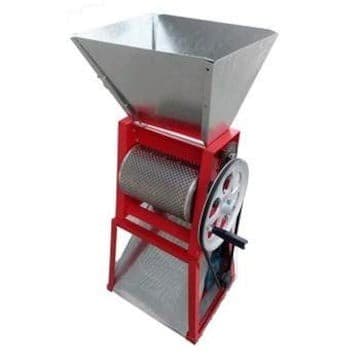
The pulper is the heart of the wet mill. It mechanically strips the skin and pulp from the cherry, leaving the parchment bean still coated in mucilage.
Disc vs. drum pulpers. Disc pulpers suit small to medium operations and handle capacities up to roughly 2,000 kg/hr cherry. Drum pulpers are the standard choice above 2,000 kg/hr, offering higher throughput and more consistent performance with mixed cherry sizes.
Key specifications:
- Capacity: 100-15,000 kg/hr cherry input
- Pulper gap: 0.5-8 mm, adjustable per variety (Robusta cherries are typically larger than Arabica and require a wider gap)
- Water consumption: 2-10 L/kg cherry; recirculating systems bring this down to 2-4 L/kg
- Target breakage: less than 2% at correct gap setting
Operating discipline matters here. Check pulper output every 10-15 minutes during operation. You are looking for two things: zero whole (unpulped) cherries passing through, and less than 2% broken or nicked parchment. If either condition fails, stop and adjust the gap. Running with incorrect gap settings for even an hour can downgrade an entire lot.
Pulp disposal. Coffee pulp has a BOD of 40,000-80,000 mg/L -- among the highest organic loads in agricultural processing. Never discharge pulp water into streams or open land. Route pulp through a mechanical pulp press to remove excess water, then compost the pressed pulp. The press water can go to settling ponds. Well-composted coffee pulp makes excellent organic fertiliser and closes the nutrient loop back to the plantation.
Mucilage Removal: Mechanical vs. Fermentation
After pulping, the parchment is still coated in mucilage -- a sticky, sugar-rich layer that must be removed before drying. You have two options, and the choice has significant implications for water use, labour, cup profile, and risk.
Option A: Demucilager (Mechanical Removal)
A demucilager uses friction and water to strip mucilage in 3-8 minutes. Capacities range from 100 to 2,000 kg/hr parchment.
Advantages:
- Water: 4-8 L/kg parchment, which is 80-90% less than the ferment-and-wash route
- Speed: Processing is continuous, with no 12-72 hour fermentation wait
- Consistency: Eliminates over-fermentation risk entirely -- over-fermentation is the single most common source of cup defects in washed coffee
- Flexibility: Partial mucilage removal settings (20%, 50%, 75%) allow honey-style processing on the same equipment
Trade-off: mechanical removal does not develop the fermentation-derived flavour compounds that some specialty buyers value. For high-volume commercial washed coffee, this trade-off is overwhelmingly favourable.
Option B: Fermentation Tanks (Traditional)
Fermentation relies on naturally occurring microorganisms to break down mucilage over 12-72 hours. Duration is temperature-dependent -- faster in warm lowland conditions, slower at altitude.
Advantages:
- Flavour complexity: Fermentation develops organic acids and flavour precursors valued in specialty lots
- Lower capital cost: Concrete or tiled tanks are cheaper than a demucilager
Disadvantages:
- Water: 40-60 L/kg total for fermentation plus subsequent washing
- Risk: Over-fermentation produces vinegary, oniony, or phenolic off-flavours that cannot be corrected downstream
- Labour: Requires monitoring (pH, feel, smell) and timely draining -- typically at night or early morning when fermentation completes
For estates processing specialty Arabica for auction or direct trade, fermentation tanks are often worth the risk and labour. For cooperatives handling large mixed-lot Robusta volumes, mechanical demucilaging is the more reliable path.
Wet Mill Equipment
Channel Washing
The channel washer serves a dual function that is easy to underestimate: it washes residual mucilage from the parchment and simultaneously density-grades it.
How grading works. The channel is typically 0.4 m wide, 0.3 m deep, and 5-30 m long. Water flows through the channel carrying parchment with it. Overflow weirs at intervals along the channel skim off lighter (lower-density) parchment, separating the lot into 2-3 grade fractions. Heavier, denser beans travel further down the channel -- these are your top-grade parchment.
This gravity-based grading is simple and effective. It costs nothing beyond the water already being used for washing and requires no electricity.
Water consumption depends on what happens upstream:
- Post-fermentation: 15-30 L/kg parchment
- Post-demucilager: 5-10 L/kg parchment (much of the mucilage is already gone)
Site planning note: the channel washer doubles as a transport mechanism. Design your layout so the channel carries washed parchment directly to the drying area by gravity and water current. This eliminates a manual handling step and reduces labour during peak harvest when every hour counts.
Drying
Drying is where many wet mills lose quality. The objective is to reduce parchment moisture from 50-55% down to 11-12% without damaging the bean structure.
Temperature is the hard constraint. Never exceed 50 degrees C. Above this threshold, the outer layers of the parchment dry faster than the core, creating case hardening -- a dry shell around a still-moist interior. Case-hardened beans develop mould during storage, even though they read 11-12% on a surface moisture meter.
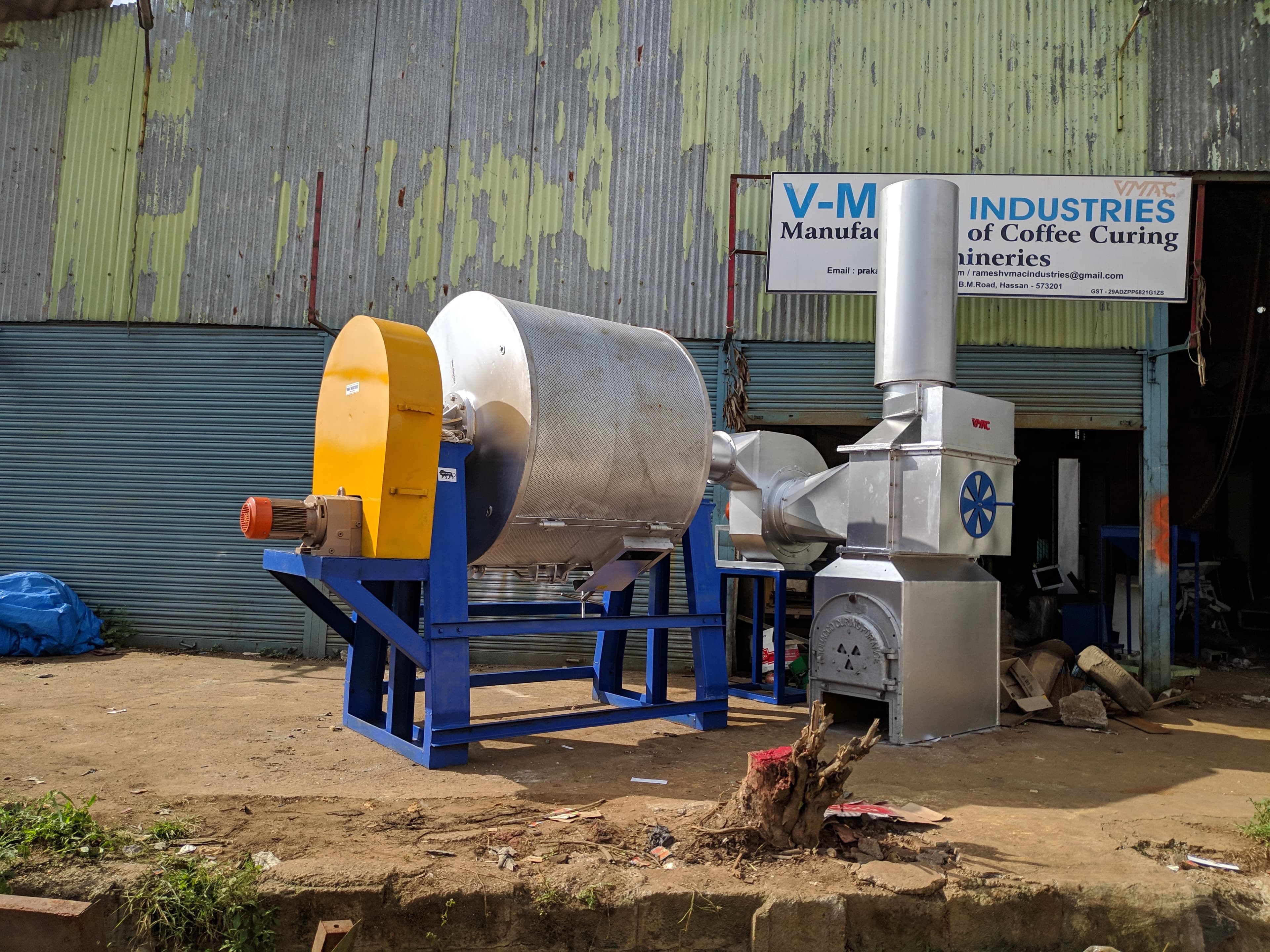
VMAC offers five dryer models from the CD-100 (100 kg per batch) to the CD-2000 (2,000 kg per batch). At 40-50 degrees C, drying takes 18-36 hours depending on ambient humidity and initial moisture content.
The hybrid approach. Sun-dry parchment on raised beds or patios to 30-35% moisture, then transfer to a mechanical dryer for the finish. This captures the cost advantage of solar energy for the easy first phase (removing free water) while using controlled mechanical heat for the critical final phase where over-drying or uneven drying does the most damage. Estates using this approach report 40-60% savings on firewood or diesel compared to full mechanical drying.
Post-drying conditioning. After reaching target moisture, allow parchment to rest for 12-24 hours in a covered, ventilated area before hulling. This conditioning period lets internal moisture gradients equalise. Hulling immediately after drying -- when the outer parchment is brittle but the core may still be slightly moist -- causes internal cracks that show up as broken beans after hulling and reduce the exportable fraction.
Water Budget
Water is the critical constraint for wet mills, particularly in Karnataka and Kerala where peak harvest (October-January) coincides with the dry season.
Total water consumption per kilogram of cherry input:
| Processing Route | Water (L/kg cherry) |
|---|---|
| Full washed with fermentation | 100-150 |
| Washed with demucilager | 40-60 |
The demucilager route cuts water demand by 50-60%. For estates with limited water sources or those sharing water with other agricultural operations, this difference often determines whether a wet mill is feasible at all.
Wastewater management is not optional -- it is a regulatory and environmental requirement:
- Pulping water (BOD 40,000-80,000 mg/L): route through pulp press, then to lined settling ponds. The pressed pulp goes to composting.
- Washing water (BOD 8,000-25,000 mg/L): settling ponds followed by land irrigation on non-coffee crops.
- Demucilager discharge: produces a concentrated slurry at lower total volume, which is easier to manage than the dilute high-volume fermentation and wash water.
Plan wastewater infrastructure during the design phase, not as an afterthought. Retrofitting settling ponds into an already-built mill is expensive and disruptive.
Capacity Tiers and Power
Match your equipment selection to your peak harvest throughput, not your average:
| Tier | Cherry Throughput | Electrical Load |
|---|---|---|
| Small estate | 500 kg/hr - 1 TPH | 15-30 kW |
| Medium estate | 1-3 TPH | 30-75 kW |
| Large estate / cooperative | 3-8 TPH | 75-180 kW |
These figures assume a complete line from reception through drying. The dryer is typically the largest single electrical load. Estates using the hybrid sun-plus-mechanical drying approach can reduce installed electrical capacity, since the dryer runs for fewer hours and can be a smaller model.
A three-phase power supply is essential for any line above 500 kg/hr. If grid power is unreliable -- common in rural growing regions -- budget for a standby generator sized to at least the pulper and demucilager. Cherry waiting to be pulped deteriorates within hours; a power outage during peak intake can ruin an entire day's harvest.
Site Layout
Water source reliability is the number one site constraint. Before selecting equipment or pouring concrete, confirm that your water source can sustain peak-season demand for 8-12 hours per day across the entire harvest period. Bore wells, gravity-fed streams, and farm ponds all have failure modes during dry months.
Key layout considerations:
- Gravity flow. Position the reception hopper at the highest point. Each subsequent machine should be at the same level or slightly lower, using gravity to move cherry, parchment, and water through the line. Pumping costs energy and adds failure points.
- Drying area. Sun drying requires 200-400 square metres per 1,000 kg of wet parchment. A mechanical dryer occupies just 4-6 square metres for a 500 kg unit. Most estates use a combination of both.
- Channel washer as transport. Design the washing channel to terminate at the drying area. The water current carries parchment to where it needs to go.
- Pulp composting. Locate the compost area downhill from the pulp press but away from the drying area. Coffee pulp in active decomposition produces strong odours and attracts insects -- neither should be near drying parchment.
- Wastewater ponds. Lined settling ponds need to be downslope from the processing area but upslope from irrigable land, allowing gravity discharge after treatment.
Leave expansion space. If you are building a 1 TPH line today, lay out the site so that adding a second pulper or a larger dryer does not require demolishing existing structures.
Setting up a wet processing line?
VMAC engineers design complete wet mills from cherry reception to dried parchment — pulpers, demucilagers, washers, and dryers matched to your cherry volume and site. One supplier, one accountability.