
Coffee Washer
Washes fermented or mechanically demucilaged parchment coffee clean, grades it by density to remove floaters and under-developed beans, and transports it to the drying area — completing the final wet-mill quality step before drying.
| Capacity | 300 – 5,000 kg parchment/hr (model and channel length dependent) |
| Washer type | Washing channel (gravity-flow) / Drum washer (rotary mechanical) |
| Channel dimensions (typical) | 0.4 m wide × 0.3 m deep × 5–30 m long (site-customised) |
| Drum washer cylinder diameter | 400 mm – 800 mm (model dependent) |
| Water flow rate | 15 – 40 litres per kg parchment (post-fermentation); 5 – 10 L/kg (post-demucilager) |
| Density separation | Floaters separated at overflow weirs; sinkers transported by current to outlet |
| Motor power (drum washer) | 0.75 HP – 3 HP |
| Motor power (channel pump) | 0.75 HP – 2 HP (water recirculation pump) |
| Power supply | Single-phase 230V or 3-phase 415V, 50 Hz |
| Output | Washed, density-graded parchment coffee — ready for drying |
Key Features
Simultaneous washing and density grading in a single water-based operation — lighter, under-developed, and hollow parchment beans float and are separated at overflow weirs before reaching the dryer
Washing channel (gravity-flow trough) and drum washer (rotary mechanical) configurations available — channel for traditional large-volume wet mills, drum washer for compact sites and more uniform mechanical wash
Adjustable water flow rate controls washing intensity and parchment transport speed — operator matches flow to fermentation endpoint and parchment load without mechanical change
Overflow weir positions in channel design allow multi-stage density separation — densest (highest grade) fraction separated at first weir, intermediate grade at second, floaters collected at overflow for separate grading or rejection
Gravity water flow design requires no additional motor power for channel models — operational energy cost is limited to the pump maintaining channel water level, typically 0.75–2 HP
Stainless steel construction for drum washer models; reinforced concrete channel design with stainless steel or HDPE lining options for corrosion resistance against mucilage acids
Capacity matched to upstream pulper and demucilager throughput — VMAC sizes washing channels and drum washers to balance the complete wet-mill processing line
Under-fermented bean detection at the wash stage: parchment with residual mucilage still attached has intermediate density and can be routed to a second wash pass rather than discarded
Water recycling compatible — washing water can be recirculated through settling tanks to reduce net water consumption, with settled mucilage-water directed to wastewater treatment
Models & Sizing
Right-Sized for Every Operation
VMAC designs and manufactures coffee washing channels and drum washers across four capacity tiers. Washing channel dimensions are site-customised — length, gradient, and weir positions are specified at installation to match upstream pulper and fermentation tank capacity. Drum washers are supplied as standalone units. Contact VMAC for channel layout design and site-specific sizing.
Micro-Mill / Small Cooperative
300 – 800 kg parchment/hr
capacity
Small washing stations, farm-gate micro-mills, and specialist estates processing 50–200 bags per harvest. Short washing channel (5–10 m) or compact drum washer. Suitable for Coorg and Chikmagalur smallholder estates.
Small–Medium Estate
800 – 2,000 kg parchment/hr
capacity
Medium estates and cooperative central washing stations. Channel length 10–20 m with two overflow weir positions for two-grade separation, or medium drum washer unit. Common across Wayanad and Coorg.
Large Estate
2,000 – 3,500 kg parchment/hr
capacity
Large integrated estates processing 500–1,500 bags per harvest. Extended channel (20–30 m) with three weir positions, or large drum washer. Suited for major Karnataka and East African estate central processing.
Commercial / High-Volume
3,500 – 5,000 kg parchment/hr
capacity
High-volume central processing stations and cooperative export-grade wet mills. Extended channel or twin-drum configuration. Handles full-day harvest of large Indian estate groups and East African cooperative unions.
Custom
Your specification
capacity
For operations requiring throughput beyond the standard range. VMAC engineers the machine to your exact capacity and processing conditions.
Request a Custom QuoteConfigurations
Full Model Range — Coffee Washer
Washing channel models are site-customised for length, gradient, and weir configuration. Drum washer models are supplied as standalone units. All models designed for integration with VMAC pulpers and fermentation systems. Contact VMAC for channel layout drawings and capacity matching for your wet mill.
| Model Tier | Capacity (kg parchment/hr) | Washer Type | Motor Power | Density Grades Separated | Best For |
|---|---|---|---|---|---|
| Micro-Mill / Small Cooperative | 300 – 800 | Short channel or compact drum | 0.75 HP | 2 (sinkers / floaters) | Small washing station / micro-mill / specialty estate |
| Small–Medium Estate | 800 – 2,000 | Channel (10–20 m) or medium drum | 1 – 1.5 HP | 2–3 | Medium estate / cooperative central station |
| Large Estate | 2,000 – 3,500 | Channel (20–30 m) or large drum | 1.5 – 3 HP | 3 | Large integrated estate central processing |
| Commercial / High-Volume | 3,500 – 5,000 | Extended channel or twin-drum | 2 – 3 HP | 3 | High-volume commercial / cooperative export station |
| Custom | Built to your capacity and specification — contact us for a quote | ||||
Overview
About the Coffee Washer
VMAC's Coffee Washer — also called a washing channel, washing machine, or density washer — is the final active processing stage in the wet-mill sequence. It performs three simultaneous operations: it washes residual mucilage from parchment coffee after fermentation or mechanical demucilaging; it grades the parchment by density using flowing water to separate lighter, under-developed, or partially hollow beans from the denser, better-developed majority; and it transports the cleaned parchment from the fermentation or demucilager area to the drying beds or mechanical dryer using water current as the conveying medium. Two principal configurations are available. The washing channel is a gravity-flow concrete or stainless-steel trough — water flows continuously from the inlet end to the outlet, carrying parchment along while floaters rise to the surface and are skimmed off at designated overflow weirs. Channel length and gradient control retention time and washing intensity. Washing channels are the traditional design used in all major coffee-producing regions and remain the dominant choice where civil construction is straightforward and where the water-transport function (moving parchment across the wet mill yard) is valued. The drum washer is a rotating perforated cylinder through which parchment and water pass together — the tumbling action provides more aggressive and uniform washing, is more compact than an equivalent-capacity channel, and is better suited for sites where floor space is limited or where a mechanically consistent wash is needed for every batch. As a density sorter, the washer performs a function that no other wet-mill machine duplicates. Fully developed, dense Arabica parchment sinks rapidly and flows along the channel floor or drum interior. Lighter parchment — hollow beans, insect-damaged beans, partially developed peaberries, and under-fermented parchment still carrying mucilage — has lower density and floats, collecting at the overflow weirs where it is diverted as lower-grade or defect fraction. This density separation at the wash stage is the last opportunity in wet processing to remove low-density defects before the coffee goes to the dryer. Removing these beans at this point prevents them from contaminating the parchment lot throughout drying, hulling, and sorting. For estates using mechanical demucilaging rather than fermentation tanks, the washer still serves an important role: the post-demucilager rinse removes mechanical mucilage traces, and the density grading function is unchanged. The water volume required is significantly lower in this configuration — post-demucilager washing requires approximately 5–10 litres per kg parchment versus 15–30 litres for a post-fermentation channel wash.
How It Works
How It Works
A coffee washer uses water flow and density differences to simultaneously clean parchment coffee and remove lighter, lower-quality beans. The operating principle is straightforward: water carries parchment, dense beans sink and travel to the outlet, light beans float and are skimmed off. The channel gradient and water flow rate are the operator's primary controls.
Parchment coffee enters the washer
Parchment coffee — either freshly fermented (mucilage broken down biologically, surface still slippery) or freshly demucilaged (mucilage removed mechanically) — is discharged into the inlet end of the washing channel or drum washer. At this point, the parchment still carries surface mucilage residue (fermented) or light mechanical film (demucilaged), and the lot contains a mixture of bean densities. Water flow begins immediately, carrying beans toward the outlet while the wash commences.
Density separation — floaters rise, sinkers travel
As parchment beans enter the flowing water, density differences immediately produce separation. Fully developed, well-fermented parchment coffee is dense (typically 1.1–1.2 g/cm³) and sinks, travelling along the channel floor in the water current toward the outlet. Under-developed, hollow, insect-damaged, or still-mucilage-coated (under-fermented) beans have lower density and float on the water surface. In a well-designed washing channel with overflow weirs, the floaters collect at the first weir and are skimmed into a separate collection trough for independent grading or downgrade. Multiple weir positions allow two or three density grades to be separated in a single channel pass.
Washing — residual mucilage removed by water agitation
As parchment travels through the channel or drum, the combined effect of water turbulence, bean-on-bean contact, and bean-on-channel-wall contact physically dislodges and dissolves residual mucilage. In a washing channel, the turbulence from water flow provides this agitation. In a drum washer, the rotating cylinder tumbles beans through the water, providing more uniform and aggressive washing with a shorter channel length. The washing water, now carrying dissolved mucilage and organic matter, drains away through the channel outlet or drum screen and is directed to wastewater settling ponds. Clean parchment exits with a much reduced BOD load compared to fermentation tank discharge.
Graded parchment discharged to dryer
Dense, clean parchment — the premium grade fraction — exits the channel outlet or drum discharge end and is collected for transport to drying beds or a mechanical dryer. At this point the parchment is fully washed, density-graded, and carrying surface moisture of approximately 55–60%. The floater fraction collected at overflow weirs is set aside for separate processing or downgrading. For most Indian washed Arabica estates, two grades emerge from the washing channel: the main lot (sinkers) and the lower grade (floaters). This two-grade separation at the wash stage is the last practical point to improve lot cleanliness before drying.
Know the Difference
Coffee Washer vs. Manual Washing / Hand-Stirred Channel
The mechanised washing channel or drum washer is frequently compared to the traditional manual washing method — where fermented parchment is washed in open concrete tanks or channels by hand-stirring or foot-treading. The comparison is relevant for smaller Indian estates and cooperatives deciding whether to invest in a dedicated washing machine.
| Feature | Coffee Washer | Manual Washing / Hand-Stirred Channel |
|---|---|---|
| Washing consistency | Uniform — controlled water flow rate and channel gradient ensure consistent wash across the entire batch; no operator-to-operator variation | Variable — wash intensity depends on worker effort and duration; uneven washing across large batch volumes; under-washed patches common |
| Density separation (grading) | Systematic — overflow weirs separate floaters from sinkers at defined points; density grades are consistently captured and separated | Partial — floaters are visible and can be skimmed manually, but separation is incomplete and labour-intensive; light beans often remain in the main lot |
| Labour requirement | Low — one operator monitors water flow and clears overflow weirs; channel or drum runs unattended during normal operation | High — requires 3–6 workers continuously stirring, scooping floaters, and moving parchment during washing; physically demanding during peak harvest |
| Water use | Controlled and measurable — flow rate set by inlet valve; water can be recirculated through settling tanks to reduce net consumption | Typically higher and unmeasured — manual washing commonly uses excess water to compensate for inefficient agitation |
| Throughput | Continuous and consistent — washing channel or drum washer processes parchment at a steady rate matched to upstream pulper capacity | Batch-limited — manual washing handles one tank at a time; throughput constrained by available labour and tank capacity |
| Under-fermented bean detection | Reliable — under-fermented beans with residual mucilage have higher surface drag and intermediate floating behaviour; separated at weirs or can be routed for re-wash | Unreliable — under-fermented beans are harder to identify by hand; often pass into the main lot and create ferment defects in the final cup |
| Capital cost | Moderate — concrete channel construction or drum washer purchase; one-time investment; low operating cost thereafter | Low capital — only tank construction required; but high and recurring labour cost during every harvest season |
For Indian estates processing more than 500 kg parchment per harvest day, the labour savings and grading consistency of a mechanised washing channel or drum washer typically justify the capital investment within 2–3 harvest seasons. Below this threshold, a well-designed manual washing channel with clearly positioned overflow weirs can be acceptable if labour is available and affordable.
Processing Line
Where It Fits in Your Processing Line
The coffee washer sits at the end of the wet-mill active processing sequence — after fermentation or demucilaging, and before the drying stage. It is the last machine the coffee passes through before moisture reduction begins.
Cherry intake / flotation tank
Freshly harvested cherries water-sorted; ripe cherry sinks, floaters removed
Coffee pulper
Cherry skin removed; parchment exits with mucilage coat intact
Fermentation tanks OR demucilager
Washed process: fermentation tanks break down mucilage over 12–72 hours; alternative: mechanical demucilager removes mucilage in minutes — both routes converge at the washer
Coffee washer
This machineResidual mucilage removed by water agitation; parchment density-graded at overflow weirs — floaters separated as lower grade; clean, graded parchment transported to dryer
Drying beds / mechanical dryer
Washed, graded parchment dried to 10–12% moisture; raised beds for sun drying or rotary / belt dryer for mechanical drying
FAQ
Frequently Asked Questions
What is a coffee washer and why is it needed in washed processing?
A coffee washer is a water-channel or rotary-drum machine that performs the final active step in wet processing. After fermentation breaks down the mucilage layer (or after a mechanical demucilager removes it), the parchment coffee still carries residual mucilage on its surface and contains a mixture of bean densities. The washer does three things simultaneously: it washes the residual mucilage away using flowing water and agitation; it grades the parchment by density — denser, fully developed beans sink and travel to the outlet while lighter, under-developed, hollow, or damaged beans float and are separated at overflow weirs; and it transports the washed, graded parchment to the drying area using water current. Without a washing step, residual mucilage on parchment can cause uneven drying, increased defect rates, and cup quality problems.
How does a washing channel separate coffee grades by density?
The density separation principle is straightforward: fully developed, dense parchment coffee sinks in water and travels along the channel floor in the current. Under-developed, hollow, or damaged beans — including over-fermented and under-fermented parchment still carrying mucilage — are less dense and float on the water surface. In a washing channel with overflow weirs, the channel is designed so that floating beans collect and overflow at defined weir positions. The position and height of each weir controls which density fraction is captured. A two-weir channel separates three fractions: premium sinkers at the outlet, intermediate-density beans at the second weir, and clear floaters at the first weir. This systematic density separation at the wash stage is a major quality-control step — it removes low-density defects before they contaminate the drying lot.
Is a coffee washer still needed if a demucilager is used instead of fermentation?
Yes — the coffee washer remains an important step even when a mechanical demucilager replaces fermentation tanks. The demucilager removes the bulk of the mucilage mechanically, but trace mucilage film typically remains on the parchment surface after the first pass. A brief washing channel pass removes this film and ensures the parchment reaches the dryer clean. More importantly, the density grading function of the washing channel is independent of how mucilage was removed — it grades beans by their physical density, which is a function of bean development and structural integrity, not mucilage content. The density separation step catches under-developed and damaged beans regardless of process route. Post-demucilager washing typically uses 5–10 litres of water per kg parchment versus 15–30 L/kg for post-fermentation washing, reflecting the already-reduced mucilage load.
How do I identify under-fermented coffee at the washing channel stage?
Under-fermented parchment coffee still has mucilage partially intact on its surface — the pectin has not fully degraded and the surface remains slippery to the touch rather than cleanly releasing from the parchment. In the washing channel, these beans behave with intermediate density — they do not sink cleanly like fully fermented parchment, nor do they float like hollow beans. They tend to drift at mid-channel depth or cling together. In a well-operated washing channel, the experienced operator identifies these beans by the slippery feel when rubbing a handful of parchment between the palms — clean parchment squeaks; under-fermented parchment is slick. Under-fermented beans should be routed to a second wash pass or back to the fermentation tank, not allowed to proceed to the dryer. Under-fermented coffee in the dryer produces a range of cup defects including rubbery, oniony, and undefined ferment-type flavours.
What is the water requirement for a coffee washing channel?
Water requirement depends on whether the washing follows traditional fermentation or mechanical demucilaging. Post-fermentation: a washing channel uses approximately 15–30 litres of water per kg of parchment coffee processed — this is a significant demand that must be planned for during the October–January Indian main crop harvest. Post-demucilager: the wash only needs to remove light mucilage film, requiring 5–10 litres per kg parchment. Water recirculation systems — where washing channel outflow is settled in a tank and recirculated — can reduce net water consumption by 30–50%, with settled mucilage-water directed to wastewater treatment or land irrigation after treatment. VMAC designs washing systems with recirculation compatibility as standard for water-constrained sites.
What is the difference between a washing channel and a drum washer?
A washing channel is a gravity-flow concrete or stainless-steel trough, typically 5–30 metres long, through which water flows continuously carrying parchment from the inlet to the outlet. The channel uses water current and gravity to transport and wash beans. Overflow weirs at specific points along the channel separate floaters. A drum washer is a rotating perforated cylinder through which parchment and water pass together — the tumbling action provides more aggressive and uniform washing in a much more compact footprint. Drum washers are better for sites with limited floor space and for uniform mechanical washing independent of water flow gradient. Washing channels are preferred where the water transport function (moving parchment across the wet mill yard) is important, where large capacity is needed with minimal motor power, and where the traditional two or three-grade weir separation is the primary quality-sorting requirement.
Can the washing channel double as a transport system for moving parchment around the wet mill?
Yes — this is a traditional and practical function of the washing channel that is often overlooked in modern discussions of the machine. In a conventional Indian or East African wet mill, the washing channel is designed as the primary transport route for parchment from the fermentation area to the drying yard. The gradient of the channel (typically 1–2% fall) and the controlled water flow carry parchment by water current over distances of 10–50 metres with no mechanical conveyors or additional labour. This dual function — washing and transport — is a significant operational advantage of the washing channel design over the more compact drum washer, which requires a separate conveyor to move parchment to the dryer. For new wet mill designs, VMAC layouts typically route the washing channel from the fermentation tank outlet to the drying bed edge, using the channel length for both washing time and transport distance simultaneously.
How should washing water and effluent from the washing channel be managed?
Washing channel effluent contains dissolved mucilage, fermentation acids, and suspended parchment fines — it has a BOD of approximately 8,000–25,000 mg/L, significantly lower than pulping water or direct fermentation overflow but still many times stronger than domestic sewage. Direct discharge to streams or rivers is environmentally prohibited and legally actionable in India under water pollution control regulations. Best practice routes washing channel outflow through a series of settling ponds: the first pond captures suspended solids; subsequent ponds allow biological BOD reduction; the clarified final effluent can be used for land irrigation on coffee plots as a dilute liquid fertiliser. Some estates run the effluent through an anaerobic biodigester before final irrigation discharge, recovering biogas in the process. VMAC recommends designing at least three settling-pond stages for any wet mill with a washing channel.
Related guides
Learn more about this equipment
Send a Enquiry Request
Retail store
Mon-Sat 9am to 5pm.
B.M road, Hassan, Karnataka 573201
Related Products
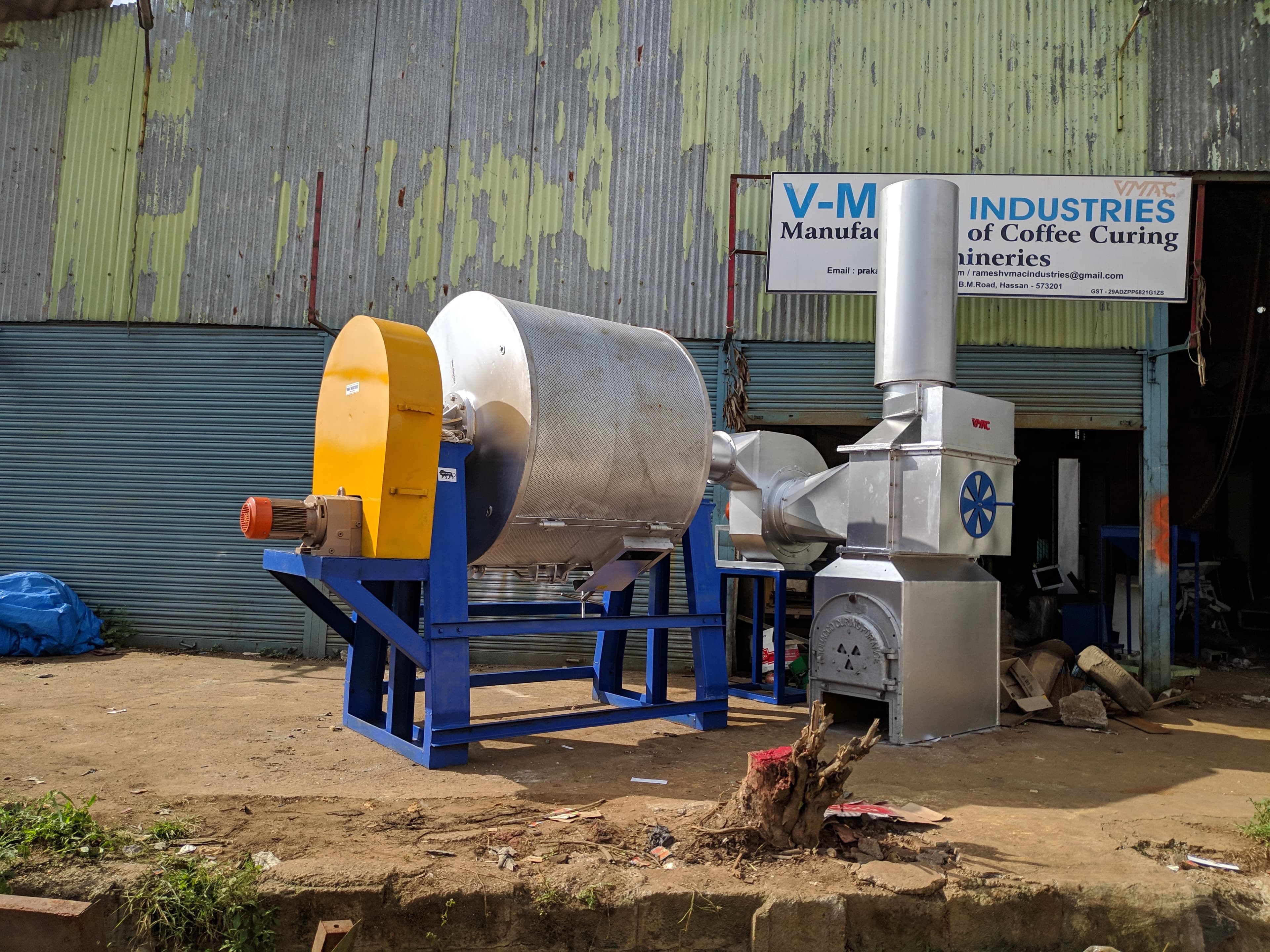
Coffee Dryer
Rotary drum dryer for parchment coffee, cherry coffee, and pepper. Reduces moisture from 50–55% post-pulping down to 10–12% for safe storage — weather-independent and significantly faster than sun drying.
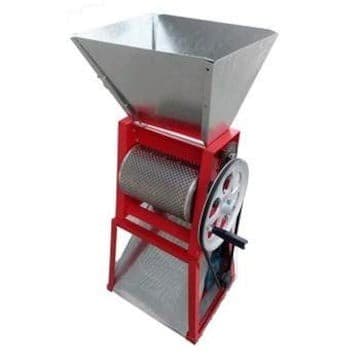
Coffee Pulper
Removes the fruit skin and outer mucilage from ripe coffee cherries to expose the parchment-covered bean — the critical first step in washed and honey processing that determines cup quality from the very beginning.
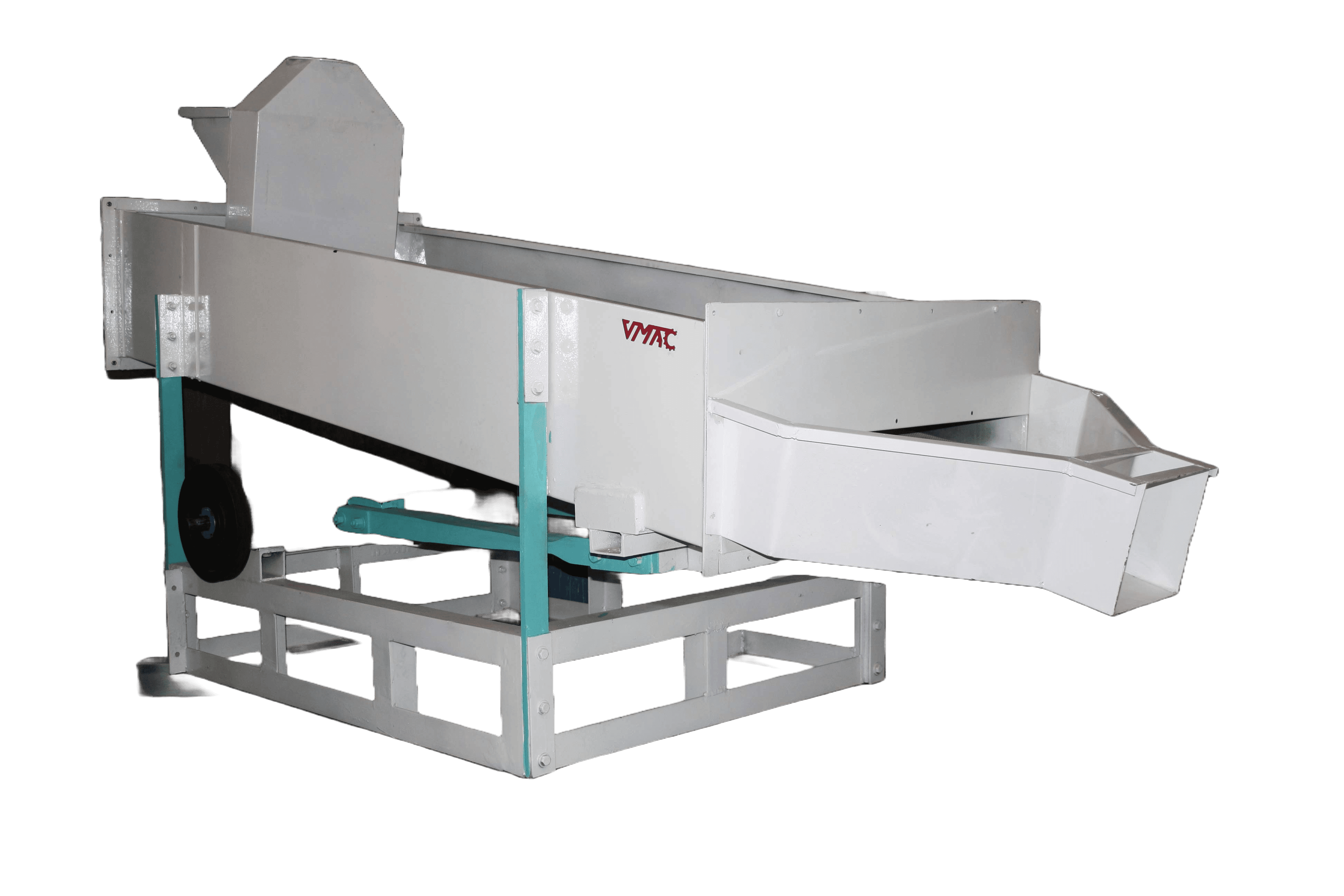
Coffee Pre-Cleaner
Vibratory scalping screen with air aspiration — removes sticks, leaves, large stones, soil clods, and light chaff from coffee cherry or parchment at intake, protecting every downstream machine in the processing line.