
Coffee Demucilager
Mechanically removes the sticky mucilage layer from pulped parchment coffee in minutes — replacing the 12–72 hour fermentation tank cycle, saving up to 90% of process water, and giving operators full, repeatable control over mucilage removal level.
| Capacity | 100 – 2,000 kg parchment/hr (model dependent) |
| Mucilage removal efficiency | 85 – 99% mucilage removal in single pass |
| Processing time per batch | 3 – 8 minutes (continuous flow models: real-time) |
| Water consumption | 4 – 8 litres per kg parchment (vs 40–60 L/kg for ferment + wash) |
| Rotor / paddle material | Stainless steel SS304 / food-grade hardened alloy |
| Cylinder / screen | Perforated stainless steel — mucilage-water drains, parchment retained |
| Motor power | 1.5 HP – 10 HP (model dependent) |
| Power supply | Single-phase 230V or 3-phase 415V, 50 Hz |
| Output | Demucilaged parchment coffee, ready for washing channel and drying |
| Parchment damage rate | < 1.5% at correct rotor speed and feed rate |
Key Features
Rotating paddle or beater mechanism scrubs mucilage from parchment surface in 3–8 minutes — reducing the processing cycle from 12–72 hours to within the same shift
Water savings of 80–90% versus conventional fermentation-and-wash: reduces process water from 40–60 litres per kg parchment to 4–8 litres per kg, critical for water-scarce Indian growing regions
Adjustable rotor speed and retention time allow the operator to control mucilage removal level — from partial (honey-style) to complete (fully washed) — without changing machines
Eliminates over-fermentation risk — the single most common source of 'ferment' cup defects in the washed process — by replacing biological fermentation with a timed mechanical cycle
Mucilage discharged as a concentrated slurry rather than diluted across fermentation tank water — lower overall effluent volume and easier BOD management at the wastewater treatment stage
Stainless steel or food-grade wetted surfaces throughout resist mucilage acidity; rotor, paddles, and cylinder lining are replaceable wear parts serviceable in the field
Capacity range from 100 kg parchment/hr for micro-mills to 2,000 kg parchment/hr for large estate central processing stations — all models designed for continuous operation during harvest
Compatible as a direct downstream unit from any disc or drum pulper — can be installed in-line or as a standalone receiving unit from fermentation tanks for partial-ferment + mechanical finish workflows
Reduced fermentation infrastructure requirement — eliminates or reduces tank capacity needed, freeing capital and wet mill floor area for other processing steps
Models & Sizing
Right-Sized for Every Operation
VMAC manufactures demucilagers in four capacity tiers from micro-mill scale through large estate central processing. All models share the same perforated-drum rotor mechanism with adjustable speed; continuous-flow and batch configurations are available. Contact VMAC for exact dimensions and site-specific configurations.
Micro-Mill
100 – 300 kg parchment/hr
capacity
Small specialty washing stations, farm-gate micro-mills, and cooperative pilot units. Batch or continuous configuration. Suits Coorg and Chikmagalur smallholder estates producing 50–200 bags per harvest.
Small Estate
300 – 600 kg parchment/hr
capacity
Small to medium estates and cooperative washing stations. Continuous-flow configuration. Common for Indian Arabica estates processing 200–500 bags per harvest and East African cooperative stations.
Medium Estate
600 – 1,200 kg parchment/hr
capacity
Medium estates and central processing stations. Continuous-flow with variable-speed rotor. Suited for Wayanad and Coorg estates processing 500–1,500 bags per harvest.
Large Estate / Commercial
1,200 – 2,000 kg parchment/hr
capacity
Large integrated estates and multi-farm central processing stations. High-throughput continuous-flow design. Handles full-day harvest of large Indian estate groups and export-volume cooperative unions.
Custom
Your specification
capacity
For operations requiring throughput beyond the standard range. VMAC engineers the machine to your exact capacity and processing conditions.
Request a Custom QuoteConfigurations
Full Model Range — Coffee Demucilager
All models feature perforated stainless steel drum, adjustable-speed rotor, food-grade wetted surfaces, and single or 3-phase motor options. Continuous-flow configuration standard from Small Estate tier upward. Contact VMAC for exact dimensions and bespoke configurations.
| Model Tier | Capacity (kg parchment/hr) | Motor Power | Water Use (L/kg parchment) | Configuration | Best For |
|---|---|---|---|---|---|
| Micro-Mill | 100 – 300 | 1.5 – 2 HP | 5 – 8 | Batch or continuous | Specialty micro-mill / smallholder estate |
| Small Estate | 300 – 600 | 2 – 3 HP | 4 – 7 | Continuous-flow | Small cooperative / washing station |
| Medium Estate | 600 – 1,200 | 5 – 7.5 HP | 4 – 6 | Continuous-flow, variable speed | Medium estate central processing station |
| Large Estate / Commercial | 1,200 – 2,000 | 7.5 – 10 HP | 4 – 6 | High-throughput continuous-flow | Large estate / multi-farm commercial station |
| Custom | Built to your capacity and specification — contact us for a quote | ||||
Overview
About the Coffee Demucilager
VMAC's Coffee Demucilager — also called a mechanical mucilage remover, aquapulper, or friction washer — strips the sticky mucilage layer from parchment coffee mechanically rather than biologically. The mucilage (mesocarp) is the dense, sugary, gel-like layer that clings to parchment coffee immediately after pulping. In the conventional washed process, this layer is broken down by lactic acid bacteria over 12–72 hours in fermentation tanks before it can be washed away. The demucilager replaces this waiting time with a few minutes of controlled mechanical scrubbing. The machine works by feeding pulped parchment coffee — still carrying its full mucilage coat — into a rotating cylinder fitted with paddles, beaters, or a textured rotor. The mechanical action abrades the mucilage from the parchment surface while a controlled water flow flushes the released mucilage away as a stream of mucilage-water. The parchment exits clean, undamaged, and ready for the washing channel and dryer within the same processing shift. For Indian coffee estates in Coorg, Chikmagalur, and Wayanad — where the washed process is the dominant quality protocol — the demucilager delivers three operational advantages over fermentation tanks: speed (same-day processing eliminates overnight soaking logistics), water savings (80–90% reduction in process water versus traditional ferment-and-wash), and consistency (mechanical removal produces a uniform mucilage removal level batch to batch, whereas fermentation varies with ambient temperature, microbial population, and bean load). The demucilager also eliminates the risk of over-fermentation — the single most common source of 'ferment' cup defects in the washed process. The demucilager does not, however, reproduce the flavour-active fermentation biochemistry that many specialty roasters seek in high-scoring washed coffees. Where cup differentiation through fermentation terroir is a commercial priority, fermentation tanks remain the preferred route. The demucilager is therefore the correct choice for volume-focused clean-cup washed production, where efficiency, water management, and repeatability matter more than fermentation character.
How It Works
How It Works
A mechanical demucilager replaces biological fermentation with controlled mechanical friction. Pulped parchment coffee — still carrying its full mucilage coat — is fed into the machine and scrubbed clean within minutes. The process is continuous and controllable: rotor speed and water flow rate are the operator's two primary variables.
Pulped parchment coffee feed
Freshly pulped parchment coffee, still coated in wet mucilage, is fed directly from the pulper outlet or collected from a brief pre-soak channel into the demucilager inlet. The mucilage at this stage is a thick, gel-like coating — chemically it is primarily pectin and sugars — and adheres firmly to the parchment surface. Feed rate should match the demucilager's rated throughput; overloading reduces mechanical contact efficiency and leaves patches of unremoved mucilage.
Mechanical scrubbing — rotor paddles abrade the mucilage
Inside the demucilager drum, a rotating shaft fitted with paddles or beaters throws the parchment beans against each other and against the perforated drum wall. This combined bean-on-bean and bean-on-drum friction physically dislodges the mucilage from the parchment surface. Rotor speed is the primary control variable: higher speed increases abrasion and shortens the time to full removal but increases the risk of parchment cracking if set too high. Correct speed is confirmed by inspection of the output — parchment should be clean and smooth, with no white mucilage patches, and breakage should be below 1.5%.
Water flush — mucilage drained as slurry
A controlled flow of water is introduced into the drum continuously during operation. This water performs two roles: it lubricates the parchment surface to prevent over-abrasion of the parchment itself, and it carries the dislodged mucilage out through the perforated drum wall as a concentrated mucilage-water slurry. Because only the mucilage — not the full parchment mass — is dissolved and flushed, the effluent volume is much smaller than fermentation tank wash water. The mucilage slurry exits to a collection channel and is directed to wastewater treatment or a biodigester.
Clean parchment discharge — ready for washing channel and dryer
Demucilaged parchment exits the drum outlet clean, visually free of mucilage, and at a moisture level suitable for immediate washing channel grading and transport to the dryer. Unlike fermentation-processed parchment, which exits the fermentation tank still slippery and requiring extended washing, mechanically demucilaged parchment can proceed to a brief final rinse wash and then directly to drying beds or a mechanical dryer. This compresses the total wet-mill cycle from 2–3 days (pulp → ferment → wash → dry) to a single processing shift.
Know the Difference
Coffee Demucilager vs. Traditional Fermentation Tank
The demucilager and the fermentation tank are the two principal methods of removing mucilage from pulped parchment coffee. They differ fundamentally in mechanism, time, water demand, effluent profile, and the flavour outcome they produce in the cup. Neither is universally superior — the choice depends on your production priorities.
| Feature | Coffee Demucilager | Traditional Fermentation Tank |
|---|---|---|
| Mucilage removal mechanism | Mechanical — rotating paddles and bean-on-bean friction dislodge mucilage physically within 3–8 minutes | Biological — lactic acid bacteria and pectinase enzymes break down pectin bonds over 12–72 hours at ambient temperature |
| Processing time | Same-shift processing: pulp in the morning, dry the same afternoon — no overnight hold required | 12–72 hours depending on ambient temperature, microbial load, and cherry variety — overnight holds are standard |
| Water consumption | 4–8 litres per kg parchment — 80–90% less water than fermentation + washing combined | 40–60 litres per kg parchment including washing channel flush — high demand during peak harvest when water is often scarce |
| Over-fermentation risk | Zero — mucilage removal is mechanically timed and controllable; 'ferment' cup defect is eliminated | Significant — ambient temperature fluctuations, over-soaking, and microbial variation all cause over-fermentation; the leading source of 'ferment' cup defects in washed coffee |
| Batch-to-batch consistency | High — rotor speed and retention time are fixed parameters; output is uniform across batches | Variable — fermentation rate changes with temperature (faster at 30°C, slower at 15°C), requiring endpoint testing and experienced operator judgement |
| Fermentation flavour contribution | None — mechanical removal does not develop fermentation-derived flavour compounds; cup is clean but without fermentation character | Significant — fermentation produces lactic acid, acetic acid, and complex aromatic compounds that contribute to the distinctive brightness and complexity of fully fermented washed coffee |
| Infrastructure requirement | Single machine; no tank construction required; compact footprint; lower civil engineering cost for new wet mills | Fermentation tanks (concrete or stainless) require significant capital construction, water management infrastructure, and covered space |
| Effluent management | Concentrated mucilage slurry — lower volume, higher concentration; easier to route to biodigester or settling pond | Large volume of fermentation water with dissolved mucilage, high BOD — requires multiple settling ponds and extended treatment time |
For volume-focused Indian estate washed coffee production — where clean cup, efficiency, and water management are the primary constraints — the demucilager is the stronger operational choice. For specialty-positioned estates where fermentation character (the bright, complex acidity of a well-fermented Ethiopia or Coorg washed) is a commercial differentiator, traditional fermentation tanks remain the correct tool. Many high-end estates run both: tank fermentation for specialty micro-lots, demucilager for estate-grade volume production.
Processing Line
Where It Fits in Your Processing Line
The demucilager sits immediately downstream of the pulper in the wet mill sequence. It replaces or supplements fermentation tanks, compressing the mucilage removal step from days to minutes.
Cherry intake / flotation tank
Freshly harvested cherries sorted by water flotation — ripe cherry sinks, floaters removed before pulping
Coffee pulper
Cherry skin removed; parchment exits with mucilage coat intact — feeds directly to demucilager or fermentation tank
Demucilager
This machineMechanical paddles and bean-on-bean friction strip mucilage from parchment in 3–8 minutes; mucilage-water slurry discharged to effluent treatment; replaces or supplements fermentation tanks
Washing channel / Coffee washer
Brief water wash removes residual mucilage traces and grades parchment by density — floaters separated as lower grade; transports parchment to dryer
Drying beds / mechanical dryer
Parchment dried from ~55% moisture to 10–12%; mechanical demucilager output typically reaches the dryer the same day as harvest — eliminating overnight holds
FAQ
Frequently Asked Questions
What does a demucilager do and how is it different from a pulper?
A pulper (coffee depulper) removes the outer cherry skin (exocarp) to expose the parchment-covered bean — but the bean exits with its full mucilage coat (mesocarp) still intact. The mucilage is the sticky, gel-like layer of pectin and sugars between the parchment and the skin. A demucilager is a separate downstream machine that removes this mucilage layer. In the conventional washed process, mucilage removal happens biologically in fermentation tanks over 12–72 hours. The demucilager replaces that fermentation step with mechanical scrubbing — paddles and bean-on-bean friction dislodge the mucilage in 3–8 minutes. The two machines perform sequential but distinct operations: pulper first, demucilager second.
Does a demucilager affect cup quality compared to fermentation?
Yes — the cup profile of mechanically demucilaged coffee differs from fermentation-processed washed coffee. Fermentation produces lactic and acetic acids, esters, and complex aromatic compounds that develop the characteristic brightness and complexity associated with high-scoring washed Arabica. Mechanical demucilaging removes mucilage without this biochemical development — the result is a clean, mild, consistent cup profile without the fermentation-derived acidity and complexity. For volume-grade estate washed coffee destined for commodity or mainstream specialty markets, this is generally acceptable and preferred (cleaner baseline, no ferment defect risk). For micro-lot specialty production where fermentation character is a value driver — the Kenya washing station flavour profile, for example — fermentation tanks remain the better choice.
How much water does a demucilager save compared to traditional fermentation and washing?
A traditional ferment-and-wash process uses approximately 40–60 litres of water per kilogram of parchment coffee processed — this includes fermentation tank water, washing channel water, and transport water. A mechanical demucilager uses 4–8 litres per kg parchment — a reduction of 80–90%. Over a full harvest season, this is significant: a medium estate processing 500 MT of parchment per harvest would reduce process water consumption from 20–30 million litres to 2–4 million litres. For Indian coffee estates in water-stressed regions such as Coorg and Wayanad, this difference is operationally and environmentally significant, particularly during the October–December main crop harvest when water sources are under pressure.
Can a demucilager be used for honey process coffee?
Yes, and this is one of its key advantages. Because rotor speed and retention time are adjustable, the demucilager can be set to remove only a portion of the mucilage — leaving 20%, 50%, or more of the mucilage layer intact on the parchment surface. This allows the same machine to produce yellow honey (20–50% mucilage remaining), red honey (50–75% remaining), or black honey (75–100% remaining) profiles by varying the processing time and rotor speed. This flexibility is not available with fermentation tanks, where full mucilage removal is the natural endpoint. For estates that want to diversify into honey processing without building dedicated infrastructure, the adjustable demucilager is the most cost-effective route.
What causes over-fermentation in traditional fermentation tanks, and does the demucilager eliminate it?
Over-fermentation occurs when pulped parchment coffee remains in fermentation tanks longer than optimal — typically when ambient temperature rises unexpectedly, when microbial populations are elevated from previous batches, or when overnight soaking extends beyond the planned time window. The chemical result is excess acetic acid and ethanol production, which penetrates the parchment and imparts a sour, vinegary, or ferment-defect flavour in the cup. It is irreversible — over-fermented coffee cannot be corrected downstream. The demucilager eliminates this risk entirely: mucilage removal is mechanical and timed, with no biological processes active. The output quality is determined by rotor speed and feed rate — both of which are directly operator-controlled — rather than by ambient biology.
Is a washing channel still needed after a demucilager?
Yes — a brief washing channel or drum washer step is still recommended after a demucilager, even though the majority of the mucilage has been removed mechanically. The post-demucilager wash serves two purposes: it rinses any remaining mucilage traces from the parchment surface (ensuring a clean final cup), and it grades the parchment by density — lighter, less-dense beans (partially hollow or under-developed) float and are separated as lower grade. This density grading at the washing stage is a standard quality-control step in washed processing regardless of whether fermentation tanks or a demucilager are used. The wash is brief (2–5 minutes) and requires significantly less water than a post-fermentation washing channel flush.
What is the maintenance requirement for a demucilager?
Demucilager maintenance is straightforward and comparable to other wet-mill machinery. Daily: flush the drum and screen thoroughly after each processing session — mucilage residue is highly acidic and will corrode metal surfaces if allowed to dry. Inspect paddles for wear — heavy mucilage processing gradually rounds paddle edges. Weekly: inspect the perforated drum screen for blocked perforations and flush with a high-pressure water jet. Seasonally: replace rotor paddles if tip wear is visible; inspect rotor shaft bearings; check motor belt tension (belt-drive models) or direct-drive coupling. Key wear parts — rotor paddles, perforated drum screen sections — are replaceable field components; VMAC supplies them for all models. A demucilager maintained to this schedule typically operates 8–12 harvest seasons before major overhaul.
Can a demucilager handle Robusta as well as Arabica?
Yes, though operating parameters differ. Robusta cherry typically produces a parchment bean with a thinner, less adherent mucilage layer than Arabica — this means Robusta parchment demucilages more quickly at lower rotor speeds, and the risk of over-abrasion (parchment surface damage) is higher if Arabica settings are applied without adjustment. In practice, most Indian Robusta wet-processing uses the washed method, though the quality premium for washed Robusta in India is lower than for washed Arabica. Where VMAC demucilagers are used for Robusta processing, the operator should start at a lower rotor speed than the Arabica setting, confirm output quality by visual inspection of the first batch, and adjust upward if residual mucilage is visible.
Related guides
Learn more about this equipment
VMAC Industries
How to Set Up a Wet Processing Line
A practical guide to building a washed coffee processing line — from cherry reception through drying. Machine sequence, water requirements, capacity matching, and site planning for Indian estates and cooperatives.
Read the guide →
VMAC Industries
Wet vs Dry Processing: Equipment Requirements Compared
A practical equipment comparison for coffee producers deciding between wet (washed) and dry (natural) processing — what machines each method needs, what's shared, and how to choose based on your operation.
Read the guide →
Send a Enquiry Request
Retail store
Mon-Sat 9am to 5pm.
B.M road, Hassan, Karnataka 573201
Related Products
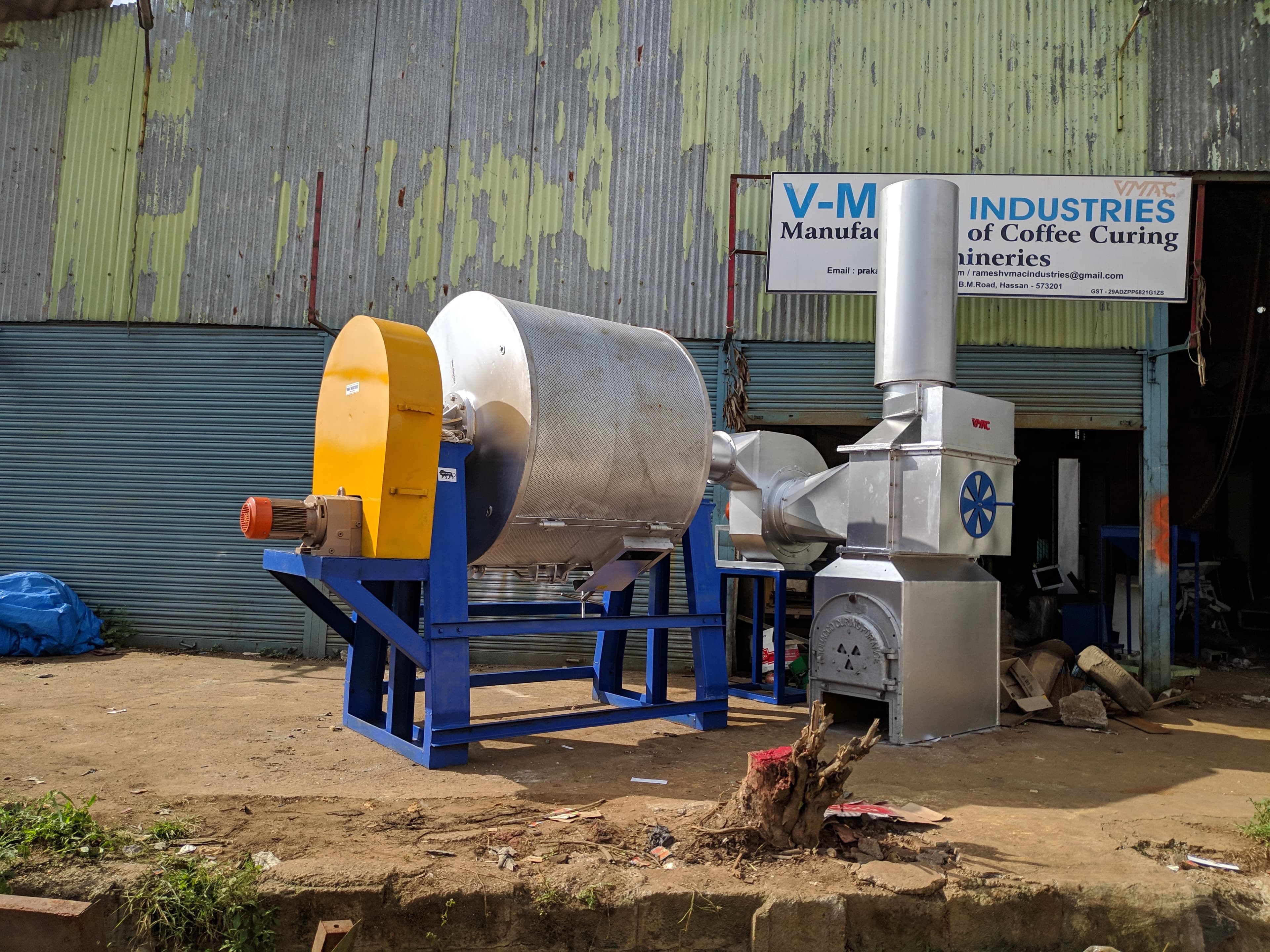
Coffee Dryer
Rotary drum dryer for parchment coffee, cherry coffee, and pepper. Reduces moisture from 50–55% post-pulping down to 10–12% for safe storage — weather-independent and significantly faster than sun drying.
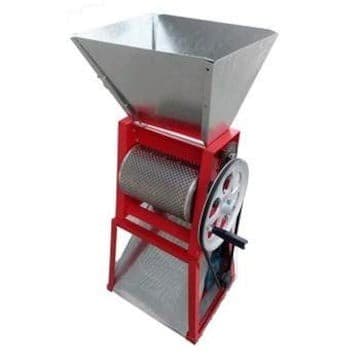
Coffee Pulper
Removes the fruit skin and outer mucilage from ripe coffee cherries to expose the parchment-covered bean — the critical first step in washed and honey processing that determines cup quality from the very beginning.
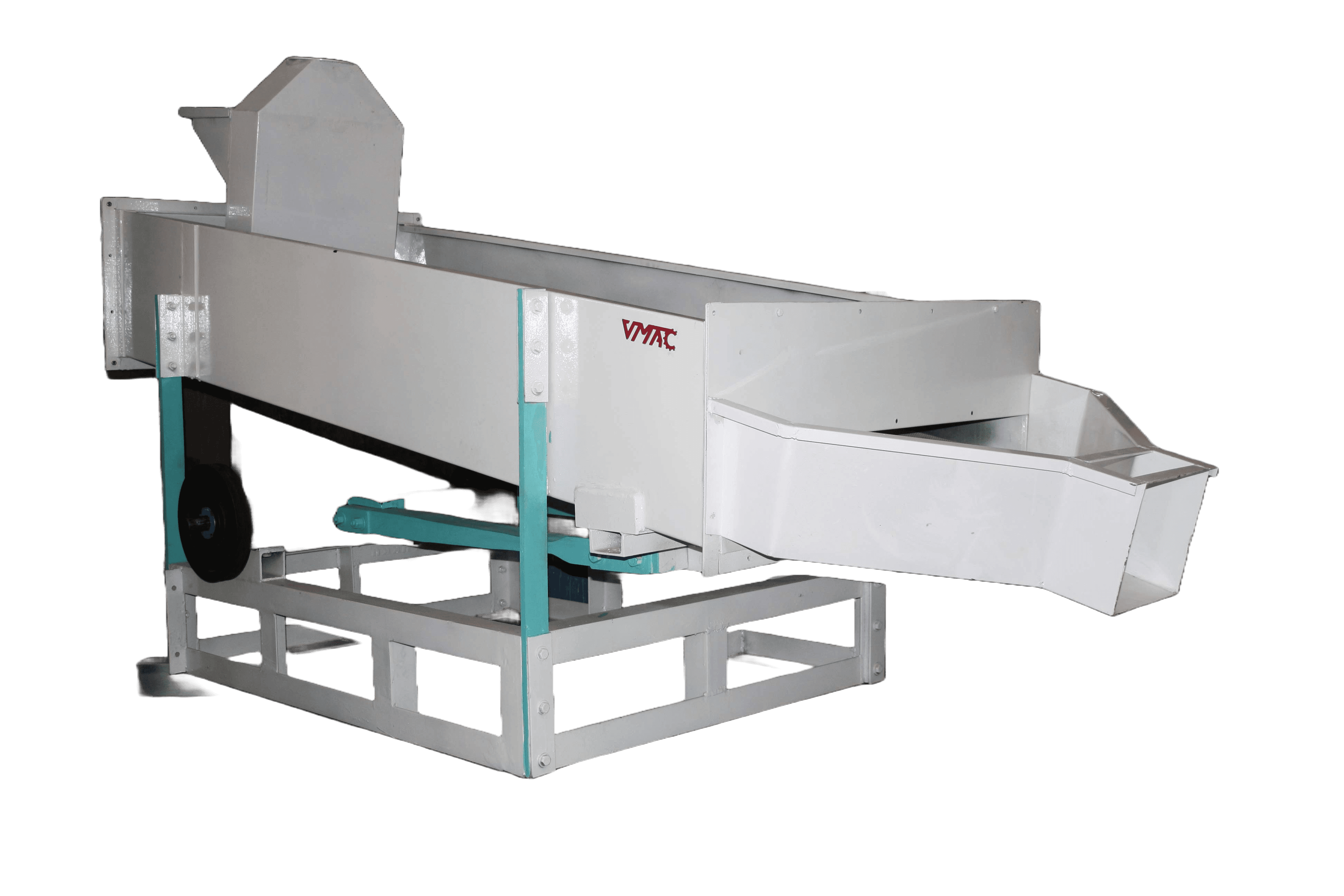
Coffee Pre-Cleaner
Vibratory scalping screen with air aspiration — removes sticks, leaves, large stones, soil clods, and light chaff from coffee cherry or parchment at intake, protecting every downstream machine in the processing line.