
Category
Purity & Quality Sorting Equipment
Purity and quality sorting equipment is the final line of defence in the coffee dry mill — the machines that take hulled, polished green coffee and sort it into precise, export-ready grade fractions while removing every foreign body, defective bean, and off-colour kernel that would trigger rejection at Coffee Board of India inspection or at the buyer's receiving warehouse. No amount of careful hulling and polishing can substitute for proper sorting. A single stone in an export bag can damage a roaster's grinder and end a commercial relationship. A batch of undersized beans mixed into a Plantation AA lot triggers immediate downgrading. Sorting equipment eliminates these risks systematically, and VMAC manufactures the complete range of machines needed for a fully equipped sorting line.
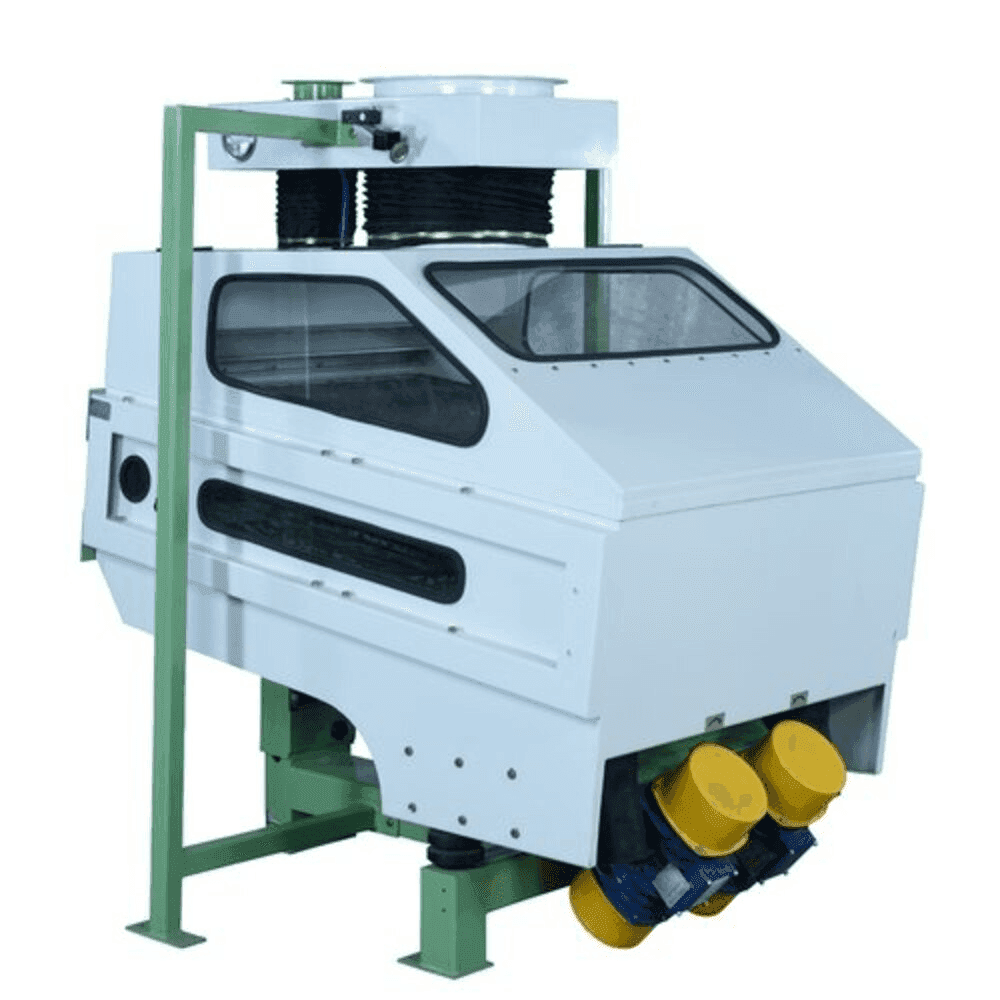
The Coffee Destoner runs early in the sorting sequence — after the pre-cleaner and before the huller in most mill configurations. It uses a vibrating inclined deck with calibrated upward airflow to exploit the density difference between coffee beans (approximately 1.35 g/cm3) and stones (approximately 2.5 g/cm3). Coffee is fluidized and carried downhill to the clean product discharge, while dense stones, gravel, glass fragments, and metal pieces remain in contact with the deck and are conveyed uphill into a sealed stone collection pocket. Running stones through a rubber roll huller causes catastrophic damage — shredded rolls, broken components, and repair costs many times the price of the destoner itself. The Coffee Board of India requires zero heavy foreign matter in export lots, making destoning standard in every licensed curing works across Karnataka, Kerala, and Tamil Nadu. VMAC destoners are available from 500 kg/hr for estate dry mills to 5 TPH for large curing works.
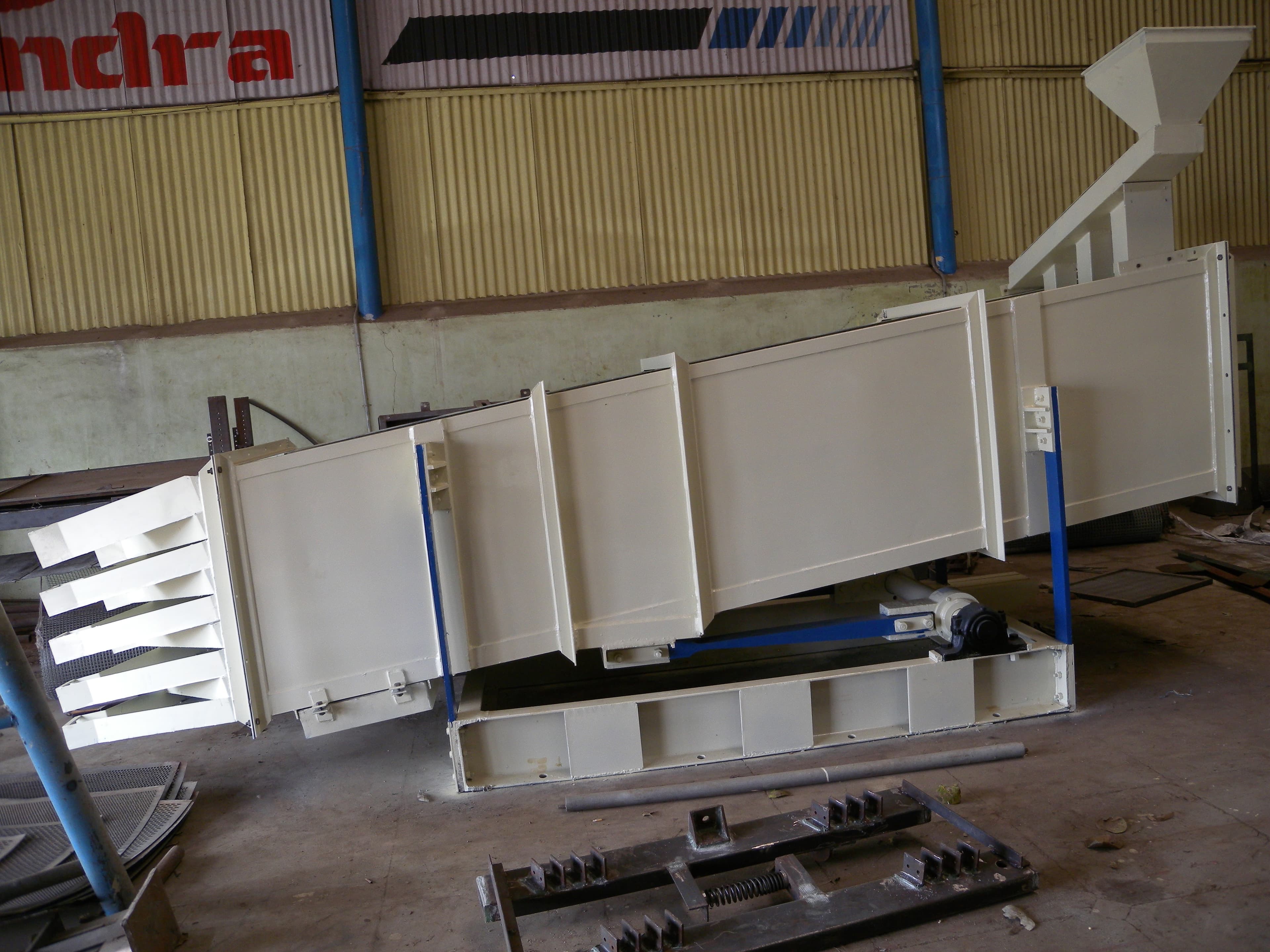
The Coffee Grader (also called a screen grader or sizing machine) is the machine that makes Coffee Board grade compliance possible. Using an eccentric-drive reciprocating mechanism to oscillate a stack of two to five perforated screen decks, it sorts green coffee by physical bean size into the specific screen fractions required for export certification: Plantation AA (Screen 17 and above), Plantation A (Screen 16 and above), Plantation B (Screen 15 and above), Plantation C (Screen 14 and above), and Peaberry grades. Round-hole decks sort flat beans by diameter, while oblong slot perforations separate round peaberries from flat beans in the same pass. Proper screen grading must occur before gravity separation — the gravity table requires uniform-size input to function correctly. VMAC graders range from 500 kg/hr two-deck estate models to 10 TPH four-deck industrial configurations with integrated peaberry screens.
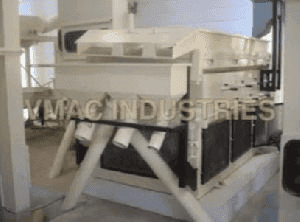
The Gravity Separator is the most powerful quality-sorting tool in the dry mill. It uses an air-fluidized vibrating deck to sort green coffee beans by specific density — the single most reliable method for separating premium, fully developed beans from low-density defects that screening cannot detect. Immature beans, hollow shells, withered beans, insect-damaged kernels, and floaters are all lighter than sound beans of the same screen size. The gravity separator stratifies them into three distinct output fractions: a heavy cut of concentrated premium-grade beans, a middlings blend, and a lights tailings fraction containing the defects. It is standard equipment in all Coffee Board-licensed curing works and a prerequisite for achieving Plantation AA, MNEB, and specialty export grades. Models range from 500 kg/hr for small estates to 10 TPH for large export curing works in Coorg, Chikmagalur, and the Shevaroy Hills.
The Color Sorter is the final automated quality gate before export bagging. Using high-resolution CCD camera arrays, it inspects every bean in free fall and ejects defective beans — black beans, sour beans, white beans, and discoloured kernels — with millisecond-fast air jets. These are colour-visible defects that no mechanical separator can detect: a black bean weighs the same and measures the same screen size as a sound bean, but it will ruin a cupping score. Available in 8 to 64 chute configurations with throughputs from 500 kg/hr to 8 TPH, VMAC color sorters include dual-side camera imaging for greater than 99% ejection accuracy and a second-sort outlet that allows the reject stream to be re-run to recover falsely ejected good beans.
The correct sorting sequence in a well-designed dry mill is: destoner, then screen grader (by size), then gravity separator (by density, run separately per screen fraction), then color sorter (by optical defect). Each machine removes a category of defect that the others cannot detect, and skipping any stage compromises the final lot quality. For estates and curing works in Wayanad, Kodagu, and across the Western Ghats coffee belt, this equipment is what separates commodity-grade output from premium export lots that command top prices at auction and in direct trade. VMAC supplies all four machines individually or as integrated sorting lines with matched capacities, connecting conveyors, and coordinated control systems for turnkey installation.
FAQ
Frequently Asked Questions
How does a gravity separator enhance coffee quality?
A gravity separator sorts coffee beans based on density, removing defective beans such as those that are immature, broken, or insect-damaged, ensuring only high-quality beans proceed to roasting.
What is the purpose of a de-stoner machine?
A de-stoner machine removes heavy foreign materials like stones and metal fragments from coffee beans, protecting downstream equipment and ensuring the purity of the final product.
How does a color sorter contribute to coffee consistency?
A color sorter uses optical technology to detect and remove discolored or defective beans, ensuring a uniform appearance and consistent quality in the final roasted coffee.
Why is grading important in coffee processing?
Grading sorts beans by size and weight, which helps in achieving uniform roasting and consistent flavor profiles, meeting specific quality standards.
What impurities are removed during the sorting process?
Impurities such as stones, metal fragments, defective beans, and chaff are removed during sorting, ensuring that only high-quality beans proceed to roasting.
Send a Enquiry Request
Retail store
Mon-Sat 9am to 5pm.
B.M road, Hassan, Karnataka 573201