
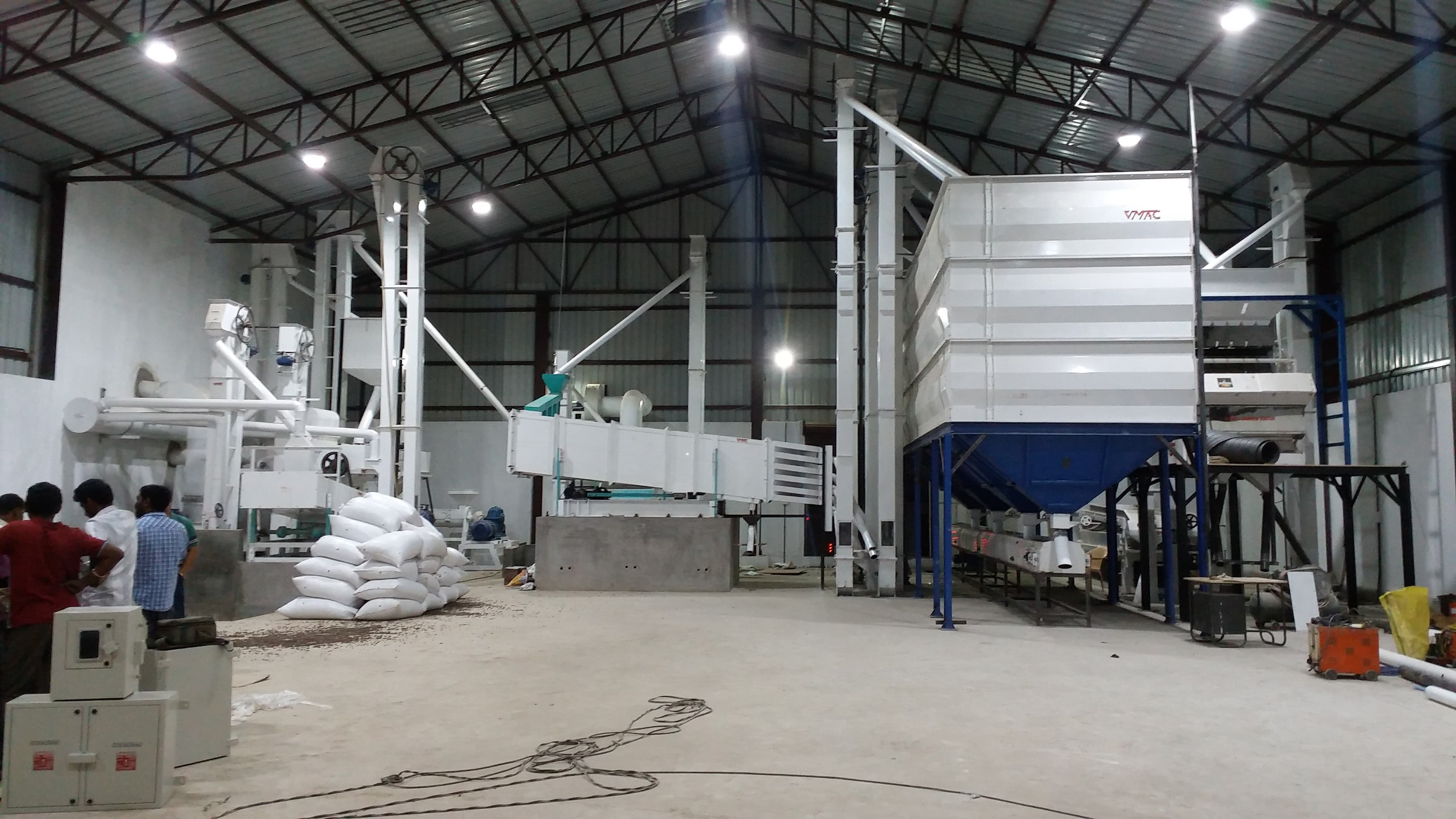
VMAC Industries
·2026-04-16
Cost of a Complete Coffee Processing Plant
A realistic cost breakdown for coffee processing plants in India — from small estate mills to large export facilities. Capacity tiers, what drives cost, operating expenses, and how to plan your investment.
Why cost information is hard to find
If you have spent any time searching for coffee processing plant costs in India, you already know the problem: nobody publishes numbers. Equipment suppliers quote on request, civil contractors estimate after a site visit, and the total project cost remains a black box until you are deep into conversations with multiple vendors.
This post is an attempt to change that. The figures below are indicative ranges based on our experience supplying complete processing lines across Karnataka, Kerala, Tamil Nadu, and export hubs. They are not fixed quotes. Every plant is different — your capacity, processing method, automation level, site conditions, and drying strategy all shift the number. But having a realistic starting range saves months of guesswork.
Disclaimer: All cost figures in this article are approximate and intended for planning purposes only. Actual costs vary significantly based on configuration, site conditions, material prices, and project scope. Contact an equipment supplier for a formal quotation.
The 14-step processing sequence
Before talking about cost, it helps to understand what you are actually buying. A complete coffee processing plant handles the full chain from harvested cherry to export-ready green bean. The standard sequence is:
- Cherry reception
- Pre-cleaning (removing sticks, stones, leaves)
- Cherry classification (sizing for uniform pulping)
- Pulping (removing the outer skin)
- Demucilaging or fermentation (removing the mucilage layer)
- Channel washing
- Drying (sun, mechanical, or hybrid)
- Pre-cleaning (dry stage)
- Hulling (removing parchment or husk)
- Winnowing (separating husk from bean)
- Screen grading (sorting by size)
- Gravity separation (sorting by density)
- Colour sorting (removing defects by optical detection)
- Weighing and bagging
Not every plant needs all 14 steps. A dry-process mill skips steps 4 through 6. A small estate doing sun drying skips the mechanical dryer. The steps you include directly determine the equipment list and, therefore, the cost.
Five capacity tiers
Coffee processing plants fall into roughly five tiers. The table below shows throughput, installed power, and the type of operation each tier serves.
| Tier | Capacity | Installed power | Typical operation |
|---|---|---|---|
| Small Estate Mill | 500 kg/hr - 1 TPH | 15-30 kW | Single estate, 300-600 bags/season |
| Medium Estate Mill | 1-3 TPH | 30-75 kW | 50-200 acre estates, specialty micro-mills |
| Large Estate / Small Curing Works | 3-8 TPH | 75-180 kW | Large estates, small licensed curing works |
| Licensed Curing Works | 8-20 TPH | 180-400 kW | Multi-estate, export-oriented processing hubs |
| Large Export Plant | 20-50 TPH | 400-1,000 kW | Commodity exporters, multi-origin blending |
What is included at each tier
The equipment scope grows with capacity. Here is a general breakdown of what a turnkey line includes:
All tiers: Reception hopper, pre-cleaner, pulper, channel washer, huller, winnower, screen grader, bucket elevators, belt conveyors, installation, and operator training.
Medium estate and above: Add cherry classifier, eco-demucilager, and gravity separator.
Large estate / small curing works and above: Add mechanical dryer, colour sorter, and storage silos.
Licensed curing works and above: Add automatic weighing and bagging systems, multiple pulper units for higher throughput.
Indicative equipment cost bands
These are equipment-only costs for a complete processing line — machines, elevators, conveyors, installation, and commissioning. Civil works, electrical infrastructure, and building costs are separate (discussed below).
| Tier | Equipment cost (INR) | Equipment cost (USD) |
|---|---|---|
| Small Estate Mill | 40-80 lakhs | $50,000-$100,000 |
| Medium Estate Mill | 1.2-3.2 crores | $150,000-$400,000 |
| Large Estate / Small Curing Works | 3-6 crores | $350,000-$750,000 |
| Licensed Curing Works | 6-15 crores | $750,000-$1.8 million |
| Large Export Plant | 15-40+ crores | $1.8 million-$5 million+ |
The wide ranges within each tier are not vagueness for the sake of it. A small estate mill that only does dry processing with sun drying will land at the low end. The same capacity mill with wet processing, a mechanical dryer, and a colour sorter will push toward the high end. The next section explains exactly what creates that spread.
Important: These are indicative ranges, not list prices. Steel costs, motor specifications, automation features, and your specific throughput requirements all affect the final number. Treat these as planning figures.
VMAC Processing Line Equipment
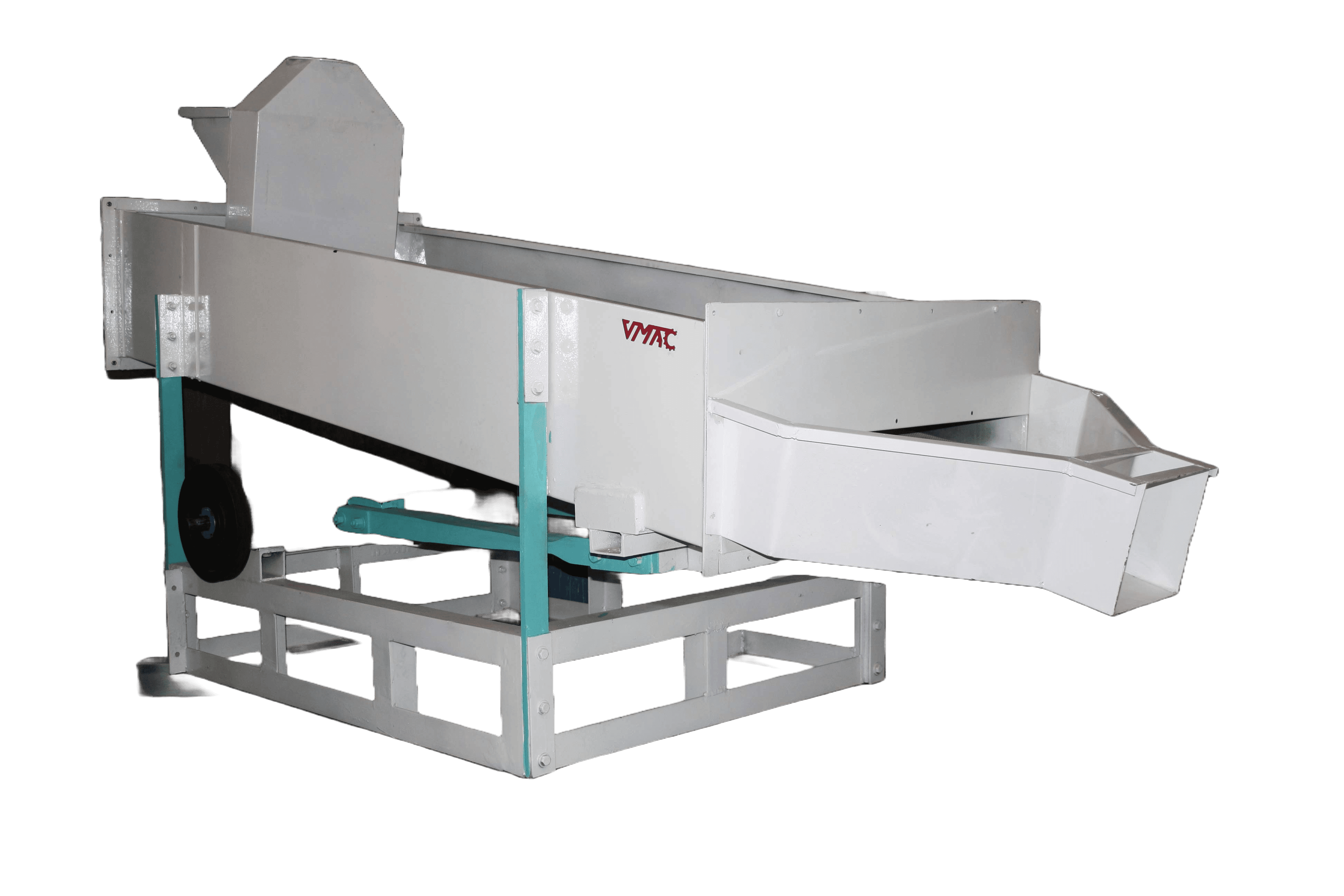
Pre-Cleaner
Essential Pre-Cleaning for Optimal Processing
View product →
Coffee Pulper
View product →
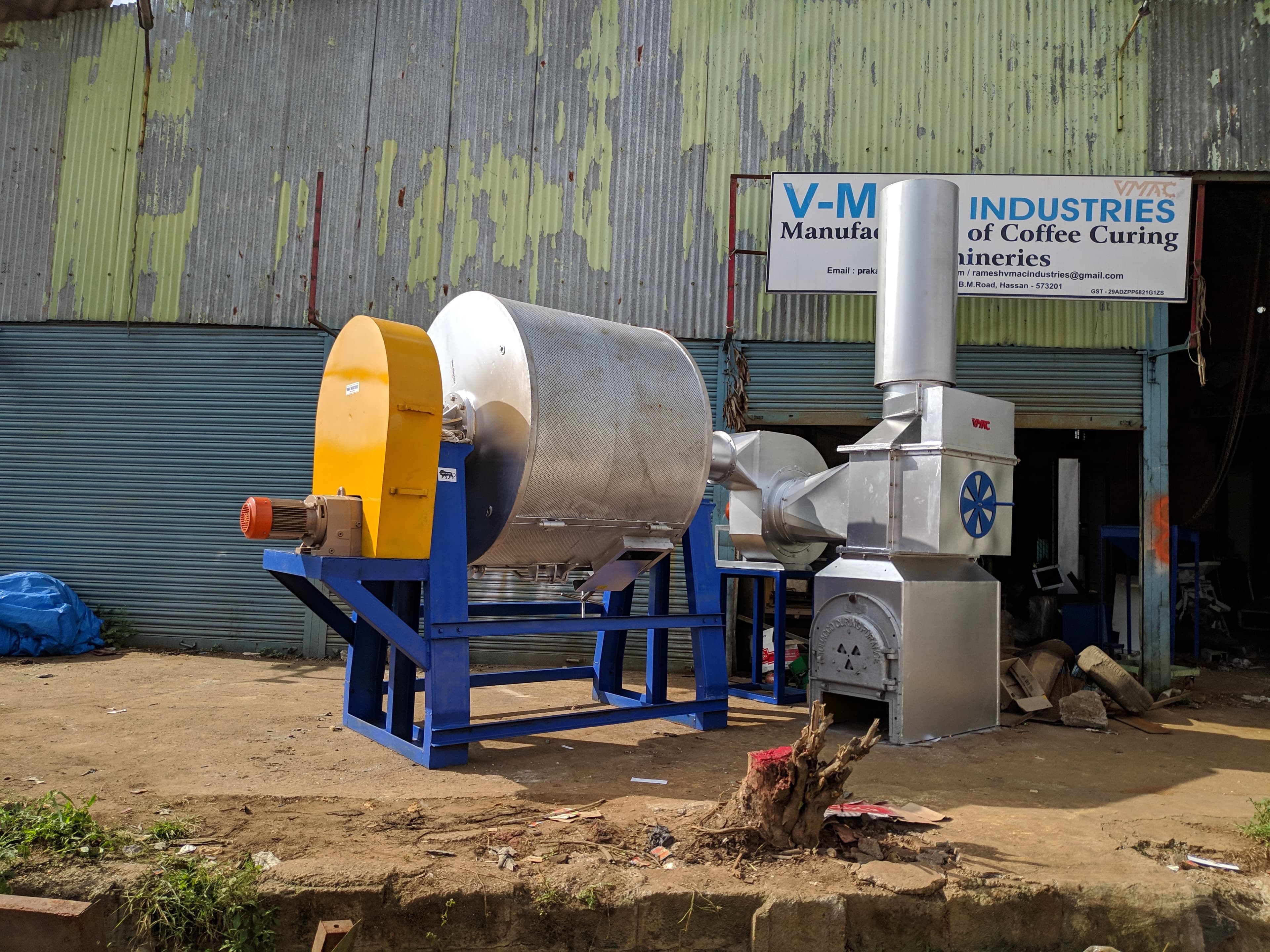
Coffee Dryer
Uniform Drying Solutions for Quality Preservation
View product →
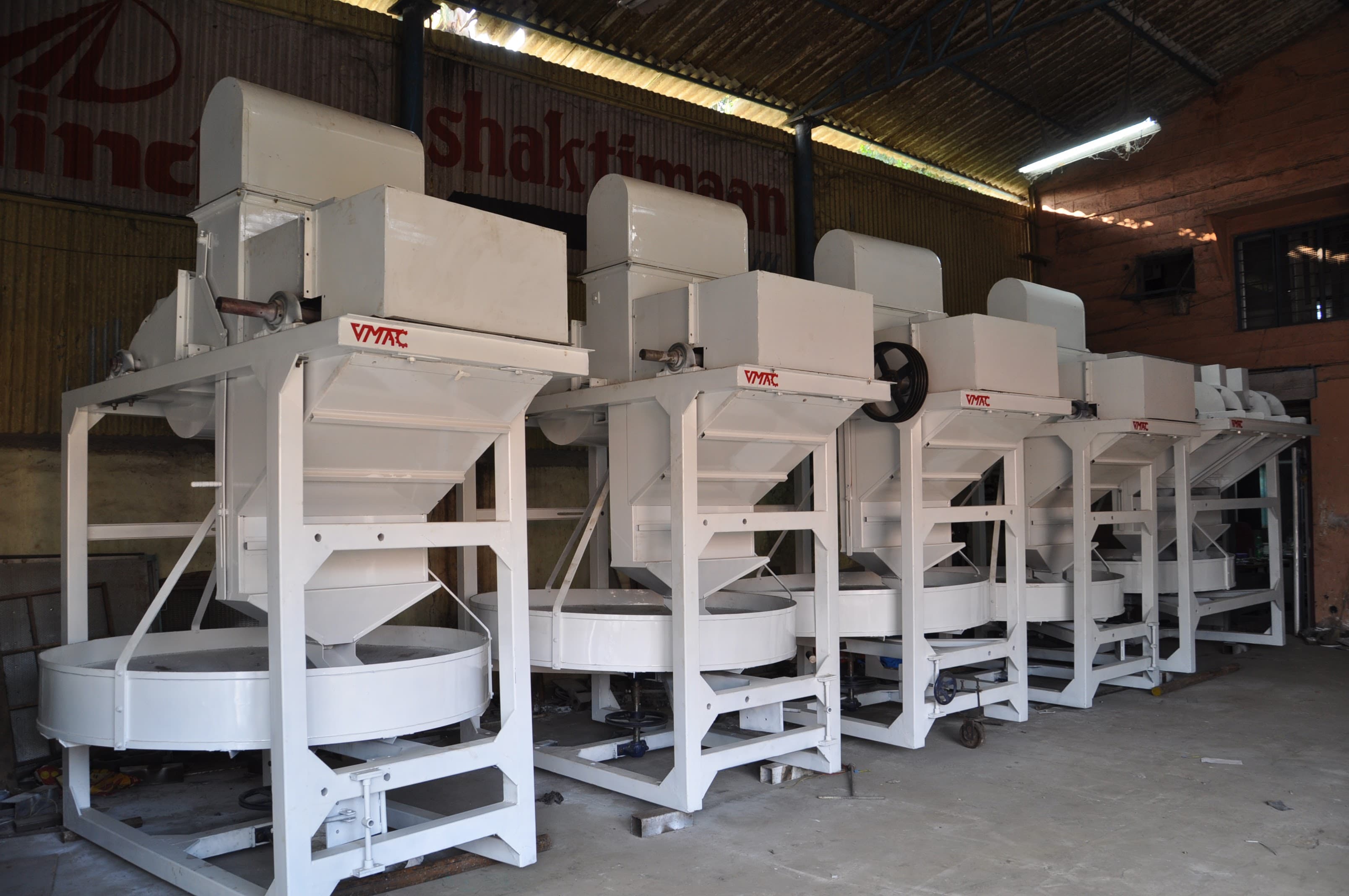
Coffee Huller
Effective Hulling for Premium Coffee Beans
View product →
Gravity Separator
View product →
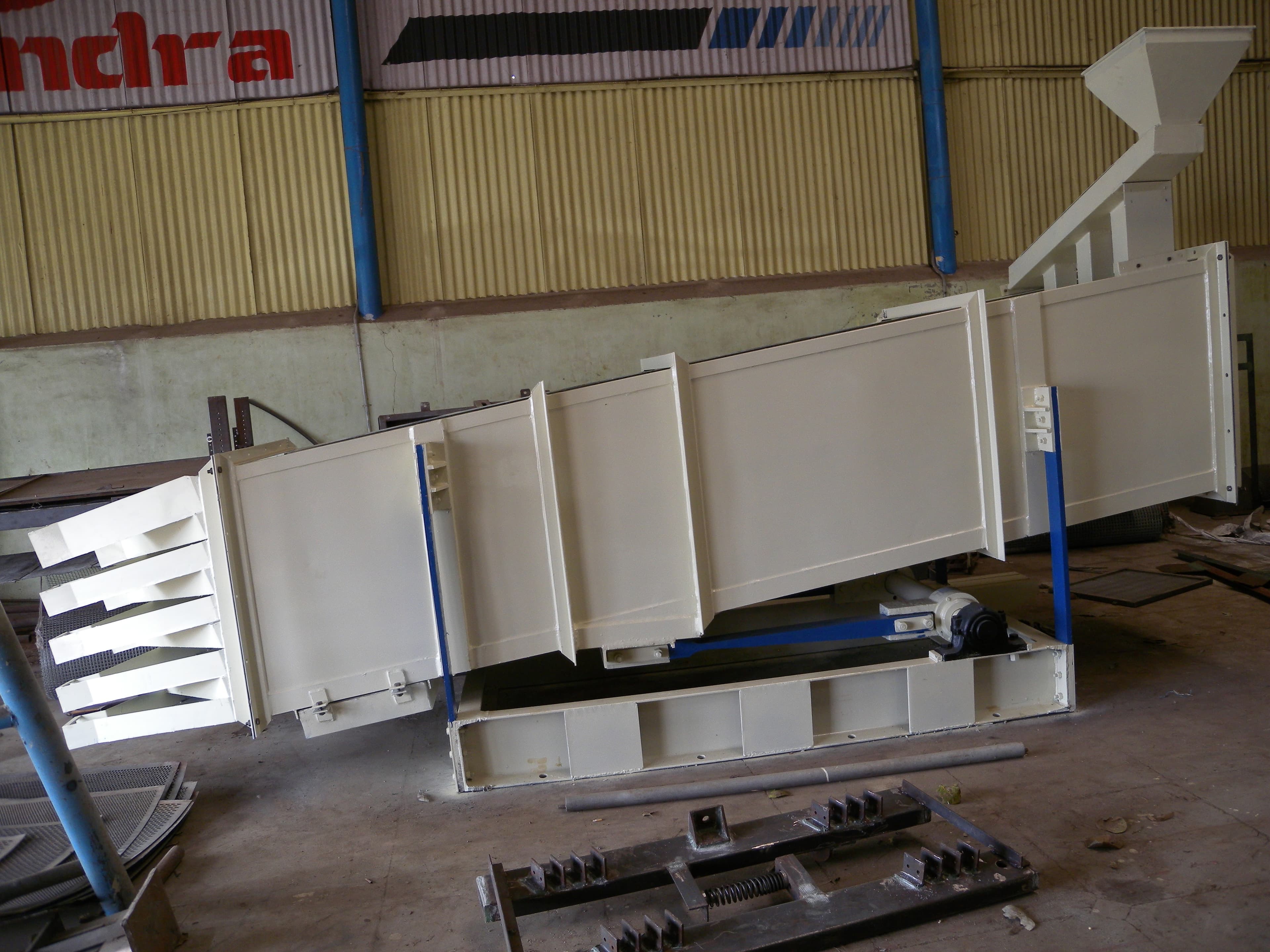
Coffee Grader
View product →
Coffee Color Sorter
CCD optical sorter — removes black, sour, white, and discoloured beans. The final automated quality gate before export bagging.
View product →
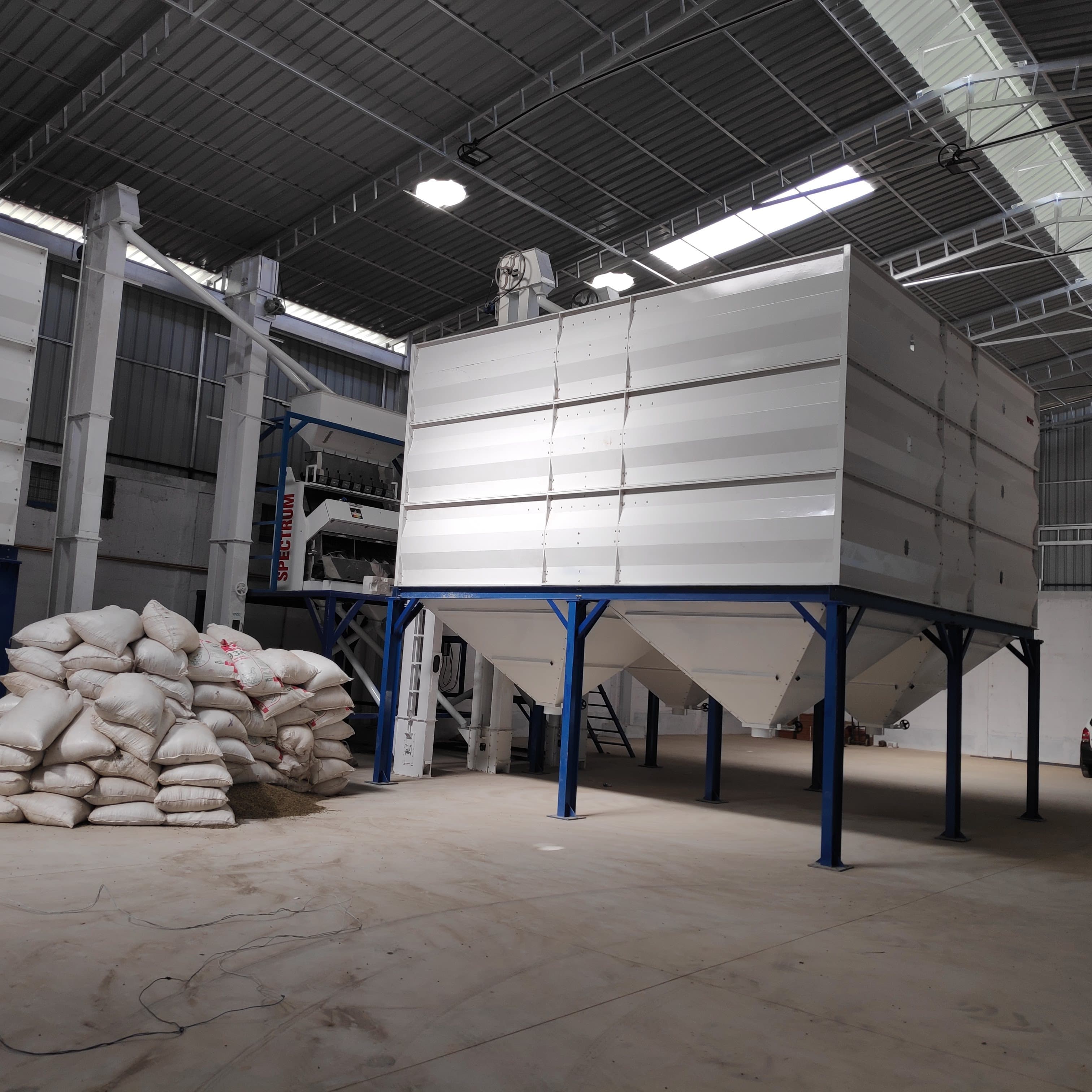
Silos
Hygienic Storage Solutions for Coffee Beans
View product →
Seven factors that drive cost
1. Capacity tier
This is the largest single factor. Moving from 1 TPH to 5 TPH does not simply mean bigger machines — it means more machines running in parallel, heavier structural frames, larger motors, and more complex material handling. Capacity determines roughly 50-60% of the total equipment cost.
2. Wet mill vs dry mill vs combined
A dry mill (hulling, grading, sorting) is simpler and cheaper than a wet mill (pulping, demucilaging, washing, drying). Most estates in India run combined wet-and-dry operations because they process their own cherry. If you are only buying cherry parchment from estates and curing it, you need only the dry mill portion, which can cut equipment cost by 30-40%.
3. Drying method
This is where planning gets interesting. You have three options:
- Sun drying requires minimal equipment cost but large paved drying yards (roughly 1 acre per 3-5 TPH of wet parchment). Land is the cost here, not machines.
- Mechanical drying requires a rotary or vertical dryer, a hot-air furnace, and fuel infrastructure. Equipment cost is high, but floor space is a fraction of sun drying.
- Hybrid drying (sun pre-dry to 25-30% moisture, then mechanical finish to 10-12%) is the most economical for medium and large operations. It reduces firewood consumption by 40-60% compared to fully mechanical drying.
In Karnataka, drying cost runs approximately 0.50-2.00 per kg of green coffee output, depending on your fuel source and method. Firewood consumption for mechanical drying is typically 0.3-0.6 kg per kg of water evaporated. These operating costs add up over a season, so the drying method decision has long-term financial consequences beyond just the equipment purchase.
4. Automation level
A colour sorter alone can cost 15-40 lakhs depending on channel count and detection capability. Automatic weighing and bagging systems add another 8-20 lakhs. These machines reduce labour costs and improve consistency, but they are optional at smaller scales where manual sorting and bagging are still viable. The decision should be based on your labour availability and quality requirements, not on what looks impressive in a brochure.
5. Material handling complexity
Bucket elevators, belt conveyors, screw conveyors, and pneumatic transfer systems connect every machine in the line. In a simple small estate layout, you might need 4-6 elevators and 2-3 conveyors. A large export plant can require 20+ elevators and a network of conveyors across multiple floors. Material handling can account for 15-25% of total equipment cost in larger plants.
6. Site-specific civil works
This is the cost that catches most buyers off guard. VMAC (and most equipment suppliers) supply machines, not buildings. The civil works — foundations, building structure, flooring, electrical panels and wiring, plumbing, water treatment, and drying yards — are typically handled by a local civil contractor.
Budget 20-40% of your equipment cost for civil works, on top of the equipment figure. For a medium estate mill at 2 crores equipment cost, expect 40-80 lakhs in civil works. For a large export plant at 25 crores equipment cost, civil works can run 5-10 crores.
Factors that push civil costs higher: multi-storey buildings (gravity-fed layouts), water treatment for wet mill effluent, cold storage for specialty lots, and remote sites with poor road access.
7. Single-supplier vs multi-supplier
Buying machines from three or four different manufacturers seems like a way to get the best price on each piece. In practice, it creates integration problems: mismatched capacities between stages, incompatible electrical systems, nobody willing to take responsibility when the line underperforms, and weeks of finger-pointing during commissioning.
A single-supplier line costs roughly the same as a multi-supplier assembly (sometimes less, because the supplier optimizes the whole system rather than over-specifying each unit in isolation). The real savings are in reduced commissioning time, a single point of accountability for throughput guarantees, and properly matched capacity at every stage so there are no bottlenecks.
Operating costs beyond equipment
Equipment purchase is a one-time capital expenditure. Operating costs run every season and deserve the same level of analysis.
Energy: Electricity is the primary operating cost for the dry mill section (hullers, graders, separators, sorters). For the wet mill and dryer, fuel (firewood, biomass briquettes, or diesel) dominates. A 3 TPH plant running a mechanical dryer during peak season can consume 500-1,000 kg of firewood per day.
Labour: A small estate mill typically needs 4-8 operators per shift. A large export plant may need 20-40 workers across wet mill, dry mill, sorting, and bagging sections. Automation (colour sorters, auto-baggers, centralized controls) reduces headcount but requires skilled operators.
Maintenance: Budget 2-4% of equipment cost annually for spare parts, wear items (screens, pulleys, belts, rubber rollers), and preventive maintenance. Machines that run on cherry (pulpers, demucilagers) see higher wear than dry mill equipment.
Water: Wet processing consumes 5-10 litres of water per kg of cherry processed. Water treatment and recycling systems add capital cost but significantly reduce ongoing water expense and environmental compliance burden.
Installation timelines
How long from delivery to first cherry? This depends on plant size and site readiness:
| Tier | Installation timeline |
|---|---|
| Small Estate Mill | 5-10 days |
| Medium Estate Mill | 10-20 days |
| Large Estate / Curing Works / Export | 4-10 weeks |
These timelines assume the civil works (building, foundations, electrical) are complete before equipment arrives. If civil work is running in parallel with equipment delivery, add buffer accordingly. The most common cause of delayed commissioning is not the equipment — it is unfinished civil work.
How to plan your investment
Start with capacity. Work backward from your peak-season cherry volume, not your average volume. A plant that can handle your peak comfortably will run underutilized most of the season, which is normal and acceptable. A plant sized for your average volume will create bottlenecks during peak harvest when you can least afford delays.
Then decide your processing scope: wet only, dry only, or combined. This determines roughly half the equipment list.
Next, choose your drying strategy. If you have the land and labour, sun drying keeps capital cost down. If land is constrained or you need to process cherry within hours of picking (as specialty lots demand), budget for a mechanical dryer.
Finally, be honest about automation. A colour sorter is a genuine quality improvement for export-grade coffee. Automatic bagging saves labour over thousands of bags per season. But if you are processing 500 bags a year, manual sorting and hand-stitched bags are perfectly adequate.
Add up the equipment cost from the tier table, add 20-40% for civil works, and you have a realistic project budget. That is the number to take to your bank or investor.
Need a quote for your specific plant?
VMAC engineers will size every machine to your throughput, site, and budget — so you only invest in what you actually need. One quote, one supplier, one accountability.