
VMAC Industries
·2026-04-16
Coffee Processing Plant Layout Guide
How to design the layout for a coffee processing plant — machine sequence, linear flow principles, capacity matching, wet mill and dry mill zoning, and site infrastructure requirements for estates and curing works.
Why layout determines plant performance
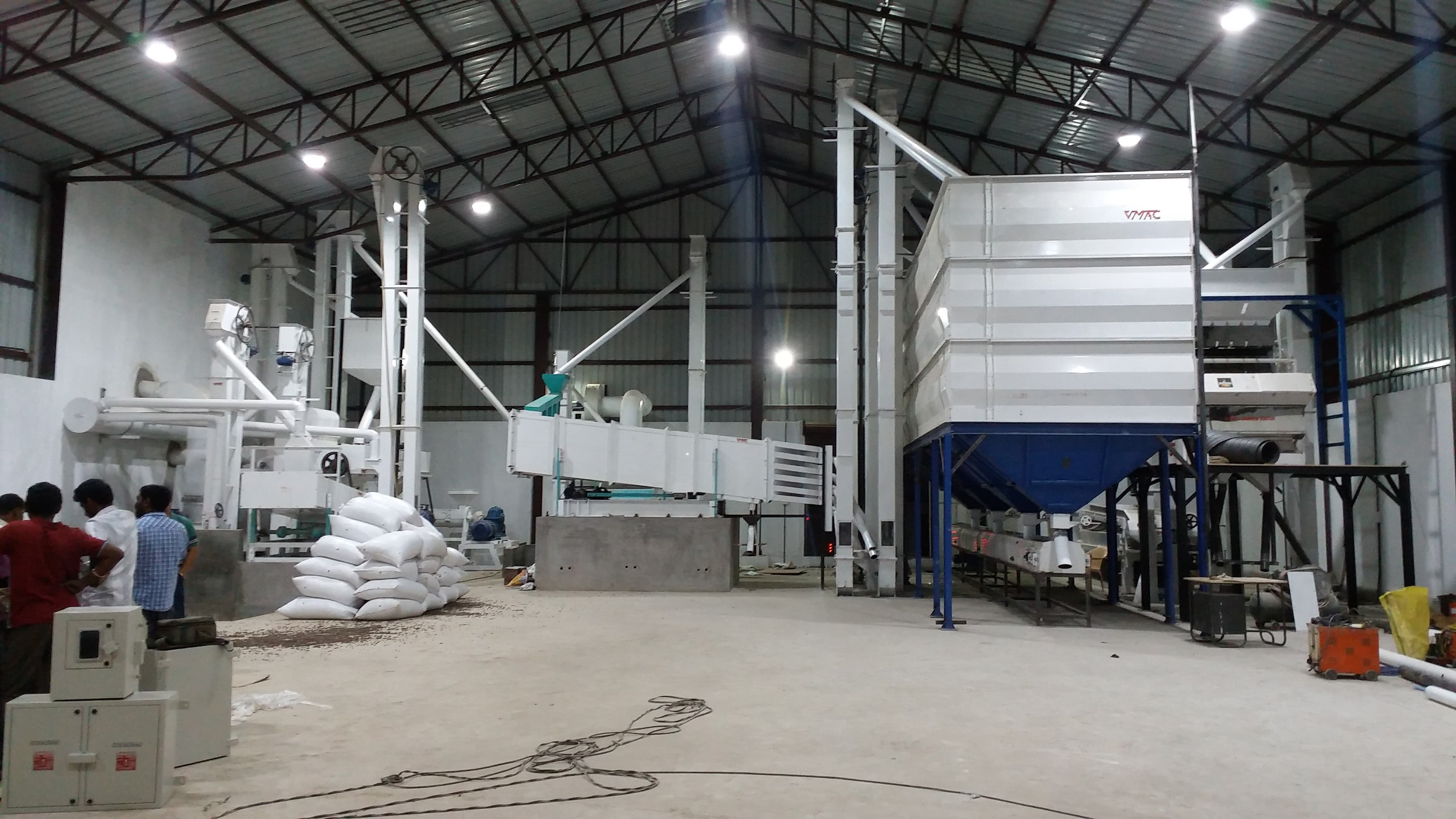
Equipment selection gets the attention. Layout gets neglected. This is a mistake. Two plants with identical machines can produce very different results depending on how those machines are arranged, how material flows between them, and how much space is allocated for maintenance, dust extraction, and future growth.
A poor layout creates bottlenecks, cross-contamination between wet and dry stages, unnecessary manual handling, and safety hazards from chaff accumulation. A good layout moves coffee in one direction — cherry in, export bag out — with no backtracking, no cross-traffic, and no wasted space.
This guide covers the full layout problem: the 14-step processing sequence that defines machine order, the five principles that govern spatial arrangement, capacity matching to prevent bottlenecks, wet mill and dry mill zoning, material handling between stages, and site infrastructure requirements. It applies to estate mills, licensed curing works, and large export plants.
The 14-step processing sequence
Layout starts with process flow. Every machine has a fixed position in the sequence, and the building must accommodate that order. The complete cherry-to-bag sequence is:
- Cherry reception hopper — bulk intake from harvest vehicles, feeds the line
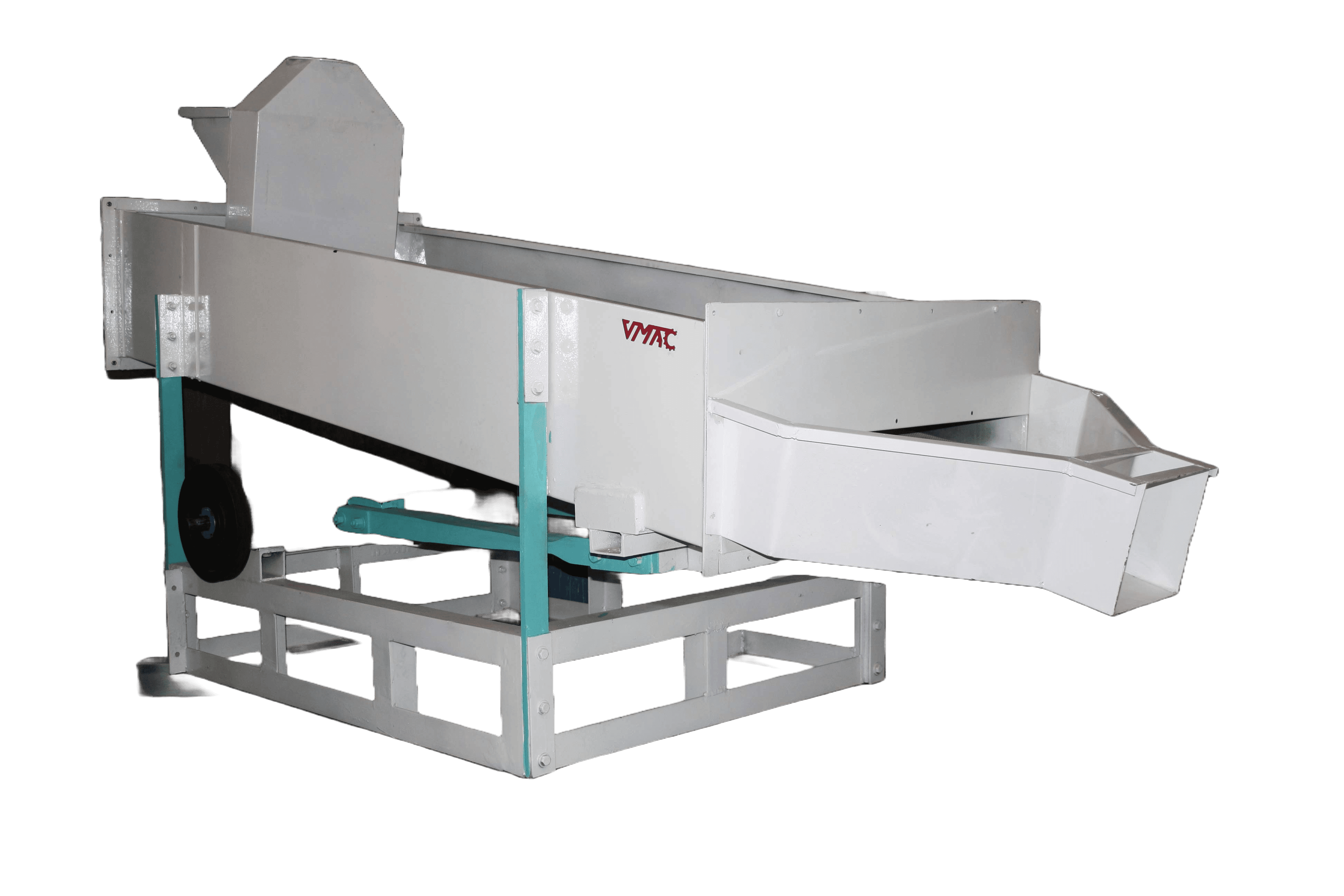
- Pre-cleaner — removes leaves, twigs, soil, and other field debris
- Cherry classifier — density separation where ripe cherries sink and floaters are removed
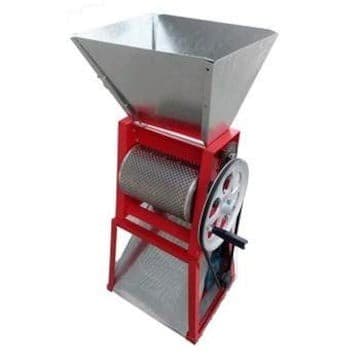
- Pulper (wet process only) — strips the outer skin from the cherry
- Demucilager or fermentation tank (wet process only) — removes the mucilage layer by mechanical or biological means
- Channel washer (wet process only) — final wash and density grading of parchment
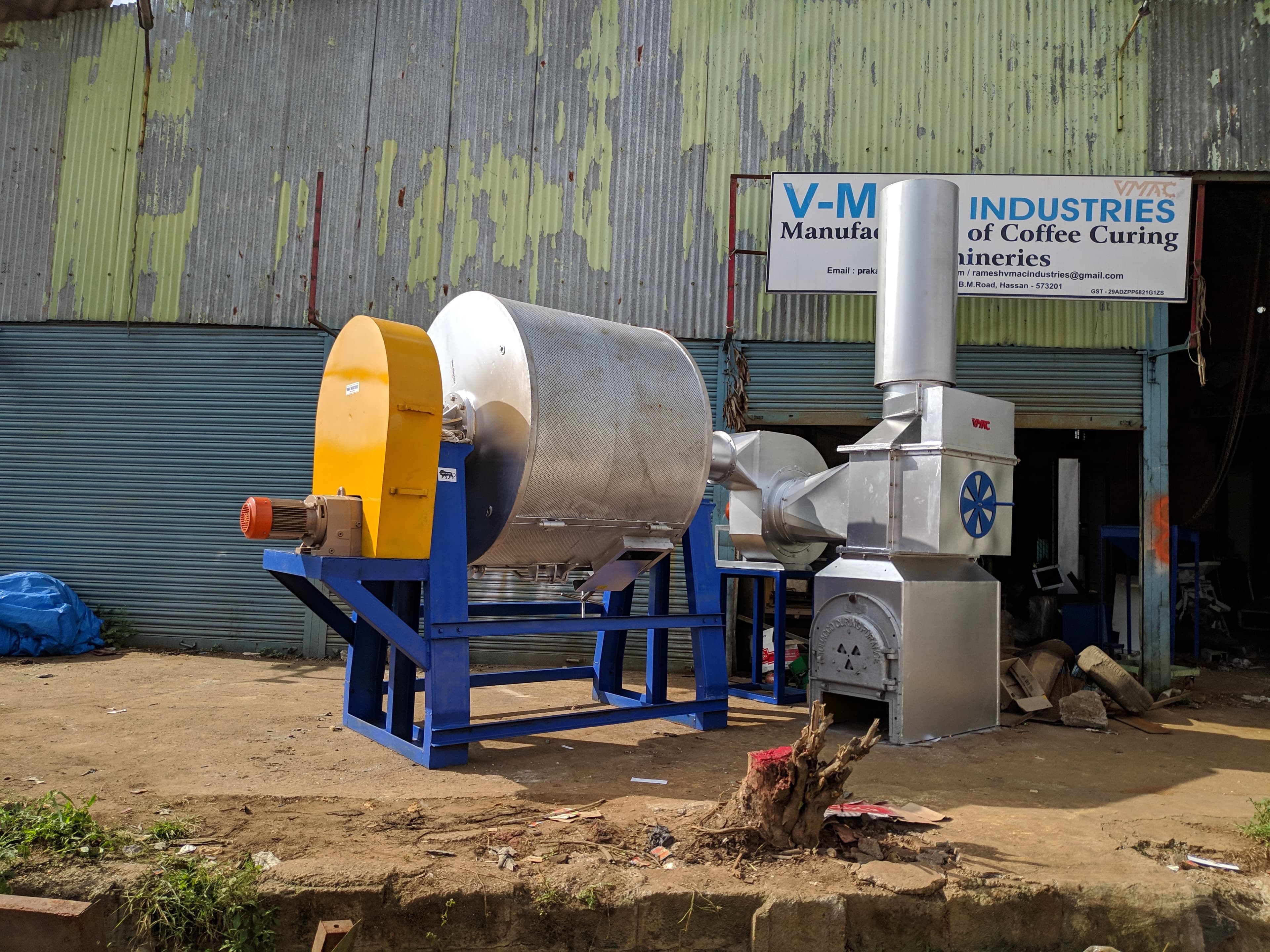
- Mechanical dryer — reduces moisture to 11-12% for parchment coffee, 12-13% for natural cherry
- Pre-cleaner, dry input — optional second pass to clean naturals or dried cherry before hulling
- Huller — removes the parchment shell (washed) or dried husk (natural)
- Winnower / aspirator — separates chaff and light husk fragments from clean bean
- Screen grader — sorts by physical size using screens 13 through 20
- Gravity separator — density-sorts each screen fraction, separating heavy from light beans
- Colour sorter — optical detection and ejection of defective or discoloured beans
- Weighing and bagging — fills and seals 60 kg export-grade bags
Not every plant runs all 14 steps. A dry-process facility skips steps 4 through 6 entirely — cherry goes straight from classification to drying. A small estate doing only sun drying may skip step 7. But the relative order never changes. The huller always follows the dryer. The grader always follows the huller. The colour sorter is always the last quality gate before bagging.
Your building layout must follow this sequence. Any deviation — placing the grader before the huller, routing material backwards from bagging to sorting — creates operational problems that no amount of conveyors can fix.
Complete Processing Line Equipment
Pre-Cleaner
Essential Pre-Cleaning for Optimal Processing
View product →
Coffee Pulper
View product →
Coffee Dryer
Uniform Drying Solutions for Quality Preservation
View product →
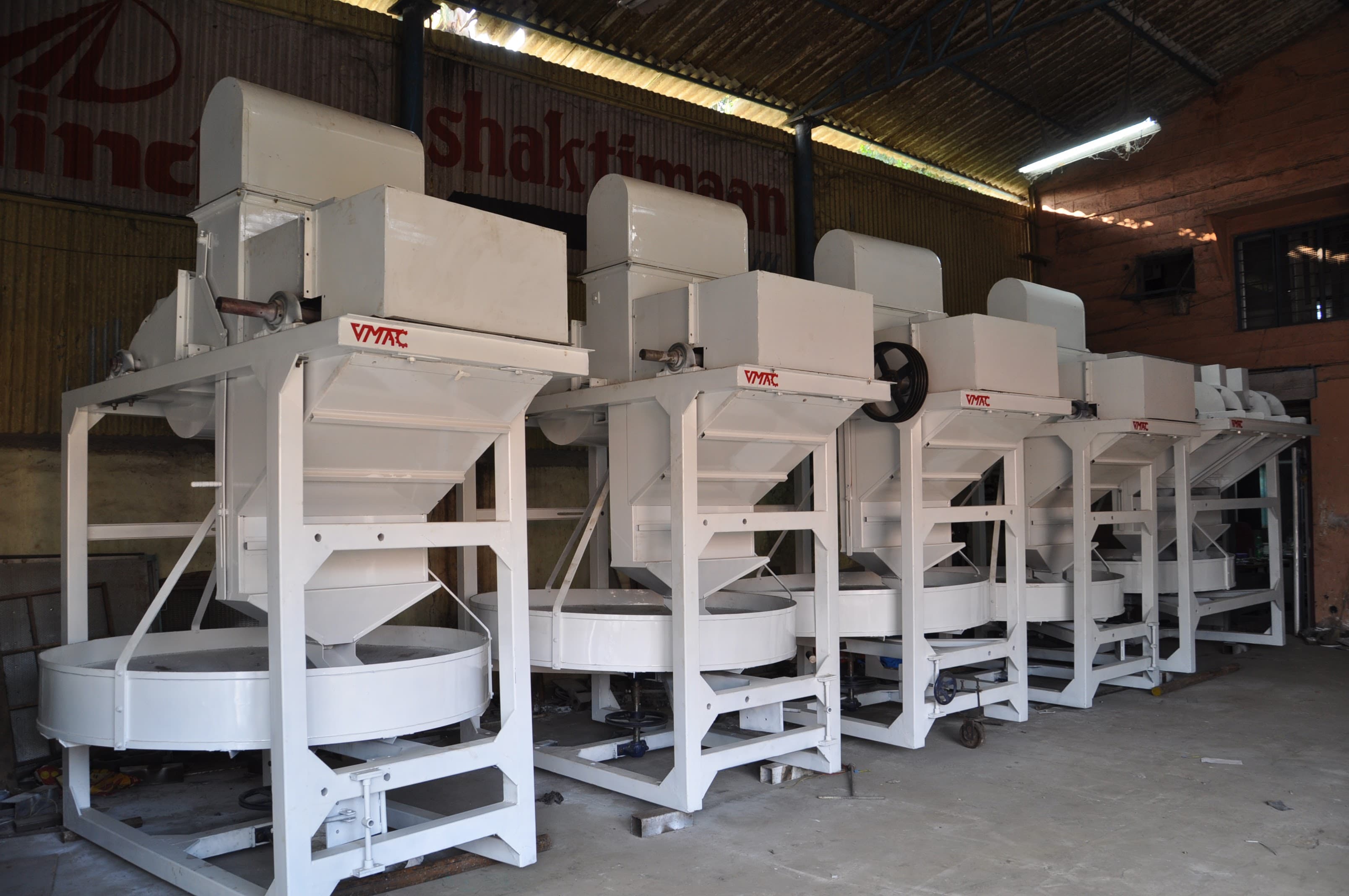
Coffee Huller
Effective Hulling for Premium Coffee Beans
View product →
Gravity Separator
View product →
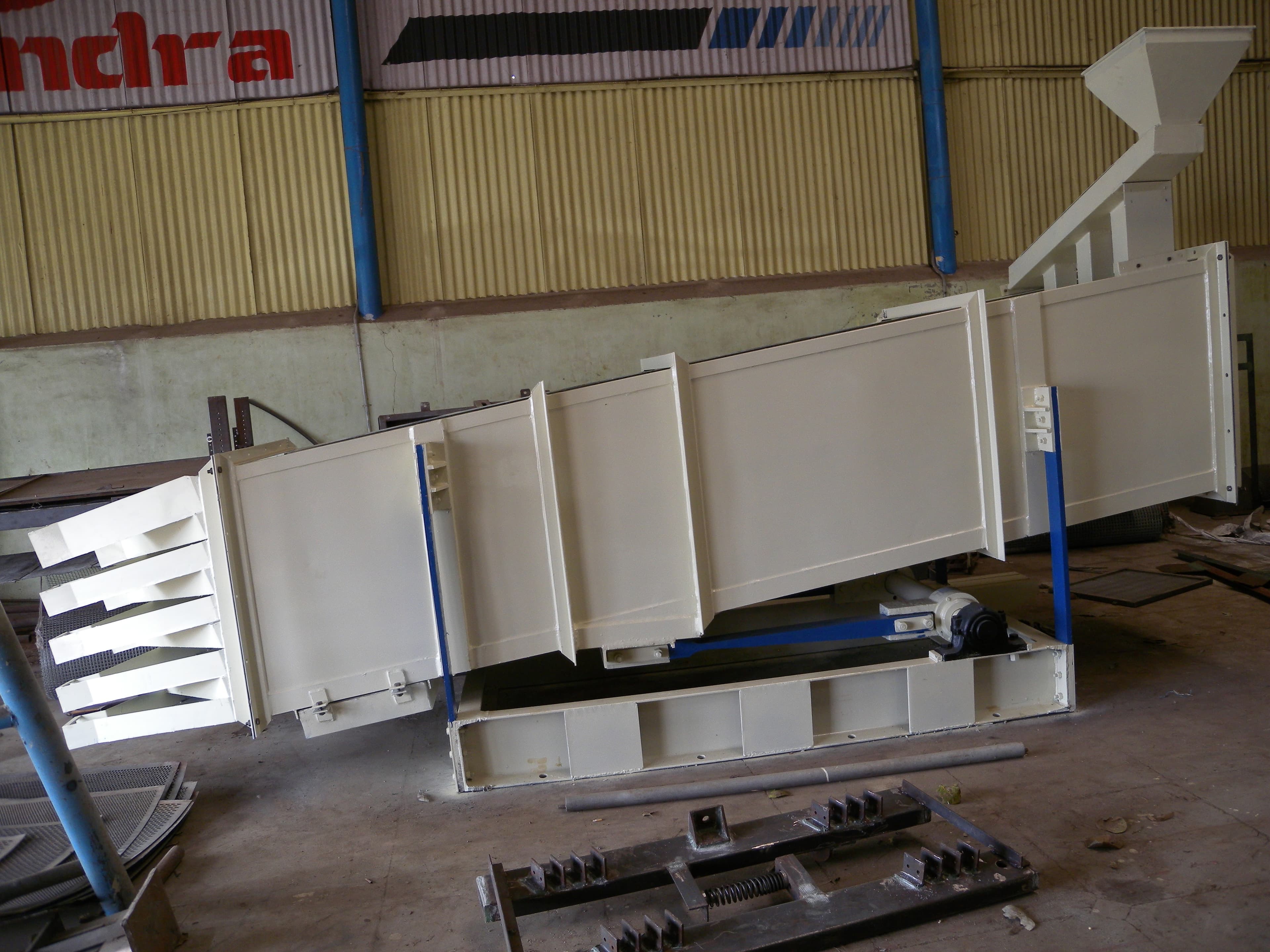
Coffee Grader
View product →
Coffee Color Sorter
CCD optical sorter — removes black, sour, white, and discoloured beans. The final automated quality gate before export bagging.
View product →
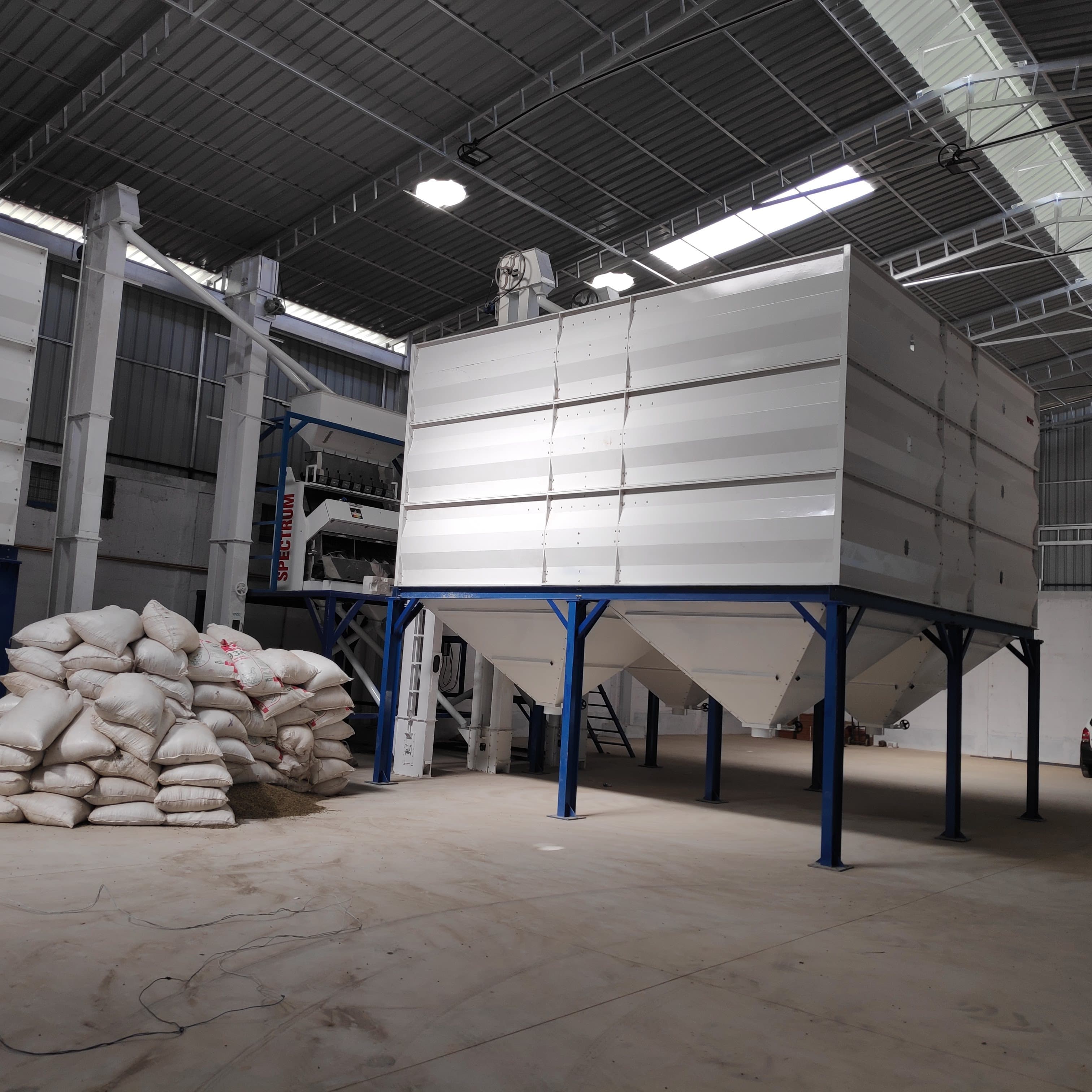
Silos
Hygienic Storage Solutions for Coffee Beans
View product →
Five layout principles
1. Linear flow
The single most important layout principle: material moves in one direction. Cherry enters at one end, export bags leave at the other. The ideal geometry is a straight line or a U-shape. A straight-line layout is simplest — machines arranged sequentially along the length of the building. A U-shape folds the line back on itself, reducing building length at the cost of a wider footprint. Both work. What does not work is a layout that forces material to cross its own path, creating congestion and contamination risk.
2. Stage segregation
Group machines into three distinct zones:
- Wet mill zone — cherry reception, pre-cleaning, classification, pulping, demucilaging, washing. This zone handles wet material, uses significant water, and produces liquid waste. Floors must slope to drainage channels. Walls and surfaces must tolerate constant moisture.
- Dry mill zone — hulling, winnowing, screen grading, gravity separation, colour sorting. This zone handles dry material and produces dust and chaff. It needs dust extraction, not drainage.
- Packing zone — weighing, bagging, stitching, stacking. This zone must be clean and dry. It should be physically separated from the dry mill to prevent dust settling on finished bags.
Mixing wet and dry operations in the same space causes problems. Water from the wet mill migrates to the dry side, raising ambient humidity and affecting moisture-sensitive equipment. Chaff from the dry mill contaminates wet product. Segregation is not optional — it is a structural requirement.
3. Maintenance clearance
Every machine needs access space on all sides. Operators need room to walk around equipment, clear blockages, inspect bearings, and replace wear parts. A common planning error is packing machines too tightly to save floor space. This saves construction cost and destroys operational efficiency.
As a general rule, leave a minimum of 1 metre clearance around each machine, and wider clearance (1.5-2 metres) on the service side where major components are accessed. For large machines like mechanical dryers, the clearance requirement is larger — consult the manufacturer's installation manual.
4. Ventilation and dust control
Coffee processing generates substantial airborne particulates. Hulling produces chaff. Winnowing produces fine dust. Screen grading generates light particles. Colour sorters exhaust warm air. All of this must be managed.
Chaff is a fire hazard. In a poorly ventilated dry mill, chaff accumulates on surfaces, inside electrical enclosures, and around motors. A single spark — from a bearing failure, an electrical fault, or static discharge — can ignite it. Dust extraction systems with cyclone separators should be installed at every chaff-producing machine. Collected chaff should be ducted outside the building to a dedicated collection point.
Worker safety is the other concern. Fine coffee dust causes respiratory irritation with prolonged exposure. Adequate ventilation — natural or forced — keeps airborne particulate concentrations within safe limits.
5. Future expansion
Coffee production is seasonal, but businesses grow. A plant designed for 3 TPH today may need 5 TPH in five years. If the original layout fills every square metre, expansion means demolition and reconstruction.
Allocate space for additional machines at every stage. Leave room for a second dryer, a second huller line, or an additional gravity separator. Plan the building footprint to accommodate one tier above your current capacity. The cost of extra floor space during initial construction is a fraction of the cost of redesigning and rebuilding later.
Capacity matching and bottleneck prevention
Layout is not just about physical arrangement. It is about flow rate matching. Every machine in the line must be sized to the same nominal throughput. If the pulper processes 5 TPH of cherry but the dryer can only handle 3 TPH, coffee accumulates between the two stages, quality degrades as wet parchment sits waiting, and the entire line is throttled to the dryer's capacity.
The dryer is the common bottleneck. This is the single most frequent design error in coffee processing plants. The dryer must be sized to match the pulper's wet output, not just the dry mill's input rate. Many poorly designed plants fail at exactly this point — the pulper runs at full speed during peak harvest, the dryer cannot keep up, and wet parchment piles up in the yard.
Buffer hoppers between stages absorb short-term flow variation. A surge in cherry reception does not need to propagate instantly through the entire line. Hoppers between the pre-cleaner and pulper, between the washer and dryer, and between the dryer and huller provide buffering that keeps each machine running steadily even when upstream or downstream machines have brief interruptions.
Capacity tiers and installed power
The table below shows the five standard capacity tiers, throughput ranges, and total installed electrical power. All installations assume 3-phase, 440V, 50 Hz supply.
| Tier | Capacity | Installed Power |
|---|---|---|
| Small Estate Mill | 0.5-1 TPH | 15-30 kW |
| Medium Estate Mill | 1-3 TPH | 30-75 kW |
| Large Estate Mill | 3-8 TPH | 75-180 kW |
| Licensed Curing Works | 8-20 TPH | 180-400 kW |
| Large Export Plant | 20-50 TPH | 400-1,000 kW |
When selecting your capacity tier, size every machine to the same nominal throughput. Do not mix a 5 TPH pulper with a 2 TPH huller. The entire line runs at the speed of its slowest machine.
Wet mill and dry mill connection
A combined facility — one that handles both washed and natural coffee — needs a split-path design. Both methods share the same reception area and pre-cleaning equipment. After that, the paths diverge:
Wet path: cherry reception, pre-cleaning, classification, pulping, demucilaging, channel washing, then drying. The coffee enters the dryer as wet parchment at around 55-60% moisture.
Dry path: cherry reception, pre-cleaning, classification, then drying directly. No pulping, no washing. The coffee enters the dryer as whole cherry at around 60-65% moisture.
Both paths converge after drying. From the huller onwards — hulling, winnowing, screen grading, gravity separation, colour sorting, and bagging — the sequence is identical regardless of processing method. The dry mill does not care whether the bean arrived as washed parchment or dried cherry. It hulls, grades, and sorts the same way.
The layout implication is straightforward: the wet mill section must branch from the shared reception area. One fork leads to pulpers and washers (wet path). Another fork leads directly to the dryers (dry path). After drying, both forks merge into a single dry mill line. The building should be arranged so that these two paths do not cross each other and both feed cleanly into the shared dryer bank.
Material handling between stages
Material does not teleport between machines. Every transition requires a conveyor, elevator, or pneumatic system. The choice depends on direction, distance, and material state:
- Belt conveyors — the standard for horizontal or low-angle transport between sequential machines. Simple, reliable, low maintenance. Used extensively in both wet and dry sections.
- Bucket elevators — for vertical transport. Multi-level layouts use bucket elevators to lift material from ground-floor machines to upper-floor equipment, allowing gravity feed through the rest of the sequence. This is common in curing works where the dry mill occupies two or three levels.
- Pneumatic conveyors — for dry materials over longer distances or where routing flexibility is needed. Higher energy consumption than belt conveyors but useful where physical space constraints prevent a straight belt run.
- Storage silos — for intermediate buffering between major stages. Silos between drying and hulling allow the two sections to operate on different schedules — the wet mill runs during harvest, the dry mill runs year-round.
- Hoppers — smaller than silos, sized to absorb flow variation between adjacent machines. Every machine-to-machine transition should include a hopper to decouple the two stages.
A well-documented case study illustrates the impact of material handling on plant performance. A Latin American coffee processor upgraded their layout by installing automated conveyors linking pulpers to destoners to gravity separators in a continuous linear flow. The results: a 60% reduction in manual bean handling, a 25% reduction in labour costs, and a 35% increase in total throughput. The machines were the same. The layout changed.
Site infrastructure checklist
The building, utilities, and civil works must be in place before equipment arrives. VMAC supplies machinery, not buildings — but we provide the specifications your civil contractor needs.
Electrical power
Sum all machine nameplate ratings and add 20% headroom for starting currents and future additions. Confirm that your utility connection can deliver this load reliably. If grid power is unreliable, factor in a backup generator sized to run the critical path — at minimum, the dryer and huller. All connections are 3-phase, 440V, 50 Hz.
Water supply
Water consumption depends entirely on processing method. Wet processing requires 40-100 litres per kilogram of cherry — and can exceed 100 L/kg with older equipment. Dry processing uses only 1-5 L/kg, primarily for cleaning. Peak harvest is the critical constraint: calculate your maximum daily cherry intake, multiply by your water ratio, and confirm that your source (borewell, municipal, river) can sustain that flow for the duration of the harvest season.
Floors and drainage
Good concrete, properly cured, with slopes to central drainage channels. No cracks — cracks harbour bacteria and make cleaning impossible. The wet mill zone needs steeper slopes and wider drains. The dry mill zone needs level floors with smooth finishes to prevent dust accumulation in surface imperfections.
Waste management
Wet processing waste is not trivial. Coffee pulp has a biochemical oxygen demand (BOD) of 40,000-80,000 mg/L — comparable to industrial effluent. Disposing of it untreated into waterways is both illegal and environmentally destructive. The standard approach is a pulp press to dewater the pulp, followed by composting. Wash water is treated through settling ponds before discharge. Factor these into your site plan — they require space and are often forgotten until the plant is already built.
Drying area
If you are using sun drying, allocate 200-400 square metres of patio or raised bed area per 1,000 kg of wet parchment. This is a large footprint and a major site constraint. Mechanical dryers reduce this dramatically — a 500 kg capacity mechanical dryer occupies only 4-6 square metres. Most medium and large plants use mechanical drying for this reason.
Installation timelines
Layout planning should account for installation duration, because the building must be ready before equipment arrives.
| Plant Size | Typical Installation Time |
|---|---|
| Small estate mill | 5-10 days |
| Medium estate mill | 10-20 days |
| Large estate / export plant | 4-10 weeks |
These timelines assume the building, floor, electrical wiring, plumbing, and drainage are complete before machinery delivery. Delays in civil works are the most common cause of delayed commissioning.
What VMAC provides for your layout
VMAC supplies machinery, not buildings. But we do not drop machines at your gate and wish you luck. Every plant we supply includes the documentation your civil contractor and electrician need to prepare the site:
- Floor plans with machine positions and anchor bolt locations
- Elevation drawings showing vertical arrangement and bucket elevator heights
- Floor-load specifications so your structural engineer can design foundations correctly
- Utility requirements — power ratings per machine, water flow rates, drain locations
- Recommended building dimensions for the capacity tier and processing method you have selected
Your civil contractor builds to these specifications. When the building is ready, our installation team places, levels, connects, and commissions every machine.
Need a plant layout designed for your site?
VMAC provides complete elevation drawings, floor-load specifications, utility schedules, and machine placement plans for every plant we supply. Tell us your capacity and site dimensions — we'll design the layout.